
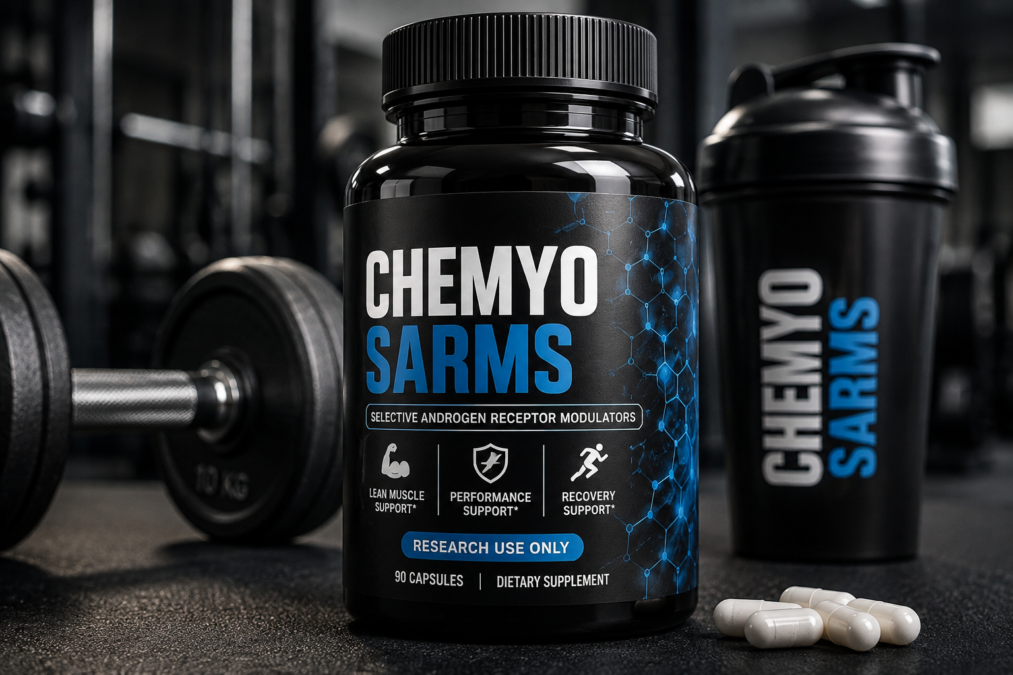

chemyo sarms: Understanding the Topic
chemyo sarms is a search term commonly associated with products marketed as selective androgen receptor modulators, or SARMs. These substances have attracted attention among people interested in bodybuilding, muscle growth, strength, and physical performance. However, there’s an important point that readers should understand from the beginning: SARMs aren’t the same as ordinary dietary supplements, and many products sold online haven’t been approved as safe and effective medicines.
Selective androgen receptor modulators are laboratory-made compounds designed to interact with androgen receptors in the body. Because androgen receptors are involved in muscle, bone, and other tissues, SARMs have been studied for possible medical applications. At the same time, some products have been promoted online for bodybuilding and athletic purposes.
The U.S. Food and Drug Administration (FDA) warns that products containing SARMs can carry serious health risks. Reported concerns include liver injury, increased risk of heart attack or stroke, sexual problems, infertility, and other harmful effects. The FDA also states that SARMs marketed to consumers are unapproved drugs rather than approved dietary supplements.
So, while chemyo sarms may appear in online searches related to fitness, readers should look beyond marketing claims and understand what these substances actually are.
What Are SARMs?
SARMs stands for Selective Androgen Receptor Modulators.
In simple terms, SARMs are synthetic compounds designed to affect androgen receptors. Androgen receptors respond to hormones such as testosterone. Researchers have investigated SARMs because they may influence muscle and bone tissue.
The word “selective” is important. The basic idea behind SARMs is that they may produce some androgen-like effects in selected tissues while producing fewer effects in others. This concept is one reason they became interesting to scientific researchers.
However, “selective” doesn’t mean “risk-free.”
That’s where confusion often begins. A product can be designed to act selectively on certain receptors without being proven safe for recreational use. In fact, the FDA has warned that SARMs can cause serious adverse effects.
Some substances commonly discussed in the SARM category include:
- Ostarine, also known as enobosarm or MK-2866
- Ligandrol, also known as LGD-4033
- Andarine
- RAD140
- S-23
- YK-11
Several of these substances are also prohibited in competitive sports under anti-doping rules. WADA’s prohibited list places SARMs under anabolic agents.
Why Have SARMs Become Popular?
The popularity of SARMs has grown partly because of social media, bodybuilding communities, fitness websites, and online marketing.
Some advertisements describe SARMs as an easier alternative to anabolic steroids. Others make attractive claims about muscle development, strength, fat loss, recovery, or maintaining lean body mass.
At first glance, that may sound appealing. After all, who wouldn’t want better gym results with less effort?
The problem is that online marketing can make complicated substances appear much simpler than they really are.
People may see photographs of muscular athletes and assume that a particular product caused those results. But photographs don’t prove effectiveness or safety. Training history, nutrition, genetics, other substances, lighting, posing, and many other factors can influence appearance.
Furthermore, products sold online may not always contain exactly what their labels claim. This creates another layer of concern for consumers.
For anyone researching chemyo sarms, the most sensible approach is to separate advertising claims from established medical evidence.
How SARMs Are Different From Regular Supplements
A major source of confusion is the way some SARMs are marketed.
Protein powder, creatine, vitamins, and other dietary products belong to different categories. SARMs, however, are pharmacologically active substances that interact with androgen receptors.
The FDA specifically warns consumers not to assume that products marketed as SARMs are dietary supplements. The agency describes SARMs sold for human use as unapproved drugs and says they haven’t been reviewed by the FDA for safety and effectiveness.
Here’s a simple comparison:
| Category | General Purpose | Main Consideration |
|---|---|---|
| Protein powder | Helps increase protein intake | Food-based nutrition product |
| Creatine | Supports high-intensity exercise performance | Widely studied supplement |
| Multivitamins | Provides selected vitamins and minerals | Nutritional support |
| SARMs | Affect androgen receptors | Unapproved and potentially harmful |
| Anabolic steroids | Produce strong androgenic/anabolic effects | Significant health and legal concerns |
This distinction matters because a product being sold through a fitness website doesn’t automatically make it safe.
Potential Effects Discussed With SARMs
People interested in chemyo sarms often encounter claims about muscle growth and physical performance.
Research into SARMs has explored possible effects on tissues such as muscle and bone. However, research interest shouldn’t be confused with approval for recreational use.
Some marketed claims include:
- Increased lean muscle mass
- Improved strength
- Better physical performance
- Changes in body composition
- Support for muscle preservation
These claims are part of the reason SARMs have attracted attention.
Still, there are two sides to the story. A substance that changes muscle-related biology can also affect other body systems. The FDA has reported serious safety concerns associated with SARMs, including liver injury and possible cardiovascular risks.
Therefore, it isn’t responsible to describe SARMs simply as a shortcut to better fitness.
Health Risks Linked to SARMs
Safety should be the central part of any discussion about chemyo sarms.
According to the FDA, serious reactions have occurred in people using products containing SARMs. These include liver injuries that required hospitalization. The agency also warns about potential increases in the risk of heart attack and stroke.
Other potential concerns identified by the FDA include:
- Liver injury
- Acute liver failure
- Heart attack
- Stroke
- Sexual dysfunction
- Infertility
- Testicular shrinkage
- Sleep disturbances
- Psychosis or hallucinations
- Pregnancy-related risks
These risks shouldn’t be ignored simply because a product is promoted as “research use only” or “not for human consumption.” The FDA has taken enforcement action against companies marketing SARMs under such labels when the products were actually promoted for human use.
In other words, a warning printed on a bottle doesn’t magically remove the health risks.
Liver Health and SARMs
The liver processes many substances that enter the body, including medicines and various chemical compounds.
Liver injury is one of the major concerns associated with SARMs. The FDA has reported life-threatening liver toxicity among people taking products containing SARMs.
Possible warning signs of serious liver problems can include:
- Yellowing of the skin or eyes
- Dark urine
- Abdominal pain
- Severe tiredness
- Nausea
- Weakness
- Loss of appetite
These symptoms can have many possible causes, so they don’t automatically prove that SARMs are responsible. Nevertheless, someone experiencing concerning symptoms after taking an unapproved substance should seek medical advice promptly.
This is particularly important because liver problems may become serious before a person realizes how much damage has occurred.
Heart and Blood Vessel Concerns
Another important issue is cardiovascular health.
The FDA warns that SARMs may increase the risk of heart attack and stroke.
Heart health depends on many factors, including blood pressure, cholesterol levels, blood vessels, weight, physical activity, smoking, family history, and other health conditions.
Adding an unapproved compound that can influence hormone-related pathways may create additional uncertainty.
For this reason, people shouldn’t assume that being young or physically active automatically protects them from possible adverse effects.
A strong body on the outside doesn’t always mean every internal system is protected.
Hormonal Effects and Reproductive Health
Because SARMs interact with androgen receptors, they can influence systems connected with hormones.
This is especially important for people who are considering these compounds because they want faster muscle development.
Potential reproductive and hormonal concerns can include:
- Changes in normal hormone activity
- Sexual dysfunction
- Reduced fertility
- Testicular shrinkage
- Changes in reproductive function
The FDA specifically lists infertility and testicular shrinkage among potential risks associated with SARMs.
Long-term effects are another concern because the safety profile of many SARMs isn’t fully established.
That means people shouldn’t rely on internet forums or gym conversations as a substitute for medical evidence.
Are SARMs Approved Medicines?
This is one of the most important questions surrounding chemyo sarms.
The FDA states that SARMs are not approved for use as dietary supplements and that products containing them are unapproved drugs. The agency has repeatedly issued warnings and enforcement actions involving products marketed as SARMs.
This doesn’t mean researchers have no interest in SARMs.
Quite the opposite. Researchers have investigated these compounds for possible medical applications. But a substance being studied in science is very different from a product being approved for general consumer use.
A useful rule is:
Research interest does not equal consumer approval.
That distinction helps readers avoid a common misunderstanding.
SARMs and Competitive Sports
Athletes should pay particular attention to this topic.
The World Anti-Doping Agency lists SARMs as prohibited anabolic agents. Its prohibited list includes examples such as andarine, enobosarm, LGD-4033, RAD140, S-23, and YK-11.
Therefore, an athlete who uses a SARM could face anti-doping consequences.
Possible consequences in sport can include:
- A positive doping test
- Disqualification
- Loss of results
- Suspension
- Damage to an athlete’s reputation
Rules can change, so competitive athletes should always check the current prohibited list and their sport’s anti-doping guidance.
In competitive sports, “I didn’t know it was prohibited” generally isn’t a safe strategy.
The Problem With Online SARM Products
Buying health-related products online requires caution.
Some online sellers use professional-looking websites, laboratory language, impressive product names, and fitness-focused advertising. However, attractive presentation doesn’t prove purity, safety, or effectiveness.
The FDA has also warned about products labeled “research only” or “not for human consumption” that were marketed in ways suggesting human use.
Consumers should therefore be careful about claims such as:
- “Completely safe”
- “No side effects”
- “Natural alternative”
- “Guaranteed muscle growth”
- “Steroid-free with identical results”
- “Clinically proven” without credible supporting evidence
When a product sounds too good to be true, it deserves extra scrutiny.
Why Product Quality Can Be Uncertain
Another concern is product quality.
A consumer may expect the label to accurately describe what is inside a bottle. With unapproved online products, however, there may be uncertainty about identity, concentration, contamination, or consistency.
Even when a product contains the named substance, the actual amount may not necessarily match what a consumer expects.
This is one reason buying from an attractive online store isn’t equivalent to receiving an approved medicine from a regulated pharmacy.
For readers researching chemyo sarms, product quality is therefore just as important a question as the advertised purpose.
SARMs Are Not a Magic Solution for Muscle Growth
Building muscle takes time.
There are no shortcuts that completely replace good training, nutrition, sleep, and consistency.
A safe fitness plan can include:
- Resistance training
- Enough dietary protein
- Balanced meals
- Appropriate calorie intake
- Adequate sleep
- Rest and recovery
- Hydration
- Gradual increases in training difficulty
- Professional guidance when needed
These fundamentals may not sound as exciting as a new compound, but they work together to create sustainable progress.
The best fitness results usually come from habits that can be maintained for months and years—not from chasing every new product promoted online.
Safer Alternatives for Building Strength
For people whose goal is muscle growth, there are many evidence-based approaches that don’t require SARMs.
Strength Training
A structured resistance-training program can help develop muscle and strength. Beginners should focus on learning proper technique before adding heavy loads.
Protein-Rich Nutrition
Protein provides amino acids needed for muscle repair and growth. Foods such as eggs, fish, chicken, dairy products, beans, lentils, and other protein-rich foods can contribute to a balanced diet.
Creatine
Creatine monohydrate is one of the most studied sports supplements. People considering supplementation should still consider their individual circumstances and discuss questions with a qualified professional.
Sleep
Recovery is often overlooked. Adequate sleep supports general health and physical recovery.
Consistency
A realistic training program followed consistently is usually more valuable than an extreme plan followed for only a few weeks.
These strategies might seem ordinary, but ordinary habits can produce extraordinary results when maintained over time.
What Readers Should Ask Before Considering SARMs
Anyone researching chemyo sarms should ask several basic questions before believing online claims.
Is the product approved for human use?
If not, there may be significant uncertainty about safety and effectiveness.
What evidence supports the claims?
A social-media post isn’t the same as a high-quality clinical study.
Could the product affect other organs?
A compound designed to affect androgen receptors can have effects beyond the muscles a user wants to develop.
Could it interfere with sports rules?
Athletes should check current anti-doping regulations before taking any substance that could be prohibited.
What happens if side effects occur?
A person should know where to obtain appropriate medical care rather than relying on an online seller.
These questions can help people make more informed decisions.
Signs That Require Medical Attention
People who have used SARMs or products suspected of containing SARMs should take concerning symptoms seriously.
The FDA advises consumers experiencing symptoms associated with these products—such as nausea, weakness, fatigue, fever, abdominal pain, chest pain, shortness of breath, jaundice, or dark/brown urine—to consult a healthcare professional.
Chest pain, severe breathing difficulty, fainting, or other emergency symptoms require urgent medical attention.
Importantly, readers shouldn’t attempt to diagnose themselves through internet searches.
A qualified healthcare professional can assess symptoms, review medications and supplements, and decide whether tests are necessary.
Common Myths About SARMs
Myth: SARMs are completely safe because they’re selective
Reality: “Selective” describes how these compounds are intended to act on androgen receptors. It doesn’t mean they have no harmful effects.
Myth: SARMs are just stronger supplements
Reality: The FDA distinguishes SARMs from ordinary dietary supplements and considers marketed SARMs to be unapproved drugs.
Myth: Young people don’t need to worry
Reality: Age doesn’t eliminate the possibility of adverse reactions.
Myth: Research-use labeling makes a product safe
Reality: A label saying “research only” doesn’t prove that a product is safe for human consumption.
Myth: Online testimonials prove effectiveness
Reality: Personal stories don’t replace controlled scientific evidence.
Separating myths from facts is one of the most useful steps a reader can take.
A Practical Decision-Making Guide
When researching a product or compound, consider this simple framework:
| Question | Why It Matters |
|---|---|
| Is it approved for human use? | Shows whether regulators have reviewed its intended use |
| Is there strong clinical evidence? | Helps separate evidence from marketing |
| Are serious risks documented? | Helps assess potential harm |
| Is product quality controlled? | Reduces uncertainty about contents |
| Is it prohibited in sports? | Important for competitive athletes |
| Are safer alternatives available? | May provide benefits without unnecessary risks |
| Can a healthcare professional provide guidance? | Helps with individual safety decisions |
This approach works well not only for SARMs but also for many other health and fitness products.
The Importance of Evidence-Based Fitness
Fitness culture changes quickly.
One month, a particular workout is popular. The next month, a new supplement becomes the center of attention. Social media can make these trends seem more important than they really are.
Evidence-based fitness takes a different approach.
Instead of asking, “What is the newest product?” ask:
“What has strong evidence behind it, and what can I safely maintain?”
That change in thinking can make a major difference.
A balanced diet, progressive resistance training, proper recovery, and realistic goals aren’t flashy. Yet these fundamentals have stood the test of time.
And honestly, that’s good news.
You don’t need to chase every trend to improve your health and fitness.
Frequently Asked Questions About chemyo sarms
What does chemyo sarms mean?
chemyo sarms is a search phrase associated with SARMs and products marketed within the SARM market. SARMs are selective androgen receptor modulators, which are synthetic compounds that interact with androgen receptors.
Are SARMs the same as steroids?
No. SARMs and anabolic steroids are different classes of compounds, although both can affect androgen-related pathways. SARMs are often marketed as an alternative to steroids, but that doesn’t make them risk-free.
Are SARMs approved by the FDA?
The FDA states that SARMs marketed to consumers are unapproved drugs and aren’t approved dietary supplements.
Can SARMs cause liver problems?
Yes. The FDA has reported serious liver injuries associated with products containing SARMs, including cases requiring hospitalization.
Are SARMs allowed in professional sports?
SARMs are prohibited under WADA’s prohibited list.
Can SARMs affect hormones?
Yes. Because SARMs interact with androgen receptors, hormonal and reproductive effects are an important safety consideration.
Are online SARM reviews reliable?
Not necessarily. Reviews and testimonials may reflect individual experiences and don’t establish safety, purity, or effectiveness.
Final Thoughts on chemyo sarms
chemyo sarms is a topic that deserves careful research rather than simple acceptance of online marketing. SARMs have attracted attention because of their potential effects on muscle and androgen receptors, but the potential benefits promoted online must be considered alongside significant safety concerns.
The FDA warns about serious risks involving liver injury, cardiovascular health, reproductive function, and other possible adverse effects. SARMs are also prohibited in competitive sports under WADA’s anti-doping framework.
For anyone interested in improving strength or body composition, the more reliable path is to focus on proven fundamentals: sensible resistance training, balanced nutrition, sufficient protein, good sleep, recovery, and professional advice when appropriate.
Ultimately, learning about chemyo sarms should help readers make informed choices—not encourage unnecessary health risks. Knowledge is powerful, and when it comes to fitness, the smartest progress is progress that supports long-term health as well as short-term goals.
Explore more insightful articles on All Vantage News and never miss an update.Contact Us.