
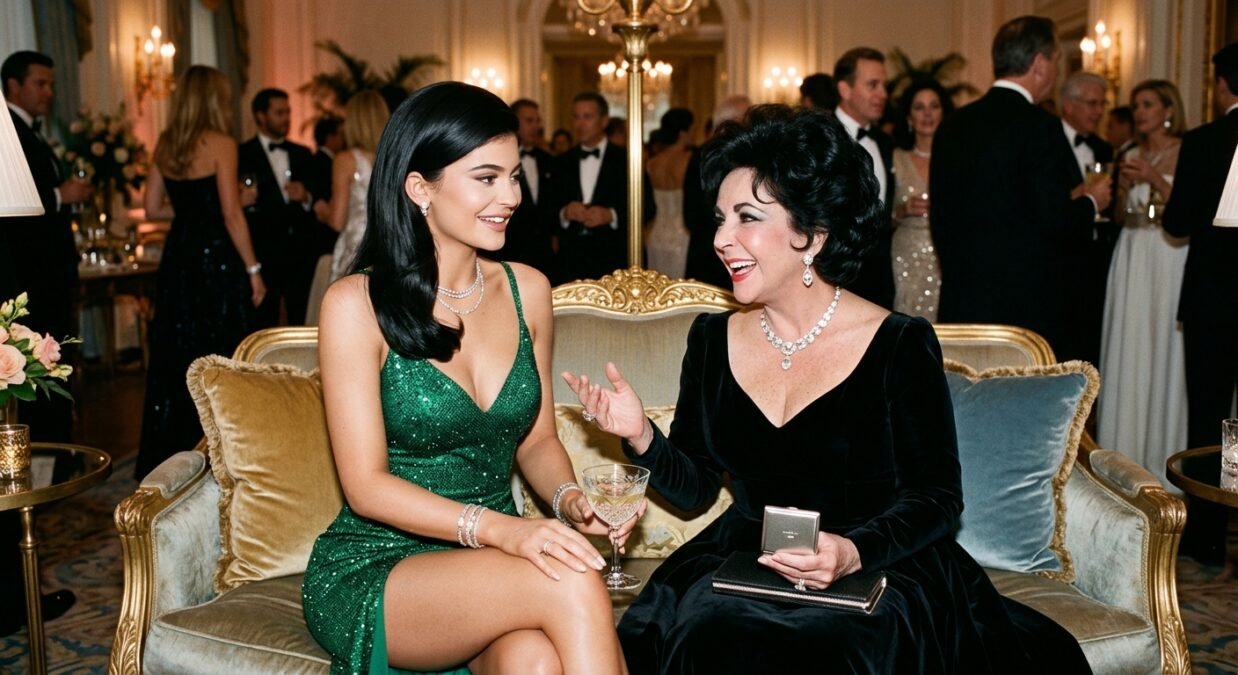

Introduction to Kylie Jenner and Elizabeth Taylor
Kylie Jenner and Elizabeth Taylor are two famous women from different generations who have made a lasting impact on popular culture. Although they became well known in different ways, both have influenced beauty trends, fashion, celebrity culture, and the way the public views famous women. Elizabeth Taylor became a legendary Hollywood actress, while Kylie Jenner built a modern career through reality television, social media, and the beauty industry.
At first glance, their lives may seem very different. Taylor belonged to the golden age of Hollywood, when movie stars attracted worldwide attention through films, magazine covers, and public appearances. Jenner, on the other hand, rose to fame during the digital age, when social media allows celebrities to communicate directly with millions of followers.
However, there are interesting connections between their careers. Both women understood the importance of personal style, a recognizable public image, and business opportunities. They also showed how beauty and celebrity can become powerful parts of a person’s professional identity.
In this article, we’ll explore their backgrounds, careers, beauty influence, fashion choices, business achievements, and cultural importance. We’ll also examine their similarities and differences while separating established facts from assumptions about their personal lives.
Who Is Kylie Jenner?


Kylie Jenner is an American media personality and businesswoman who became famous through reality television. Born on August 10, 1997, she grew up in a family that was already receiving significant public attention. Her parents are Kris Jenner and Caitlyn Jenner, and her older half-siblings include Kim Kardashian, Kourtney Kardashian, and Khloé Kardashian.
Kylie first appeared on television through the reality series Keeping Up with the Kardashians, which premiered in 2007. The program introduced viewers to her family life and helped turn the Kardashian-Jenner family into a major part of international entertainment culture.
As Kylie grew older, she developed her own public identity. Rather than remaining known only as a reality television personality, she explored fashion, cosmetics, and entrepreneurship.
Kylie Jenner’s Rise to Fame
Kylie’s fame grew as social media became an important part of everyday life. Platforms such as Instagram gave her opportunities to share beauty looks, fashion choices, product announcements, and moments from her personal life.
Her growing audience helped her understand what many young consumers were interested in, particularly makeup and skincare. This connection between celebrity and consumer culture became an important part of her business strategy.
Some key stages in her career include:
- Reality television: She gained early recognition through her family’s television series.
- Social media: She built a large online audience and became an influential figure in digital culture.
- Cosmetics: She launched Kylie Cosmetics in 2015, beginning with products that included her well-known lip kits.
- Fashion and lifestyle: She continued to expand her presence through clothing, beauty collaborations, and public appearances.
- Entrepreneurship: She developed a commercial identity beyond television and celebrity appearances.
Kylie’s journey shows how modern fame can create opportunities in several industries at once. Her success also reflects the growing relationship between online influence, branding, and shopping habits.
Kylie Jenner’s Beauty Influence
Kylie Jenner is particularly associated with modern makeup trends. Her beauty looks have included defined lips, sculpted makeup, carefully styled eyebrows, and polished skin.
The launch of Kylie Cosmetics helped turn her personal beauty image into a commercial brand. Her first lip kits attracted attention from customers who wanted to recreate the makeup style associated with her public appearances.
Nevertheless, beauty trends constantly change. Kylie’s influence is best understood as part of a larger industry that includes professional makeup artists, beauty creators, cosmetic companies, and consumers.
Her career demonstrates that a recognizable personal style can become a business opportunity when it connects with a clear audience.
Who Was Elizabeth Taylor?


Elizabeth Taylor was one of the most celebrated actresses in Hollywood history. Born on February 27, 1932, in London, England, she began acting as a child and eventually became an international movie star. Her career lasted for decades, and she earned recognition for her acting talent, distinctive appearance, glamorous fashion, and strong personality.
Taylor was especially known for her striking violet-blue eyes, dark hair, and elegant style. However, her achievements went far beyond her appearance. She received two Academy Awards for Best Actress and became an influential businesswoman and humanitarian.
According to her official biography, she also helped change the relationship between celebrity and business by building a successful fragrance brand and negotiating major film contracts.
Elizabeth Taylor’s Journey in Hollywood
Elizabeth Taylor began her screen career at a young age. Her early films introduced audiences to a talented young performer who would later become one of the most recognizable faces in the entertainment industry.
Her career included several major films, such as:
- National Velvet (1944), which helped establish her as a young star.
- A Place in the Sun (1951), a respected drama that strengthened her reputation as a serious actress.
- Giant (1956), a major film featuring an acclaimed cast.
- Cat on a Hot Tin Roof (1958), which earned her an Academy Award nomination.
- BUtterfield 8 (1960), for which she won her first Academy Award for Best Actress.
- Who’s Afraid of Virginia Woolf? (1966), which earned her a second Best Actress Oscar.
- Cleopatra (1963), a historical epic that became closely associated with her glamorous public image.
These films demonstrate that Taylor’s reputation wasn’t based on appearance alone. She developed a long career through acting, professional skill, and the ability to portray complex characters.
Elizabeth Taylor’s Influence on Beauty and Fashion
Elizabeth Taylor helped define glamour during the classic Hollywood era. Her public appearances often featured elegant gowns, dramatic makeup, carefully styled hair, and beautiful jewelry.
Her makeup style remains recognizable today. Dark eyeliner, defined lashes, and strong brows were important features of many of her famous looks. Her appearance in Cleopatra also became a lasting reference point for dramatic eye makeup.
Taylor’s personal jewelry collection attracted considerable attention, too. She was known for wearing impressive diamonds, colored gemstones, and other valuable pieces. These accessories helped create a distinctive style that blended Hollywood glamour with personal expression.
Her approach to beauty offers several lessons:
- A recognizable style can become part of a person’s public identity.
- Fashion can communicate confidence and personality.
- Classic beauty trends can return in new forms.
- Accessories can help make a simple outfit more memorable.
- Professional achievements are an important part of a lasting legacy.
Although modern beauty standards differ from those of Taylor’s era, her influence continues through vintage fashion, film-inspired makeup, jewelry design, and celebrity styling.
Kylie Jenner and Elizabeth Taylor: What Connects Them?
The connection between Kylie Jenner and Elizabeth Taylor is best understood through their shared influence on beauty, business, and celebrity culture. They lived in different periods, but both understood how a public image could become a valuable part of a professional career.
There is no need to assume that they had a personal relationship or worked together to recognize these connections. Their careers can be compared through documented achievements and the different ways they reached audiences.
Their Shared Interest in Beauty
Beauty played an important role in both women’s public identities.
Kylie Jenner became associated with contemporary makeup trends and cosmetics products. Elizabeth Taylor became famous for classic Hollywood glamour and later built a fragrance business.
Their approaches reflected the expectations of their respective eras. Kylie could use online photographs, product launches, and social media campaigns to reach customers directly. Taylor relied more heavily on films, magazines, public appearances, advertising, and traditional media.
Despite these differences, both women demonstrated how a recognizable beauty image could help support a commercial brand.
Their Entrepreneurial Thinking
Both women explored business opportunities beyond their original careers.
Kylie developed a cosmetics company that turned her public image into a modern beauty business. Taylor built a fragrance business that connected her personal taste and glamorous identity with products sold to consumers.
Their careers show that celebrities can use public recognition to introduce products, attract attention, and build commercial partnerships.
Still, celebrity recognition doesn’t automatically guarantee long-term business success. Product quality, customer trust, pricing, distribution, and changing consumer preferences all matter.
Their Influence on Different Generations
Kylie and Elizabeth reached audiences through different communication systems.
Elizabeth became famous when Hollywood studios and traditional entertainment media played a central role in creating stars. Kylie rose to prominence when television, internet platforms, and social media became increasingly connected.
Their influence reflects a broader change in celebrity culture. In Taylor’s era, audiences often learned about stars through cinema and magazines. In Kylie’s era, fans can follow public figures through daily posts, short videos, livestreams, and online shopping platforms.
This shift has changed how beauty trends spread and how quickly consumers can respond to new products.
Comparing Kylie Jenner and Elizabeth Taylor
The following table summarizes the main similarities and differences between these two influential women.
| Category | Kylie Jenner | Elizabeth Taylor |
|---|---|---|
| Birth year | 1997 | 1932 |
| Main career | Media personality and entrepreneur | Actress and humanitarian |
| Early recognition | Reality television | Child acting and Hollywood films |
| Beauty influence | Contemporary makeup and cosmetics | Classic Hollywood makeup and glamour |
| Business activities | Cosmetics, skincare, and brand partnerships | Fragrances and business ventures |
| Main communication era | Social media and digital platforms | Cinema, magazines, and traditional media |
| Notable business brand | Kylie Cosmetics | Elizabeth Taylor fragrance collection |
| Philanthropic legacy | Public involvement in charitable activities has varied over time | Major, well-documented HIV/AIDS advocacy |
| Cultural legacy | Digital celebrity and beauty entrepreneurship | Film history, glamour, and humanitarian advocacy |
The table highlights an important distinction: although both women used their fame to develop commercial opportunities, their overall legacies are not identical. Taylor’s film achievements and public health advocacy are central to her historical importance, while Jenner’s influence is especially associated with digital culture and beauty entrepreneurship.
The Business Success Behind Their Beauty Brands
Beauty businesses offer a useful way to understand the professional similarities between these celebrities.
Kylie Cosmetics and the Digital Beauty Market
Kylie Jenner launched Kylie Cosmetics in November 2015. The brand initially attracted attention through lip kits, which combined lip liner and liquid lipstick. Its launch demonstrated the commercial potential of connecting a celebrity’s personal beauty image with products sold directly to consumers.
Coty, the beauty company that acquired a 51% stake in Kylie’s beauty brands in 2020, described the business as an example of a direct-to-consumer model that connected with a younger audience.
Several factors helped the brand attract attention:
- Personal branding: Customers could connect the products with Kylie’s recognizable makeup style.
- Online marketing: Social media helped spread product announcements and beauty looks.
- Product identity: Lip kits gave the brand a clear starting point.
- Customer engagement: Online conversations helped make launches part of celebrity news.
- Retail expansion: Partnerships created opportunities to reach shoppers beyond the brand’s own website.
However, the beauty industry is competitive. New products, customer reviews, price expectations, and changing preferences all influence whether a brand can maintain its position.
Elizabeth Taylor’s Fragrance Business
Elizabeth Taylor also demonstrated that a celebrity could build a business around personal style. Her fragrance venture began with Passion in 1987 and later included White Diamonds, one of her best-known fragrances.
Taylor’s approach was significant because celebrity beauty businesses were less common in her early career than they are today. She helped establish a model in which a famous person’s name and image could become central to a consumer product.
What Modern Entrepreneurs Can Learn
Kylie and Elizabeth offer several useful lessons for people who want to build a business.
- Create a clear identity. Customers should understand what makes a brand different.
- Know the audience. Products should respond to real needs and preferences.
- Build trust. Honest communication and consistent quality matter.
- Adapt to change. Consumer tastes and marketing platforms evolve.
- Think beyond fame. A business needs effective operations, not just attention.
- Develop lasting value. Products and services should offer something useful to customers.
Their careers show that branding can create opportunities, but lasting commercial success requires more than a recognizable name.
Elizabeth Taylor’s Humanitarian Work and Social Impact
One of the most important differences between Kylie Jenner and Elizabeth Taylor is the historical significance of Taylor’s humanitarian work. Although Taylor was famous for her beauty, acting, and glamorous lifestyle, she also became a major advocate for people affected by HIV and AIDS.
During the early years of the AIDS crisis, many people faced discrimination, fear, and a lack of public understanding. Taylor used her fame to challenge these attitudes and encourage greater support for medical research and patient care.
According to the official Elizabeth Taylor AIDS Foundation, she established the foundation in 1991 to support people living with HIV and AIDS. She also helped establish the American Foundation for AIDS Research, known as amfAR, in 1985.
The Elizabeth Taylor AIDS Foundation
Her work included:
- Raising funds for AIDS research and care.
- Speaking publicly against discrimination and stigma.
- Encouraging government leaders to respond to the crisis.
- Supporting organizations that provided services to affected communities.
- Using interviews and public appearances to educate people.
Taylor’s advocacy demonstrates that celebrity influence can serve purposes beyond entertainment and commerce. She used her public position to draw attention to a serious health crisis at a time when many people were reluctant to discuss it.
Her humanitarian legacy remains an important part of her story, alongside her acting achievements and business ventures.
Fashion Trends: From Classic Hollywood to Modern Celebrity Style


10
Fashion provides another interesting way to compare these two women.
Elizabeth Taylor’s style reflected the glamour of classic Hollywood. Formal gowns, statement jewelry, dramatic eye makeup, and elegant hairstyles were important features of her public image. Her appearance often created a sense of timeless sophistication.
Kylie Jenner’s fashion choices reflect a more varied modern environment. She has appeared in contemporary designer clothing, dramatic red-carpet outfits, streetwear, and experimental beauty looks. Social media allows these outfits to reach audiences around the world almost immediately.
How Their Fashion Influence Differs
Elizabeth Taylor’s fashion influence
- Helped popularize glamorous Hollywood styling.
- Made statement jewelry a recognizable part of her public image.
- Inspired vintage-inspired makeup and eveningwear.
- Connected elegance with strong personal expression.
Kylie Jenner’s fashion influence
- Helps introduce contemporary beauty and clothing trends to online audiences.
- Uses social platforms to share looks with fans.
- Appears in fashion campaigns and designer collaborations.
- Reflects the fast-changing relationship between celebrity culture and digital marketing.
Neither approach is limited to one period. Taylor-inspired glamour can still appear in modern fashion, while contemporary trends may borrow ideas from earlier Hollywood stars.
Fashion evolves by combining older influences with new ideas, and these two celebrities represent different parts of that ongoing process.
Social Media Versus Traditional Celebrity Culture
The difference between their generations becomes especially clear when we look at how audiences receive information.
Elizabeth Taylor became famous before social media existed. Her public image developed through films, newspaper stories, interviews, magazine photographs, and public appearances. Her most famous roles gave audiences a way to connect her name with particular characters and styles.
Kylie Jenner grew up during the expansion of digital media. She can share content directly with her audience and introduce products through online platforms. Her business journey is often discussed as an example of the relationship between social media visibility and consumer marketing.
Here are some important differences:
| Feature | Traditional celebrity culture | Digital celebrity culture |
|---|---|---|
| Main communication | Films, magazines, television, newspapers | Social media, streaming, websites, and television |
| Audience contact | Often indirect | Can be direct and frequent |
| Trend development | Often spread through media and retail over time | Can spread rapidly online |
| Product promotion | Advertising, endorsements, and print campaigns | Online launches, videos, posts, and collaborations |
| Public feedback | Letters, interviews, and traditional media coverage | Comments, shares, reviews, and online discussion |
| Main challenge | Limited direct communication with audiences | Constant visibility and rapid public reactions |
These differences don’t mean that one era is more important than the other. Instead, they show how technology has changed the way public figures build reputations and connect with consumers.
Public Image, Privacy, and Beauty Standards
Both Kylie Jenner and Elizabeth Taylor have experienced intense public interest in their appearance. Their stories also raise important questions about beauty standards and the pressure that comes with fame.
Celebrity photographs often show carefully styled hair, professional makeup, designer clothing, and controlled lighting. These images can be entertaining and inspiring, but they don’t always represent everyday life.
For young audiences in particular, it’s important to understand that beauty images are often created with help from professional teams, photography, editing, and styling.
A balanced approach to celebrity culture includes several principles:
- Enjoy inspiration without demanding perfection. Makeup and fashion can be creative activities rather than rules everyone must follow.
- Recognize individual differences. People have different facial features, budgets, preferences, and needs.
- Think critically about advertising. A product promoted by a celebrity may not work equally well for every customer.
- Respect privacy. Public recognition doesn’t mean every part of a person’s life should be open to public discussion.
- Value achievements beyond appearance. Acting, entrepreneurship, advocacy, and creativity deserve attention, too.
Kylie and Elizabeth’s careers show how strongly appearance can influence celebrity identity. At the same time, their wider professional achievements demonstrate why it is important to look beyond photographs and headlines.
Common Questions About Kylie Jenner and Elizabeth Taylor
Were Kylie Jenner and Elizabeth Taylor Related?
There is no established family relationship between Kylie Jenner and Elizabeth Taylor. They belong to different generations and are known for separate careers in entertainment, beauty, and business.
Did Kylie Jenner and Elizabeth Taylor Work Together?
There is no widely documented professional collaboration between them. Their connection in this article is a comparison of their influence on beauty, fashion, business, and celebrity culture rather than a claim that they worked together.
Why Are Both Women Associated With Beauty?
Kylie Jenner is widely associated with contemporary makeup and cosmetics entrepreneurship. Elizabeth Taylor became famous for her Hollywood appearance, dramatic makeup, jewelry, and fragrance business.
Both developed recognizable public images that became closely connected with beauty products and trends.
What Was Elizabeth Taylor Most Famous For?
Elizabeth Taylor was famous for her long acting career, films such as Cleopatra and Who’s Afraid of Virginia Woolf?, her glamorous style, and her humanitarian advocacy. Her work raising awareness and funds for people affected by HIV and AIDS remains a major part of her legacy.
What Made Kylie Jenner Famous?
Kylie Jenner first gained widespread recognition through Keeping Up with the Kardashians. She later developed a large social media presence and launched Kylie Cosmetics, becoming a prominent figure in beauty entrepreneurship.
What Can Readers Learn From Their Careers?
Their careers show that public recognition can create opportunities in business, entertainment, and advocacy. They also demonstrate the importance of developing a distinctive identity, understanding an audience, adapting to cultural change, and building a legacy beyond short-term attention.
Conclusion: The Lasting Legacy of Kylie Jenner and Elizabeth Taylor
Kylie Jenner and Elizabeth Taylor represent two different periods in the history of celebrity culture. Taylor became a Hollywood legend through her acting talent, glamorous style, successful fragrance business, and important humanitarian work. Jenner developed a modern public identity through reality television, social media, cosmetics, and entrepreneurship.
Their stories share several themes. Both women developed recognizable personal brands, influenced beauty trends, attracted international attention, and explored commercial opportunities connected to their public images. Yet their achievements also reflect the different opportunities and expectations of their generations.
Elizabeth Taylor’s legacy reaches beyond fashion and entertainment because of her lasting contribution to HIV/AIDS advocacy. Kylie Jenner’s career illustrates how digital platforms can help transform celebrity recognition into a contemporary beauty business.
Ultimately, Kylie Jenner and Elizabeth Taylor offer valuable examples of how fame, personal style, and business can shape popular culture. Their careers remind us that influence takes many forms, and that a lasting legacy can include creative achievements, commercial innovation, and meaningful contributions to society.
Files, images, and data analysis are unavailable until usage resets tomorrow at 2:03 AM. Continue chatting with text only, or upgrade for more access.
Try Plus free
Think
To pick up a draggable item, press the space bar. While dragging, use the arrow keys to move the item. Press space again to drop the item in its new position, or press escape to cancel.
To pick up a draggable item, press the space bar. While dragging, use the arrow keys to move the item. Press space again to drop the item in its new position, or press escape to cancel.
Kylie Jenner and Elizabeth Taylor: More Interesting Facts, Beauty Secrets, and Cultural Influence — Part 2
The Different Paths to International Fame
Kylie Jenner and Elizabeth Taylor became famous in very different ways, yet both developed public identities that attracted attention across generations. Their stories show how the meaning of celebrity has changed over time.
Elizabeth Taylor entered the entertainment industry as a child actress. Her early film roles helped her gain recognition, and her performances in major Hollywood productions later established her as a respected actress. Her fame grew through cinema, interviews, magazine covers, and public appearances.
Kylie Jenner’s rise followed a different path. Reality television introduced her to audiences, while social media helped her build a personal brand. Instead of relying mainly on acting roles, she expanded into cosmetics, fashion, and other commercial projects.
These journeys reveal two important lessons:
- Talent and a recognizable identity can help someone build a lasting career.
- The opportunities available to celebrities depend partly on the technology and culture of their time.
Neither woman’s career can be explained by appearance alone. Both developed public identities through professional activities, business decisions, and their interactions with audiences.
The Role of Makeup in Their Public Images


9
Makeup is one of the clearest areas in which Kylie Jenner and Elizabeth Taylor can be compared.
Elizabeth Taylor was known for dramatic eyes, dark lashes, defined brows, and glamorous evening makeup. Her appearance in Cleopatra became especially memorable because of the film’s bold eye makeup and elaborate costumes.
Kylie Jenner is associated with modern makeup trends, including defined lips, sculpted facial makeup, and polished beauty looks. Her cosmetics brand helped make some of these styles more accessible to customers interested in recreating celebrity-inspired makeup.
How to Recreate Their Different Beauty Styles
You don’t need expensive products to experiment with either look.
For an Elizabeth Taylor-inspired look:
- Apply a comfortable base product that suits your skin.
- Use eyeliner to create a defined, dramatic eye.
- Add mascara to emphasize the lashes.
- Shape the eyebrows while keeping them natural to your features.
- Finish with a classic lipstick shade and a simple hairstyle.
For a Kylie Jenner-inspired look:
- Start with moisturizer and a suitable makeup base.
- Apply foundation or a lighter complexion product if desired.
- Blend a soft contour or bronzer for definition.
- Use lip liner and lipstick in complementary shades.
- Add a subtle highlight and finish with a setting product if needed.
The key is to treat these styles as inspiration rather than strict beauty rules. Everyone’s face is different, and makeup should be enjoyable, comfortable, and suited to personal taste.
Their Influence on the Beauty Industry
The careers of Kylie Jenner and Elizabeth Taylor demonstrate how celebrities can influence the products people buy.
Kylie Cosmetics connected a recognizable social media personality with a beauty business. Elizabeth Taylor’s fragrance collection connected her Hollywood image with perfumes that consumers could purchase.
Although their products belong to different categories, both examples show the commercial value of a consistent brand identity.
Celebrity Branding in the Modern Market
Celebrity beauty businesses often depend on several elements:
- A clear brand identity.
- Products designed for a particular audience.
- Marketing that communicates the product’s purpose.
- Reliable quality and customer service.
- Distribution that makes products easy to purchase.
However, an attractive brand story isn’t enough by itself. Consumers increasingly compare ingredients, prices, reviews, and product performance before making a purchase.
This is an important lesson for anyone interested in entrepreneurship: a celebrity can attract initial attention, but the product must provide value if customers are going to return.
Jewelry, Luxury, and Personal Expression
Elizabeth Taylor’s love of fine jewelry became a major part of her public identity. She was associated with exceptional gemstones and diamonds, including the famous Taylor-Burton Diamond. Her jewelry collection was widely discussed because it combined historical importance, rarity, and personal style.
Kylie Jenner’s fashion image belongs to a different luxury environment. Her public appearances have included designer clothing, statement accessories, and modern red-carpet looks.
Their approaches show that luxury can communicate different ideas. For Taylor, jewelry often formed part of classic Hollywood glamour. For Jenner, accessories may be incorporated into a contemporary fashion image shaped by designers, styling, and social media.
Still, personal style doesn’t have to depend on expensive purchases. People can create elegant looks with affordable accessories, vintage pieces, and items they already own.
The Importance of Business Identity
A recognizable identity helps customers understand what a brand represents. Both women demonstrate this principle in different ways.
Elizabeth Taylor’s fragrance business used her name and glamorous reputation to connect perfumes with a particular image of elegance. Kylie Jenner’s cosmetics business used her association with contemporary beauty trends to attract consumers interested in makeup.
For new business owners and content creators, their experiences suggest several useful ideas:
- Choose a clear topic or market.
- Understand the audience you want to reach.
- Develop a consistent visual identity.
- Communicate honestly about products and services.
- Focus on quality instead of relying only on publicity.
- Build a reputation that can survive changing trends.
These principles apply to beauty companies, online stores, blogs, and many other kinds of businesses.
How Their Legacies Continue Today
Elizabeth Taylor remains an important figure in film history. Her performances continue to be discussed by film fans, while her fashion choices inspire photographers, makeup artists, and designers. Her humanitarian work also provides an example of using fame to support a public cause.
Kylie Jenner’s influence continues through modern celebrity culture, beauty entrepreneurship, and digital marketing. Her career illustrates how a public figure can communicate directly with an audience and use online visibility to promote a business.
Their legacies are different, but each helps explain an important part of popular culture.
Elizabeth Taylor represents the enduring power of classic cinema and Hollywood glamour. Kylie Jenner represents the changing relationship between celebrity, social media, and consumer brands.
Final Thoughts on Kylie Jenner and Elizabeth Taylor
Kylie Jenner and Elizabeth Taylor demonstrate that fame can take many forms. One became a celebrated actress and humanitarian, while the other developed a career across reality television, beauty, and entrepreneurship.
Their shared interest in personal branding, fashion, and beauty offers useful lessons for readers who want to understand celebrity culture. Their differences are equally important because they reveal how entertainment, technology, and business have changed across generations.
Ultimately, Kylie Jenner and Elizabeth Taylor remain interesting subjects not because their lives are identical, but because their careers show two distinct ways that public figures can influence beauty, business, and culture.
Think
To pick up a draggable item, press the space bar. While dragging, use the arrow keys to move the item. Press space again to drop the item in its new position, or press escape to cancel.
Explore more insightful articles on All Vantage News and never miss an update.Contact Us