
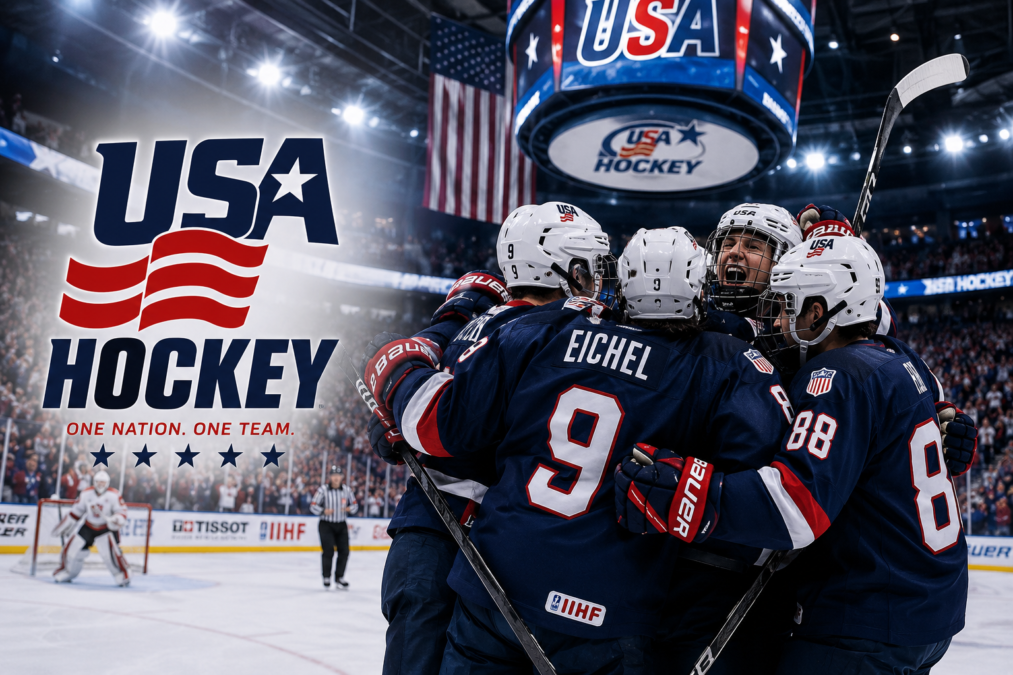

usa hockey: An Introduction to the American Game
usa hockey represents much more than a national team wearing red, white, and blue. It refers to the broad American ice hockey system that supports players, coaches, officials, families, volunteers, youth programs, junior leagues, national teams, and international competition.
USA Hockey is the national governing organization for amateur ice hockey in the United States. According to its official information, the organization provides the foundation for ice hockey in America and is represented in all 50 states, with more than one million players, coaches, officials, parents, and volunteers connected to the organization.
The organization has a long history. It began on October 29, 1937, as the Amateur Hockey Association of the United States, commonly known as AHAUS. The organization adopted the name USA Hockey in June 1991. Today, its headquarters are in Colorado Springs, Colorado.
What makes usa hockey especially interesting is its development system. Young players can begin at local rinks and, depending on their goals and abilities, move through youth hockey, high school or prep hockey, junior hockey, college hockey, professional hockey, and national-team programs.
The journey isn’t always easy, of course. Hockey requires speed, balance, discipline, teamwork, and plenty of practice. But the American system has continued to develop, creating opportunities for players at many different levels.
The History Behind usa hockey
The roots of usa hockey go back to the late 1930s.
USA Hockey’s history began when AHAUS was established in 1937. The organization later grew into the national body responsible for supporting amateur hockey across the United States.
One early milestone came in 1938, when the organization crowned its first national champion. The Hershey Bears won the Senior Open title after defeating Detroit Holzbaugh Ford in a three-game series.
Youth competition also became an important part of the organization’s development. Over the decades, thousands of players have participated in USA Hockey national championships, and many later reached professional hockey, including the NHL.
This history shows something important: American hockey wasn’t built overnight.
It developed through local clubs, youth programs, schools, colleges, coaches, volunteers, national competitions, and international opportunities.
Today, that long history provides the foundation for a much larger hockey community.
How usa hockey Is Organized
USA Hockey operates across the country through a network of geographical districts and affiliates.
The organization states that it is divided into 12 geographical districts, with 34 affiliates providing formal governance within those districts.
This structure allows hockey programs to operate at the local level while remaining connected to national standards and development goals.
USA Hockey supports several major areas, including:
- Youth hockey
- Junior hockey
- Adult hockey
- Women’s and girls’ hockey
- Disabled hockey
- Coaching education
- Officiating
- Player development
- National championships
- National teams
- Safety and Safe Sport programs
This broad structure is important because not every player wants to become a professional.
Some players simply want to enjoy the sport with friends. Others dream about college hockey, the NHL, international competition, or representing the United States.
A strong national system needs room for all of them.
The American Development Model
One of the most important ideas in modern usa hockey is the American Development Model, commonly called the ADM.
USA Hockey launched the American Development Model in 2009. It was designed to provide hockey organizations with guidance for age-appropriate athlete development.
The basic idea is straightforward: young players shouldn’t be trained exactly like professional athletes.
Children are still developing physically, mentally, and emotionally. Their training needs to match their age and stage of development.
The model focuses on areas such as:
- Skill development
- Age-appropriate training
- Enjoyment of the game
- Long-term development
- Athletic movement
- Competition
- Player confidence
- Coaching education
This approach has helped shape the way many American youth programs think about player development.
Rather than rushing young athletes toward one narrow goal, the development model encourages a broader and more sustainable approach.
Youth Hockey and usa hockey
Youth hockey is one of the biggest foundations of usa hockey.
Children often begin by learning basic skating before developing puck-handling, passing, shooting, positioning, and game awareness.
A young player may start with introductory programs and gradually move into organized teams.
A typical development journey can include:
| Development Stage | Main Focus |
|---|---|
| Beginner hockey | Skating and basic movement |
| Youth hockey | Skills, teamwork, and game awareness |
| Advanced youth | Competition and individual development |
| High school or prep | Higher-level competition and academics |
| Junior hockey | Advanced development and exposure |
| College hockey | High-level competition and education |
| Professional hockey | Full-time elite competition |
| National team | International representation |
Not every player follows this exact route.
That’s important.
USA Hockey’s development system includes multiple pathways because athletes mature at different rates. A player who isn’t ready at one age may develop quickly later.
In other words, hockey development isn’t a straight line.
The National Team Development Program
The National Team Development Program, or NTDP, is one of the most recognized parts of usa hockey.
USA Hockey launched the NTDP in 1996. The program was initially based in Ann Arbor, Michigan, and is now based at USA Hockey Arena in Plymouth, Michigan.
The program includes:
- U.S. National Under-17 Team
- U.S. National Under-18 Team
The teams play against strong competition, including USHL teams, college opponents, and international teams.
The purpose isn’t simply to win every game.
USA Hockey explains that the NTDP evaluates success through player development and the experience gained from competing against older and highly skilled opponents.
That’s a powerful concept.
A young player might lose a game but learn something that improves their career for years.
NTDP’s Impact on American Hockey
The National Team Development Program has played a major role in the growth of American hockey.
USA Hockey reports that players from the program have contributed to major international successes. The U.S. has won multiple IIHF World Under-18 and World Junior Championship gold medals with teams largely made up of NTDP players.
The program has also helped develop players who later became NHL stars.
This includes players such as:
- Patrick Kane
- Jack Johnson
- Ryan Kesler
- Seth Jones
- Other NHL and international players
USA Hockey’s development pathway has therefore become an important bridge between youth hockey and elite competition.
It isn’t the only route to the top, but it is a significant one.
The Path From Youth Hockey to the NHL
For young players dreaming of professional hockey, the American pathway can provide several opportunities.
USA Hockey describes a development route that can begin with youth hockey and continue through high school or prep school, junior hockey, college hockey, and eventually the NHL.
One possible pathway looks like this:
Youth hockey → High school or prep hockey → Junior hockey → College hockey → NHL
However, players can take different routes.
Some move into junior hockey earlier. Others remain with high school or prep programs. Some develop through different regional programs before entering college.
This flexibility matters because every athlete develops differently.
The goal isn’t necessarily to make every player follow the same path.
The goal is to create enough opportunities for talented and dedicated players to find the route that suits them best.
Junior Hockey in the United States
Junior hockey plays a major role in American player development.
Two important junior organizations connected to the broader American pathway are the United States Hockey League and the North American Hockey League.
USA Hockey describes junior hockey as an important stage between youth hockey and higher levels of competition.
Junior hockey can provide players with:
- Strong competition
- Professional-style training
- Exposure to scouts
- Physical development
- Tactical education
- Opportunities for college recruitment
- Experience playing against older athletes
The United States Hockey League, in particular, has become a significant development league for players preparing for college hockey and beyond.
Still, junior hockey isn’t the only option.
Players can continue developing through high school, prep school, college, and other recognized pathways.
College Hockey and usa hockey
College hockey is another major part of the American system.
The United States has a large network of college hockey programs, including NCAA teams.
College hockey offers a unique combination of athletic competition and education.
For many players, this is a major advantage.
A student-athlete can develop their hockey skills while also working toward a degree.
The college route can also provide valuable experience for players who later enter professional hockey.
Many NHL players have come through American college hockey programs. The system has therefore become an important bridge between junior-level competition and professional hockey.
For young athletes, the message is encouraging: you don’t necessarily have to choose between education and high-level hockey.
With the right planning, both can be part of the same journey.
Women’s Hockey and usa hockey
Women’s hockey has become an increasingly important part of usa hockey.
USA Hockey supports girls’ and women’s hockey through development programs, national teams, camps, and competitions.
The American women’s national program has become one of the world’s leading hockey programs.
Young girls can participate in local youth hockey before moving toward:
- Girls’ youth hockey
- High school hockey
- Prep hockey
- College hockey
- National development programs
- Professional hockey
- U.S. national teams
This growth has helped create more opportunities for female athletes.
The development of women’s hockey is important not only for elite competition but also for increasing participation at the grassroots level.
When young girls see successful athletes representing the United States, they can imagine themselves doing the same thing.
That’s how a sport grows.
Player Development Camps
USA Hockey’s player development camps are another important part of the system.
The development-camp tradition dates back to 1977. In 2026, close to 1,000 players are participating in USA Hockey development camps, according to USA Hockey.
These camps give talented young players an opportunity to:
- Train with high-level coaches
- Compete against strong players
- Learn new skills
- Receive evaluations
- Meet other talented athletes
- Gain exposure to scouts
- Prepare for future national opportunities
Camps can be valuable because players aren’t only evaluated during ordinary league games.
They get a chance to demonstrate how they respond to new coaching, unfamiliar teammates, and strong competition.
Sometimes, that’s where a young player’s potential becomes easier to recognize.
Coaching and Officiating
A successful hockey system needs more than talented players.
It needs good coaches and knowledgeable officials.
USA Hockey provides education and certification programs for coaches and officials. The organization says its programs are designed to help maintain standards appropriate to different levels of play.
Good coaching can influence a player’s entire experience.
A strong coach teaches more than:
- Passing
- Shooting
- Skating
- Defense
- Team systems
Coaches also help players learn:
- Discipline
- Communication
- Leadership
- Responsibility
- Resilience
- Sportsmanship
Officials are equally important.
Referees and other officials help enforce the rules and create a fair environment where players can compete safely.
Safety in usa hockey
Safety is an essential part of modern hockey.
Ice hockey is fast and physical, so players need proper equipment, coaching, rules, and supervision.
USA Hockey has placed significant emphasis on safety and operates the Safe Sport Program.
Important safety habits include:
- Wearing properly fitted equipment
- Using an approved helmet
- Following rink rules
- Learning safe checking techniques where applicable
- Respecting officials
- Reporting injuries
- Following return-to-play guidance
- Creating a positive team environment
Parents also play an important role.
USA Hockey provides parent education on topics such as equipment, rules, and the role of parents in youth sports.
A safe hockey environment benefits everyone.
National Championships
USA Hockey national championships are major events within American amateur hockey.
The history of these championships goes back decades. The first USA Hockey national champion was crowned in 1938.
Over the years, national tournaments have provided young players with opportunities to compete against some of the strongest teams in the country.
Winning a national championship is a significant achievement.
But the value isn’t only about the trophy.
Players also gain:
- Tournament experience
- Confidence
- Exposure to strong competition
- Team memories
- Leadership opportunities
- Lessons about preparation and pressure
For many athletes, national tournaments become unforgettable parts of their hockey careers.
International Competition and Team USA
One of the most exciting parts of usa hockey is international competition.
Team USA competes in major international tournaments, including IIHF championships and Olympic events.
American players have achieved significant success at the junior and under-18 levels. USA Hockey’s NTDP information highlights multiple U.S. gold-medal finishes at the IIHF World Junior Championship and World Under-18 Championship.
At the senior level, the United States has also produced memorable international performances.
Through the 2025 4 Nations Face-Off, the U.S. had earned one NHL international tournament championship, winning the 1996 World Cup of Hockey. The team also finished second at the 2025 4 Nations Face-Off.
International hockey creates a special kind of pressure.
Players aren’t simply representing themselves or their club.
They’re representing their country.
Recent Success and the Future of usa hockey
The future of usa hockey looks promising.
USA Hockey reported that American Olympic ice hockey and Paralympic sled hockey teams won three gold medals in 2026. The organization connected those achievements with decades of player development and continued investment in development camps.
This shows how long-term development can produce results.
A championship isn’t usually created by one tournament.
It begins years earlier when a child learns to skate, when a coach teaches a basic skill, when a parent drives to an early-morning practice, and when a teenager receives an opportunity to compete against stronger players.
Little by little, those experiences build elite athletes.
The New USA Hockey Development League
USA Hockey is also continuing to evolve its player-development structure.
The organization approved a new Development League framework at its 2026 Winter Meeting. The league is scheduled to begin operations in the 2027-28 season.
The Development League is designed to provide another player-development pathway, particularly for the 15U and 17U age groups.
USA Hockey says the initial framework is planned around 32 programs, with teams at both age levels.
Importantly, the Development League is not intended to replace Tier I hockey.
Instead, it is designed to work with the existing youth hockey system.
This is another sign that American hockey development is continuing to evolve.
What Makes usa hockey Successful?
There isn’t one single reason for the growth of usa hockey.
Several factors work together.
More Participation
A larger player base creates more opportunities to discover talented athletes.
Better Development
Programs such as the American Development Model and NTDP have helped improve structured development.
Strong Competition
American players have opportunities to compete against talented athletes from across the country and internationally.
College Hockey
College programs provide another important development stage.
Professional Opportunities
The NHL gives elite players a clear professional goal.
Coaching Education
Better-educated coaches can create better learning environments.
National Programs
Development camps and national teams allow top players to receive additional training.
Together, these elements create a stronger hockey ecosystem.
Challenges Facing American Hockey
Despite its growth, usa hockey still faces challenges.
Ice hockey can be expensive because families may need to pay for equipment, ice time, travel, registration, coaching, and tournaments.
Access to ice can also vary by region.
States with long hockey traditions may have more rinks and established programs than areas where the sport is newer.
Another challenge is ensuring that players from different backgrounds have opportunities to participate.
Growing the game means making hockey accessible to more communities.
The sport also needs to keep improving safety, coaching, player development, and education.
These challenges aren’t reasons for pessimism.
Instead, they’re opportunities for continued improvement.
How Young Players Can Improve
A young athlete interested in usa hockey doesn’t need to become a superstar overnight.
Progress happens step by step.
Players can focus on:
- Skating technique
- Balance
- Puck control
- Passing
- Shooting
- Defensive positioning
- Decision-making
- Fitness
- Teamwork
- Mental confidence
Off-ice habits matter too.
Good sleep, proper nutrition, schoolwork, and respectful behavior can all contribute to long-term development.
Most importantly, players should enjoy the sport.
When a young athlete loves hockey, practice becomes more meaningful.
The Role of Parents
Parents are a major part of youth hockey.
They often provide transportation, equipment, emotional support, scheduling help, and encouragement.
But there is an important difference between supporting a child and putting too much pressure on them.
A healthy hockey parent can:
- Encourage effort
- Respect coaches
- Respect officials
- Celebrate improvement
- Help with organization
- Support academic responsibilities
- Encourage healthy habits
- Let the child enjoy the game
A young athlete should feel that hockey is something they love—not something they must use to satisfy someone else’s expectations.
Why Hockey Teaches Valuable Life Skills
Hockey can teach lessons that extend beyond the rink.
Players learn that mistakes are part of improvement.
They learn to communicate.
They learn that a team can achieve more than one individual working alone.
They learn how to handle both victory and disappointment.
The sport also teaches resilience.
A player may miss a scoring chance one minute and need to defend against an opponent the next.
There isn’t much time to dwell on mistakes.
You have to reset and keep playing.
That mindset can be useful in school, work, and everyday life.
Frequently Asked Questions About usa hockey
What is usa hockey?
USA Hockey is the national governing organization for amateur ice hockey in the United States. It supports grassroots programs, player development, national teams, coaching, officiating, safety, and competitions.
When was USA Hockey founded?
The organization was founded on October 29, 1937, as the Amateur Hockey Association of the United States. It adopted the name USA Hockey in June 1991.
Where is USA Hockey based?
USA Hockey is headquartered in Colorado Springs, Colorado.
What is the National Team Development Program?
The NTDP is USA Hockey’s elite development program for American players at the Under-17 and Under-18 levels. It was launched in 1996.
What is the American Development Model?
The American Development Model is a USA Hockey framework introduced in 2009 to encourage age-appropriate and long-term player development.
Can young players reach the NHL through American hockey?
Yes. Players can develop through youth hockey, high school or prep hockey, junior hockey, college hockey, and other pathways before reaching professional hockey.
Does USA Hockey support women’s hockey?
Yes. Girls’ and women’s hockey are important parts of the American hockey system, with development programs and national-team opportunities.
Is hockey available for adults?
Yes. USA Hockey supports adult hockey programs for players of different ability levels.
Does USA Hockey support disabled hockey?
Yes. USA Hockey supports disabled hockey programs, including sled hockey.
Final Thoughts on usa hockey
usa hockey has grown from a small organization founded in 1937 into a nationwide hockey system connecting players, coaches, officials, parents, volunteers, youth programs, junior leagues, colleges, and national teams.
Its development story is especially encouraging. The American Development Model, National Team Development Program, player development camps, junior hockey, college hockey, and national competitions have created multiple opportunities for players to improve.
The results can be seen internationally, with American teams earning major medals and recent success at the Olympic and Paralympic level. USA Hockey’s continued investment in player development suggests that the next generation could be even stronger.
Of course, there are challenges, including access, cost, facilities, and maintaining safe and welcoming environments. But the sport continues to evolve.
For a young player stepping onto the ice for the first time, the journey may begin with something very simple: learning to skate, controlling a puck, and having fun.
Where that journey ends is impossible to predict.
It could lead to a local championship, a college team, a junior program, the NHL, or even a chance to wear the national jersey.
That combination of opportunity, development, teamwork, and ambition is what makes usa hockey such an important and exciting part of American sports.
Explore more insightful articles on All Vantage News and never miss an update.Contact Us.