
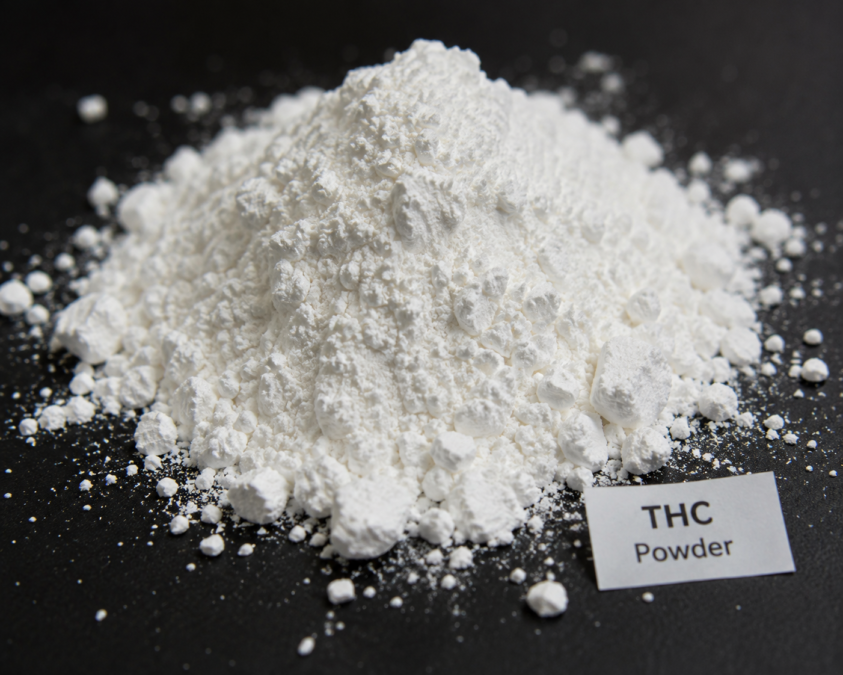

thc powder is a term used online to describe powdered or highly concentrated material containing tetrahydrocannabinol (THC), the main intoxicating cannabinoid associated with cannabis. The term can refer to different types of products, and that’s exactly why readers should be careful when they see it online. A powder can have a very different chemical composition, concentration, purity, and legal status depending on what it actually contains.
THC is not the same as CBD. THC can produce intoxicating effects, while CBD does not generally produce the traditional “high” associated with THC. The U.S. Food and Drug Administration explains that cannabis contains many biologically active compounds, with THC and CBD among the best-known.
Interest in thc powder has grown as cannabis-derived products have become more diverse. However, popularity doesn’t automatically mean safety. Some cannabinoid products sold online may have uncertain contents, inaccurate labels, contaminants, or unsupported health claims. The FDA has specifically warned that some cannabis-derived products have quality and safety concerns.
This article explains what thc powder means, how THC differs from CBD, why concentrated forms require caution, what quality concerns exist, how regulations can vary, and what readers should know before believing claims made about these products.
Important note: This article is for general education. It does not provide instructions for making, concentrating, inhaling, or consuming THC powder. THC products can have legal and health risks, and people should consult an appropriate healthcare professional or local authority for individual guidance.
What Is THC Powder?
thc powder generally refers to a powdered material containing THC or a THC-related cannabinoid. Unlike ordinary cannabis flower, which contains plant material, a powder is usually associated with a more processed or concentrated form of a cannabinoid-containing material.
The exact meaning of the term can vary.
For example, online sellers may use “THC powder” to describe:
- A powdered cannabinoid preparation
- A concentrated cannabis-derived material
- A formulation containing THC or a THC-related compound
- A research or laboratory material
- A product designed to be incorporated into another formulation
Because the label can be broad, the name alone doesn’t tell you everything.
A responsible reader should ask what specific cannabinoid is present. Is it delta-9 THC? Delta-8 THC? Another cannabinoid? Is the material actually THC, or does the seller use the term loosely?
These questions matter because different cannabinoids can have different effects and legal classifications.
THC Explained in Simple Language
THC stands for tetrahydrocannabinol.
The best-known form is delta-9 THC, which is primarily responsible for the intoxicating effects commonly associated with marijuana.
When THC affects the brain, it can change:
- Mood
- Perception
- Attention
- Memory
- Coordination
- Reaction time
- Sense of time
The effects can vary greatly between people.
One person might feel relaxed, while another might experience anxiety or confusion. In some situations, THC can impair a person’s ability to drive or perform tasks that require quick judgment.
That’s why the simple statement “THC is natural” doesn’t tell the whole story. Natural substances can still have powerful effects.
THC Powder vs. Cannabis Flower
Cannabis flower and thc powder aren’t identical products.
Cannabis flower is the dried plant material from cannabis. It contains many naturally occurring compounds, including cannabinoids and aromatic compounds.
A powder, by contrast, can represent a processed or concentrated material. Its exact characteristics depend on how it was produced and what other substances are present.
| Feature | Cannabis flower | THC powder |
|---|---|---|
| Physical form | Dried plant material | Powdered material |
| Composition | Multiple natural compounds | Depends on formulation |
| THC concentration | Varies | May be concentrated |
| Appearance | Plant material | Fine or granular material |
| Label information | Often strain/product information | Should identify specific contents |
| Quality concerns | Contamination and potency | Potency, identity, purity, contamination |
| Legal status | Varies by jurisdiction | Varies by jurisdiction and formulation |
The most important lesson is simple: appearance doesn’t prove chemical identity.
A white or crystalline-looking powder isn’t automatically pure THC. A professional-looking package doesn’t prove that its contents match the label.
THC Powder and CBD Are Different
One common misunderstanding is treating THC and CBD as though they’re the same.
They’re not.
THC is psychoactive and can cause intoxication. CBD, or cannabidiol, generally doesn’t produce the same intoxicating “high.”
The FDA identifies THC and CBD as two of the most commonly known cannabinoids found in cannabis.
Their differences can be summarized simply:
| THC | CBD |
|---|---|
| Can cause intoxication | Doesn’t generally cause a traditional high |
| Can affect perception and coordination | Has different biological effects |
| Can impair driving ability | Does not produce the same intoxicating effect |
| Has significant regulatory restrictions | Also has important regulatory restrictions |
| Used in some approved prescription medicines in specific forms | One FDA-approved CBD medicine exists for certain seizure disorders |
Importantly, the existence of an FDA-approved CBD medicine doesn’t mean that all CBD products are approved.
The same principle applies to THC-related products. A product being available for sale doesn’t automatically mean it has been evaluated and approved as a medicine.
Why Concentration Matters With THC Powder
One major concern with thc powder is concentration.
A concentrated material can make it harder for an inexperienced person to understand how much THC is present. This is one reason concentrated cannabinoid products deserve extra caution.
Potency can influence the intensity and duration of effects.
Higher exposure may increase the chance of unwanted effects such as:
- Anxiety
- Confusion
- Dizziness
- Sleepiness
- Impaired coordination
- Faster heart rate
- Problems with attention
- Poor judgment
The experience can also depend on a person’s age, health, previous exposure to THC, medications, and other factors.
That’s why there isn’t a single response that applies to everyone.
THC Powder and Product Quality
Quality is one of the biggest concerns surrounding cannabinoid products.
A product label might claim a particular THC content, but consumers can’t verify chemical composition simply by looking at the powder.
Reliable quality assessment may involve laboratory testing for:
- Cannabinoid identity
- Potency
- Purity
- Residual solvents
- Heavy metals
- Pesticides
- Microbial contamination
- Other unwanted substances
The FDA has reported concerns about the quality of some cannabinoid products and has found cases where products didn’t contain the cannabinoid levels claimed on their labels. The agency has also investigated contamination concerns involving cannabinoid products.
So, when it comes to thc powder, “looks pure” isn’t a scientific test.
Why Laboratory Testing Is Important
Laboratory testing can provide information that consumers cannot obtain from appearance alone.
A credible analytical report may identify:
- The tested compound
- Sample identification
- Testing date
- Testing method
- Reported concentration
- Potential contaminants
- Laboratory information
Still, laboratory paperwork needs to be interpreted carefully.
A document labeled “certificate of analysis” doesn’t automatically prove that a product is safe for human consumption. It also doesn’t prove that every container sold by a company has identical contents.
Ideally, testing should be connected to the specific batch being evaluated.
In other words, evidence matters more than marketing language.
THC Powder and Potential Health Effects
THC affects the central nervous system.
Short-term effects can include changes in:
- Memory
- Attention
- Coordination
- Reaction time
- Mood
- Perception
- Judgment
Some people may also experience anxiety, paranoia, dizziness, or other unpleasant effects.
These reactions can be especially concerning when a person doesn’t know the strength or exact composition of a product.
Another important issue is impairment.
Someone affected by THC may not recognize how impaired they are. That’s why driving or operating machinery after using an intoxicating cannabis product can be dangerous.
The safest approach is not to assume that feeling “fine” means reaction time and judgment are completely normal.
THC Powder and Mental Health Considerations
THC can affect mood and perception, and some people may experience significant psychological effects.
Potential reactions can include:
- Anxiety
- Panic
- Paranoia
- Confusion
- Distorted perception
People with certain mental-health vulnerabilities may need particular caution.
This doesn’t mean that every person exposed to THC will experience these problems. Human responses vary considerably.
Still, responsible health information should acknowledge the possibility rather than presenting THC products as universally relaxing or harmless.
If someone experiences severe confusion, extreme agitation, loss of consciousness, difficulty breathing, chest pain, or another serious reaction after exposure to a cannabis product, urgent medical attention may be appropriate.
THC Powder and Pregnancy
Pregnancy is an especially important safety issue.
The FDA strongly advises against using THC, CBD, or marijuana in any form during pregnancy or breastfeeding. The agency cites potential risks to the developing baby and other health concerns.
This is one area where there should be little confusion.
People who are pregnant, planning pregnancy, or breastfeeding should speak with a qualified healthcare professional about cannabis and cannabinoid exposure.
The same caution applies to products that are marketed as natural or plant-based. Natural doesn’t automatically mean risk-free during pregnancy.
THC Powder and Children
THC-containing products should be kept away from children.
Accidental exposure can be particularly concerning because children are smaller, may not understand what they have encountered, and can be attracted to products with appealing packaging.
The FDA has expressed concerns about cannabinoid products, including some delta-8 THC products, that may be packaged or labeled in ways that appeal to children.
Responsible storage therefore matters.
Parents and caregivers should avoid leaving cannabinoid products where children can easily reach them.
Delta-8 THC and THC Powder
The phrase thc powder can sometimes be used in connection with delta-8 THC products.
Delta-8 THC is a cannabinoid that has psychoactive and intoxicating effects. The FDA has warned about delta-8 products and says they haven’t been evaluated or approved by the agency for safe use.
This is particularly important because some online marketing may create the impression that delta-8 products are automatically safer than other THC products.
That’s not a conclusion consumers should make without evidence.
The FDA has received adverse-event reports involving delta-8 THC products and has expressed concerns about manufacturing processes, product concentrations, contamination, and consumer exposure.
So, once again, the name on the package isn’t enough.
THC Powder and Legal Status
Cannabis laws can be complicated.
The legal status of thc powder may depend on:
- The specific cannabinoid
- THC concentration
- Source of the material
- Product type
- Country
- State or province
- Intended use
- Whether it is classified as a medicine
- Whether it is sold as food or another consumer product
For example, U.S. federal rules have distinguished hemp from marijuana based on THC concentration, while the FDA continues to regulate cannabis-derived products under federal food, drug, and public-health laws.
That means the word “hemp” doesn’t automatically make every THC-containing product legal in every situation.
Readers should check current laws in their own jurisdiction rather than relying on old social-media posts or online advertisements.
THC Powder and Unproven Medical Claims
A major warning sign is a product that claims to treat serious diseases without strong clinical evidence.
Some cannabinoid products have been marketed with claims involving:
- Pain
- Anxiety
- Cancer
- Inflammation
- Sleep
- Neurological disorders
- Other medical conditions
The FDA has warned consumers about cannabis-derived products marketed with unproven medical claims.
A product isn’t proven effective just because a website says it is.
Real medical evidence generally requires carefully designed studies, appropriate testing, reliable data, and regulatory review where applicable.
That’s the difference between a health claim and a scientifically established treatment.
THC Powder: Important Warning Signs
When evaluating information about thc powder, readers should watch for red flags.
Vague Ingredient Information
If the product doesn’t clearly identify the cannabinoid, be cautious.
Unrealistic Health Claims
Claims that one product can cure many unrelated diseases deserve serious skepticism.
No Independent Testing
If there is no meaningful laboratory evidence, product quality may be difficult to assess.
Incomplete Labels
A responsible label should provide useful information rather than hiding important details.
Extremely Strong Marketing
Words such as “100% safe,” “risk-free,” or “guaranteed cure” should raise questions.
Child-Friendly Packaging
Products containing intoxicating cannabinoids shouldn’t be marketed in ways that encourage accidental child exposure.
Unclear Legal Status
Consumers should understand the applicable laws before dealing with cannabinoid products.
THC Powder and Responsible Information
The internet contains a huge amount of information about cannabis.
Some of it is scientific.
Some of it is personal opinion.
Some of it is advertising.
And, unfortunately, some of it is simply wrong.
Readers can improve their decision-making by checking the source.
Good sources include:
- Government health agencies
- Medical institutions
- Peer-reviewed research
- Licensed healthcare professionals
- Established scientific organizations
- Official regulatory agencies
Random social-media comments can be interesting, but they shouldn’t replace professional medical advice or scientific evidence.
As the saying goes, better safe than sorry.
Comparing THC Powder With Other Cannabis Products
Cannabis products come in many forms, and they don’t all carry identical characteristics.
| Product category | General description | Main concern |
|---|---|---|
| Cannabis flower | Dried cannabis plant material | THC potency and impairment |
| THC powder | Powdered or concentrated cannabinoid material | Unknown identity, concentration, or purity |
| Edibles | Food or drink containing cannabinoids | Delayed effects and accidental overexposure |
| Oils/tinctures | Liquid cannabinoid preparations | Potency and labeling accuracy |
| Vapes | Inhaled cannabinoid products | Lung exposure and product quality |
| CBD products | Products containing cannabidiol | Mislabeling, contamination, and unproven claims |
| Delta-8 products | Products containing delta-8 THC | Intoxication, manufacturing, and regulatory concerns |
This table highlights an important fact: different forms don’t eliminate the need for caution.
THC Powder and Scientific Research
Cannabinoids are legitimate subjects of scientific research.
Researchers study questions involving:
- The endocannabinoid system
- Cannabinoid receptors
- Brain function
- Pain pathways
- Appetite
- Nausea
- Neurological conditions
- Drug interactions
- Long-term effects
Research can help scientists understand both potential benefits and potential risks.
However, laboratory research should not be confused with consumer self-treatment.
A compound being studied in a laboratory doesn’t mean that people should experiment with it themselves.
Clinical evidence has to establish whether a substance is safe and effective for a specific medical purpose.
Approved THC-Related Medicines
It’s also important to distinguish THC-containing medicines from unapproved consumer products.
The FDA has approved certain prescription products containing dronabinol, a synthetic form of THC, for specific medical uses. The FDA explains that these approved products are used for particular conditions and are available by prescription.
This is very different from saying that all THC products are approved medicines.
A prescription drug is evaluated for a defined purpose, formulation, manufacturing quality, safety profile, and effectiveness.
An online powder doesn’t receive those protections merely because its label contains the word “THC.”
How Consumers Can Become Better Informed
Consumers don’t need to become chemists overnight.
A few simple habits can make information easier to evaluate.
Before believing a claim, ask:
- Who made the claim?
- Is the source independent?
- Is there scientific evidence?
- Is the product clearly identified?
- Is testing available?
- Are there known risks?
- Is the claim approved by a recognized regulator?
- Does the information come from a recent and trustworthy source?
These questions can help separate useful information from advertising.
Frequently Asked Questions About THC Powder
What does THC powder mean?
thc powder generally refers to powdered or concentrated material containing THC or a related cannabinoid. The exact composition depends on the specific product.
Is THC powder the same as CBD powder?
No. THC and CBD are different cannabinoids. THC can cause intoxication, while CBD generally doesn’t cause the same traditional high.
Is THC powder safe?
Safety depends on the exact substance, concentration, purity, exposure, and individual circumstances. Unregulated or poorly labeled products can carry additional risks.
Can THC powder be used as medicine?
A product containing THC isn’t automatically an approved medicine. The FDA has approved certain specific THC-related prescription medicines, but that doesn’t mean ordinary THC products are approved treatments.
Is delta-8 THC the same as delta-9 THC?
No. They are different forms of THC, although both can have intoxicating effects. The FDA has raised specific safety concerns about delta-8 THC products.
Can THC products be used during pregnancy?
The FDA strongly advises against THC and marijuana use during pregnancy and breastfeeding because of potential health risks.
Why is laboratory testing important?
Testing can help determine whether the product contains what its label claims and whether unwanted contaminants may be present. However, testing doesn’t automatically prove that a product is medically safe.
Are all THC products legal?
No. Laws vary by jurisdiction and depend on the cannabinoid, concentration, source, product type, and intended use.
Can online reviews prove that THC powder is safe?
No. Reviews describe personal experiences, not controlled scientific evidence. Product safety and composition require more reliable evidence.
Final Thoughts on THC Powder
thc powder is a term that can describe a range of powdered or concentrated cannabinoid materials, but the label alone doesn’t tell the full story. Consumers need to know exactly what cannabinoid is present, how the product was tested, whether the contents match the label, what contaminants may be present, and what laws apply.
THC can cause intoxication and can affect memory, attention, coordination, judgment, and perception. Concentrated or poorly labeled products may create additional uncertainty. The FDA has also raised concerns about the safety and quality of several cannabis-derived products, particularly unapproved products and delta-8 THC products.
Most importantly, thc powder shouldn’t be viewed simply as another ordinary powder or supplement. Its chemical identity, potency, purity, legal status, and potential health effects all matter. Pregnant or breastfeeding individuals should avoid THC products according to FDA guidance, and anyone considering cannabis or cannabinoid products for a medical reason should speak with a qualified healthcare professional.
With accurate information, careful evaluation, and respect for health and legal requirements, readers can better understand the growing world of cannabinoid products. When it comes to thc powder, knowledge and caution are far more valuable than hype.
Explore more insightful articles on All Vantage News and never miss an update.Contact Us.