
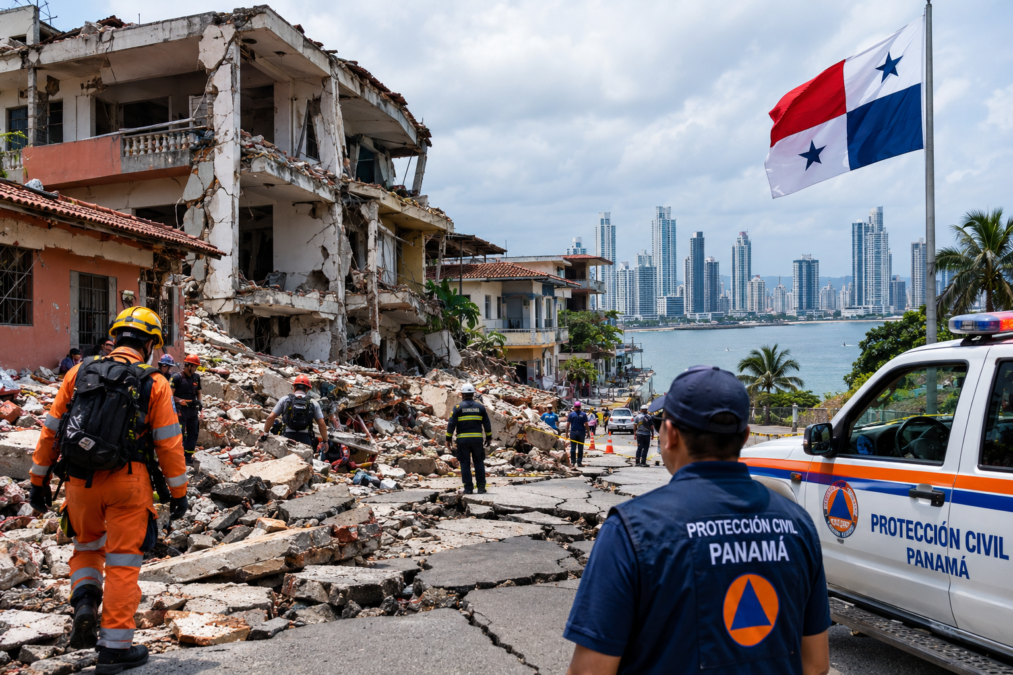

Introduction to the Panama Earthquake
A panama earthquake is a natural event that occurs when energy stored inside the Earth is suddenly released, causing the ground to shake. Panama is a beautiful country in Central America, known for the Panama Canal, tropical forests, long coastlines, and rich wildlife. However, its location near several active tectonic plate boundaries means that earthquakes are a natural risk for the country.
Although many earthquakes in Panama are small and cause little or no damage, stronger events can affect homes, roads, public services, and coastal communities. Understanding why earthquakes happen, where they are most likely to occur, and how people can prepare is essential for residents, travelers, and anyone interested in natural disasters.
The good news is that knowledge and preparation can make a real difference. People who understand earthquake warning signs, safe actions, and emergency planning are better prepared to protect themselves and help others.
This article explains the science behind the panama earthquake, the country’s seismic history, possible effects, safety measures, and the role of monitoring systems. It also explains how to find reliable updates when an earthquake occurs.
Understanding What a Panama Earthquake Is
An earthquake happens when rocks beneath the Earth’s surface suddenly move along a crack or fault. This movement releases energy that travels through the ground as seismic waves.
Panama experiences earthquakes because it lies in a geologically active part of the world. The movement of tectonic plates creates pressure beneath the surface. When that pressure becomes greater than the strength of the surrounding rocks, the rocks can break or slip, producing an earthquake.
Earthquakes vary greatly in strength. Some are so weak that people don’t notice them, while others can shake buildings, damage roads, and affect large areas.
It’s important to understand that an earthquake’s magnitude and its effects aren’t the same thing. A powerful earthquake in a remote location may cause little damage, while a smaller earthquake near a crowded city can have serious consequences.
Earthquake information usually includes several important details:
- Magnitude: A measure of the size of the earthquake and the energy released.
- Depth: How far beneath the Earth’s surface the earthquake began.
- Epicenter: The point on the Earth’s surface directly above the earthquake’s starting location.
- Intensity: A description of how strongly the earthquake was felt and the damage it caused in a particular place.
- Aftershocks: Smaller earthquakes that occur after a larger event in the same general area.
These details help scientists understand an earthquake and help emergency officials decide whether additional safety measures are necessary.
Latest Panama Earthquake: What Happened in October 2026?
The topic has become especially important because a major earthquake struck Panama on October 9, 2026. According to reports from the U.S. Geological Survey (USGS) and the Associated Press, a powerful earthquake with a reported magnitude of 7.7 occurred near Pitaloza Arriba in Herrera Province. A second major earthquake, reported at magnitude 6.6, also shook the region. Numerous aftershocks followed.


The initial reports described damage to buildings and public structures, evacuations, and several injuries. Authorities had not confirmed any deaths in the early reporting. A tsunami warning was issued initially and later lifted, according to the Associated Press. Damage assessments and emergency checks remained important after the first shaking ended.
Here are the main details reported about the event:
| Detail | Reported information |
|---|---|
| Date | October 9, 2026 |
| Main earthquake | Magnitude 7.7 |
| Reported epicenter area | Near Pitaloza Arriba, Herrera Province |
| Reported depth | About 12.6 km |
| Additional major earthquake | Magnitude 6.6 |
| Main concerns | Building damage, aftershocks, evacuations, and service interruptions |
| Tsunami warning | Issued initially and later lifted |
Source: USGS earthquake records and Associated Press reporting. Earthquake measurements and damage assessments can change as agencies review the evidence.
A magnitude 7.7 earthquake is a serious event, and its effects can extend far beyond the immediate epicenter. However, the final impact depends on factors such as distance, ground conditions, building strength, and population density.
For the latest confirmed information, check the USGS Latest Earthquakes map and official announcements from Panama’s emergency authorities. Early reports should be treated as provisional until inspections and assessments are complete.
Why Do Earthquakes Happen in Panama?
To understand the panama earthquake risk, it’s helpful to look beneath the country’s surface. The Earth’s outer shell is divided into large pieces called tectonic plates. These plates move slowly, often by only a few centimeters each year.
Even though this movement is gradual, it can create enormous pressure where plates meet or slide past one another. When rocks suddenly move along a fault, the stored energy travels outward as seismic waves.
Panama sits in a complex tectonic region near the boundary between the Caribbean Plate and the Cocos Plate, with other regional plates and fault systems also affecting its geology. Movement and deformation in this area help explain why earthquakes occur both offshore and on land.
Several processes can cause earthquakes in and around Panama:
- Plate movement: Tectonic plates move relative to each other and create stress in the Earth’s crust.
- Fault movement: Rocks break or slip along existing fractures.
- Offshore tectonic activity: Earthquakes beneath the sea can sometimes produce coastal hazards.
- Local crustal movement: Faults within the land itself can produce damaging shaking.
These processes are natural and cannot be stopped. However, scientific monitoring and careful construction can reduce the risks to people and property.
Which Areas of Panama Face Earthquake Risks?
Earthquake hazards aren’t evenly distributed across Panama. Some areas are closer to active faults or offshore plate boundaries, while others may experience weaker shaking from the same event.
The Pacific side of the country is particularly important when studying seismic activity. Earthquakes can also affect the western region near the Costa Rican border and other parts of the country.
The October 2026 event highlighted the importance of preparedness in central provinces, including Herrera, Los Santos, and Veraguas. Reports also described shaking and evacuations in Panama City.


Panama City
Panama City is the country’s main urban and business center. It contains homes, apartment towers, offices, hospitals, schools, and important transport links.
A strong earthquake can disrupt normal life in a large city even when the epicenter is far away. Tall buildings may sway, traffic may become congested, and people may evacuate offices or shopping areas.
Building standards, safe construction, and emergency planning are essential to reducing these risks.
Herrera and Los Santos
These central provinces were among the areas highlighted in reports about the October 2026 earthquake. Damage to structures in affected communities demonstrates why rural areas also need emergency services, safe buildings, and reliable communication.
Veraguas
Veraguas includes coastal and inland communities. Earthquake shaking can affect houses, roads, bridges, and public buildings, depending on the event’s location and strength.
Western Panama and the Costa Rican Border
Western Panama lies near an active regional tectonic zone. Earthquakes in this wider region may affect communities on either side of the border.
Coastal Communities
People living along the Pacific and Caribbean coasts should understand local earthquake and tsunami guidance. Not every coastal earthquake creates a tsunami, but strong offshore earthquakes can sometimes displace the seabed and generate dangerous waves.
Panama’s Earthquake History
Panama has experienced earthquakes throughout its history. These events range from small tremors that cause little disruption to stronger earthquakes that damage buildings and affect communities.
Historical earthquake records help scientists identify patterns, study faults, and improve estimates of future hazards. Still, past events cannot tell us the exact date or location of the next earthquake.
The October 2026 earthquake is an important recent example of the country’s seismic risk. It also shows why communities should not assume that a major earthquake will only affect remote locations or areas near international borders.
When reviewing historical earthquake information, consider the following:
- Magnitude: How much energy did the earthquake release?
- Depth: Did it begin close to the surface or much deeper underground?
- Location: Was it near a populated area or far from major communities?
- Building conditions: Were the affected structures designed to withstand strong shaking?
- Secondary hazards: Were landslides, damaged roads, or tsunami concerns reported?
It’s also important to remember that earthquake catalogs improve over time. Older events may have less precise locations or magnitudes than earthquakes recorded using modern instruments.
The goal of studying earthquake history isn’t to frighten people. Instead, it helps engineers, emergency planners, and communities make better decisions before another event occurs.
What Is the Difference Between Magnitude and Intensity?
People sometimes use the words magnitude and intensity as though they mean the same thing. They don’t.
Magnitude describes the overall size of an earthquake. Intensity describes the shaking and its effects at a particular location.
For example, one large earthquake can produce severe shaking near its epicenter but much weaker shaking hundreds of kilometers away.
| Feature | Magnitude | Intensity |
|---|---|---|
| What it measures | Earthquake size | Shaking and effects at a location |
| How it is described | A numerical magnitude | A level on an intensity scale |
| Can it vary by location? | The event has an estimated magnitude | Yes, intensity varies from place to place |
| What affects it? | Seismic measurements and earthquake characteristics | Distance, depth, soil, buildings, and other local factors |
Magnitude scales are logarithmic. This means a one-unit increase represents a substantial increase in measured ground-motion amplitude and roughly 32 times more released energy.
That’s why a magnitude 7 earthquake is not simply a little stronger than a magnitude 6 earthquake. The difference in energy is significant.
For the public, both measurements are useful. Magnitude helps describe the earthquake itself, while intensity helps explain what people experienced in their communities.
Common Signs and Effects of a Panama Earthquake
Earthquakes often begin without any clear warning. Unlike hurricanes, which can usually be tracked as they develop, earthquakes cannot currently be predicted with enough accuracy to tell people the exact time and place they will strike.
During an earthquake, people may notice several effects.
Ground Shaking
The most familiar effect is movement of the ground. Floors may vibrate, furniture can shift, and hanging lights may swing. Strong shaking can make it difficult to stand or walk.
Damage to Buildings
Older structures, poorly maintained buildings, and buildings that don’t meet suitable earthquake-resistant standards may face greater risks. Strong shaking can damage walls, roofs, columns, and foundations.
Landslides
In hilly or mountainous areas, shaking can loosen soil and rocks. Landslides may block roads, damage homes, or make it difficult for emergency workers to reach affected communities.
Road and Transport Disruptions
Earthquakes can damage bridges, roads, and other transport infrastructure. Even when roads remain intact, traffic congestion and emergency closures may slow travel.
Power and Communication Problems
Electricity, mobile networks, water supplies, and internet connections can be disrupted. This can make it harder for families to contact one another or receive official information.
Aftershocks
Aftershocks are smaller earthquakes that follow a larger earthquake in the same general region. Some are barely noticeable, while others can be strong enough to damage buildings already weakened by the main event.
After a major panama earthquake, residents should remain alert and follow official instructions even if the initial shaking has ended.
How to Stay Safe During a Panama Earthquake
Knowing what to do during an earthquake can protect you from falling objects, broken glass, and structural hazards. The safest action depends on whether you’re indoors, outdoors, or in a vehicle.


If You’re Indoors
Follow the widely recommended Drop, Cover, and Hold On procedure.
- Drop: Get down onto your hands and knees before the shaking knocks you over.
- Cover: Protect your head and neck under a sturdy table or desk if one is nearby. If not, crouch near an interior wall away from windows and falling objects.
- Hold On: Hold your shelter in place until the shaking stops.
Stay away from windows, glass doors, shelves, and heavy furniture that could fall.
Don’t rush toward the stairs or elevators while the ground is shaking. Moving through a building during strong shaking can expose you to falling objects and broken glass.
If You’re Outdoors
Move toward an open area away from buildings, streetlights, trees, utility wires, and walls that could collapse.
Once you’re in a safer place, remain there until the shaking ends. Watch for falling debris and damaged power lines.
If You’re Driving
Slow down carefully and stop in a safe location away from bridges, overpasses, buildings, and power lines. Stay inside your vehicle until the shaking stops, unless remaining there presents an immediate danger.
Follow local traffic instructions before continuing your journey.
If You’re Near the Coast
If you experience strong or prolonged shaking near the coast, move to higher ground or inland as soon as it is safe to do so if a tsunami is possible. Don’t wait for an official warning when natural warning signs are present.
Follow instructions from emergency officials and don’t return to the shoreline until authorities say it is safe.
What Should You Do After a Panama Earthquake?
The end of the shaking doesn’t always mean the danger has passed. Damaged structures, aftershocks, broken gas lines, and fallen electrical wires can create additional risks.
After an earthquake, take the following steps.
- Check yourself and others for injuries. Provide basic first aid if you can do so safely.
- Leave damaged buildings if officials advise evacuation or the structure appears unsafe.
- Avoid touching fallen power lines or entering areas with damaged electrical equipment.
- Expect aftershocks and be ready to protect yourself again.
- Use text messages when possible to reduce pressure on phone networks.
- Listen to official announcements through reliable radio, mobile alerts, or emergency authority websites.
- Avoid spreading unconfirmed reports about deaths, damage, or tsunami threats.
- Keep roads clear for ambulances, firefighters, and other emergency responders.
If you smell gas, hear hissing near a gas line, or notice signs of a fire, leave the dangerous area and contact the appropriate emergency service from a safe location. Don’t use open flames near a possible gas leak.
When authorities recommend leaving an area, follow their instructions promptly. On the other hand, don’t enter a damaged building simply because you want to collect belongings.
How Families Can Prepare for an Earthquake
Preparation is one of the most effective ways to reduce earthquake-related injuries and confusion. A family doesn’t need expensive equipment to begin preparing. A few simple steps can make a meaningful difference.
Build an Emergency Kit
Store essential supplies in an easy-to-reach location. Your kit should include:
- Drinking water and nonperishable food.
- A flashlight and spare batteries.
- A first-aid kit and necessary personal medicines.
- A battery-powered or hand-crank radio.
- A power bank and charging cables.
- Copies of important documents in a waterproof bag.
- Hygiene supplies, sturdy shoes, and a whistle.
- Cash, emergency contact details, and supplies for infants or pets if needed.
Try to prepare enough supplies for several days. The right amount depends on your household size, personal needs, and local emergency guidance.
Create a Family Communication Plan
Choose a meeting point outside your home and another location away from your neighborhood in case you can’t return.
Write down important phone numbers instead of relying entirely on your mobile phone. Select an out-of-area contact who can help family members share updates if local communication networks become overloaded.
Make Your Home Safer
Secure tall bookcases, televisions, water heaters, and heavy furniture. Keep heavy objects on lower shelves, and don’t place large items above beds or sofas.
Know where your home’s electricity and water shutoffs are located. Learn how to use them safely, and turn off gas only if your system and local instructions make that appropriate.
Practice With Your Family
Practice Drop, Cover, and Hold On. Talk about what to do at school, work, shopping centers, and other frequently visited places.
Children should know how to contact trusted adults and where to meet family members. Older adults and people with disabilities may need a specific evacuation or communication plan.
The Role of Earthquake Monitoring and Technology
Scientists use advanced instruments to detect and study earthquakes. Seismometers record ground movement, allowing researchers to estimate an earthquake’s location, depth, and magnitude.
Monitoring agencies combine these measurements with geological information to improve their understanding of active faults.
Technology supports earthquake safety in several ways.
Seismic networks: These instruments record ground motion and help scientists identify earthquakes quickly.
Earthquake alert systems: In some regions, systems can send alerts after an earthquake has begun but before strong shaking reaches certain locations. These alerts provide only limited warning and aren’t guaranteed to arrive before shaking.
Satellite observations: Satellite data can help researchers study ground deformation and identify changes associated with some geological processes.
Building engineering: Modern engineering methods help buildings resist shaking and reduce the likelihood of collapse.
Public communication: Websites, emergency broadcasts, and mobile alerts help people receive information about hazards and protective actions.
For current earthquake reports, the USGS Earthquake Hazards Program is a useful resource. For local emergency instructions, use official Panamanian government and emergency-management announcements.
No monitoring system can guarantee that an earthquake will be predicted in advance. Reliable alerts, however, can help people respond more quickly and make informed decisions.
How Panama Can Reduce Future Earthquake Damage
Although earthquakes cannot be prevented, their effects can be reduced through planning, engineering, education, and emergency response.
Strong Building Standards
Buildings should be designed and constructed according to applicable seismic standards. Proper foundations, structural connections, suitable materials, and professional inspections can reduce the risk of collapse.
Existing buildings may also need evaluation and strengthening, especially when they serve as schools, hospitals, or emergency facilities.
Better Emergency Planning
Local authorities can prepare evacuation procedures, emergency shelters, medical response plans, and communication systems. These plans should be tested through regular exercises.
Public Education
People who understand earthquake safety are more likely to act quickly and correctly. Schools, workplaces, and community groups can organize drills and share reliable safety information.
Protecting Essential Infrastructure
Hospitals, water systems, electricity networks, roads, and communications infrastructure are vital during emergencies. Planning for earthquakes can help keep these services functioning or restore them quickly after damage.
Cooperation Between Communities
Emergency response often depends on cooperation among government agencies, local communities, engineers, medical workers, and humanitarian organizations. Sharing information and resources can improve recovery.
These efforts require investment, but they can help save lives, reduce financial losses, and strengthen communities against future disasters.
Panama Earthquake and Its Impact on Tourism
Panama attracts visitors with its tropical beaches, historic districts, rainforests, wildlife, and famous canal. Earthquakes can affect travel plans, particularly when they damage transport routes or public buildings.
Travelers should remember that the impact of an earthquake can vary considerably from one location to another.
If you’re planning to visit Panama after an earthquake, take these precautions:
- Check official travel advisories and local emergency announcements.
- Confirm that your hotel and transport services are operating safely.
- Follow instructions from local authorities and hotel staff.
- Avoid damaged buildings, restricted areas, and unstable coastal locations.
- Keep travel documents, essential medicines, and emergency contacts accessible.
- Review your travel insurance policy for relevant coverage.
+1
Common Myths About Earthquakes
Misinformation can spread quickly after a natural disaster. Understanding a few basic facts helps people make safer decisions.
| Myth | Fact |
|---|---|
| Scientists can predict the exact date of every earthquake. | Exact earthquake prediction isn’t currently possible. |
| A small earthquake always prevents a larger one. | Small earthquakes don’t guarantee that a larger event won’t occur. |
| Every offshore earthquake causes a tsunami. | A tsunami depends on factors such as seabed displacement and the earthquake’s characteristics. |
| Aftershocks are always harmless. | Some aftershocks can cause additional damage, particularly to weakened structures. |
| Standing in a doorway is always the safest choice. | Drop, Cover, and Hold On is generally recommended indoors. |
| No visible damage means a building is definitely safe. | Structural damage may not always be obvious. |
It’s wise to verify earthquake information before sharing it. A dramatic social media post may contain outdated measurements, incorrect locations, or unconfirmed casualty figures.
Frequently Asked Questions About the Panama Earthquake
When did the latest major Panama earthquake occur?
A major earthquake struck near Pitaloza Arriba in Herrera Province on October 9, 2026. The USGS reported a magnitude of 7.7, and another major event was reported at magnitude 6.6. Check the USGS earthquake map for updated records.
Why does Panama experience earthquakes?
Panama lies in a tectonically active region where plate movement and local fault systems generate stress in the Earth’s crust. When rocks suddenly move along faults, they release energy as seismic waves.
Can a Panama earthquake cause a tsunami?
Yes, an earthquake can generate a tsunami if it causes sufficient displacement of the seabed or otherwise produces significant water movement. However, not every earthquake causes a tsunami. Follow official warnings and evacuate coastal areas when instructed.
Are aftershocks dangerous?
They can be. Aftershocks may cause further damage to buildings already weakened by the main earthquake. Stay away from damaged structures and follow safety instructions from local authorities.
Can scientists predict the next Panama earthquake?
Scientists can study faults and estimate long-term earthquake hazards, but they cannot reliably predict the exact date, time, and location of the next earthquake.
How can residents prepare?
Residents can prepare emergency kits, secure heavy furniture, create family communication plans, learn Drop, Cover, and Hold On, and follow official earthquake information.
Where can I find reliable earthquake updates?
The USGS provides earthquake measurements and maps. For local evacuation orders, tsunami guidance, and damage assessments, consult official Panamanian emergency authorities and government announcements.
Conclusion: Why Understanding the Panama Earthquake Matters
A panama earthquake reminds us that natural hazards can affect communities even in places better known for their beautiful landscapes, wildlife, and important transport routes. Panama’s location in a tectonically active region means that earthquakes are a continuing risk, and the major events reported on October 9, 2026, demonstrate why preparation matters.
Understanding earthquake causes, recognizing possible hazards, and learning the correct safety procedures can help protect lives. Families can prepare emergency kits, businesses can review their response plans, and communities can support safer construction and public education.
At the same time, accurate information is essential. Earthquake magnitudes, damage estimates, and official warnings can change as experts gather new evidence. Readers should check trusted monitoring services and local authorities for the latest confirmed details.
Ultimately, the best response to a panama earthquake combines scientific knowledge, practical preparation, strong infrastructure, and community cooperation. Earthquakes cannot be prevented, but their consequences can often be reduced. With careful planning and reliable information, Panama’s communities can improve their readiness and build a safer future.
Panama Earthquake: Part Two — Recovery, Emergency Response, and Future Preparedness
The Importance of Understanding a Panama Earthquake
A panama earthquake can affect much more than the ground beneath people’s feet. A strong earthquake may disrupt homes, schools, hospitals, transportation, businesses, and communication networks. Even after the shaking ends, families may face difficult questions about where to stay, how to find accurate information, and when it is safe to return home.
Understanding these challenges helps people prepare before a disaster happens. It also helps communities respond calmly and recover more effectively afterward.
Panama’s location in Central America makes earthquake awareness an important part of public safety. By combining scientific research, emergency planning, stronger buildings, and public education, the country can reduce the harm caused by future earthquakes.
How Emergency Teams Respond After an Earthquake
When a major earthquake occurs, emergency services must quickly identify the areas that need the most help. Their first priority is protecting human life.
Emergency response may involve firefighters, medical workers, police officers, engineers, utility workers, and disaster-management officials. Each group has a different role, but they must work together to support affected communities.
Their main responsibilities include:
- Searching for people who may be trapped in damaged buildings.
- Providing medical care to injured residents.
- Checking roads, bridges, hospitals, and public buildings.
- Identifying fire hazards, gas leaks, and damaged electrical systems.
- Arranging temporary shelters for people who cannot safely return home.
- Sharing verified updates about evacuation routes and safety instructions.
- Restoring essential services such as water, electricity, and communication.
A successful response depends on preparation. Emergency teams need suitable equipment, trained personnel, clear communication systems, and access to reliable information.
The Role of Hospitals and Medical Services
Hospitals play a vital role after a strong panama earthquake. Injuries may range from minor cuts and bruises to broken bones and serious trauma.
Medical facilities must be prepared not only to treat patients but also to protect their own buildings, staff, equipment, and power supplies.
Emergency medical planning often includes backup electricity, emergency water supplies, first-aid equipment, and procedures for managing a sudden increase in patients.
Residents can also help by learning basic first aid and keeping essential medicines accessible. However, seriously injured people should receive professional medical attention as soon as possible.
How Earthquakes Affect Schools and Children
Children may find earthquakes frightening, especially when they experience strong shaking or see damage to familiar buildings. Schools therefore need clear emergency procedures that teachers and students can practice regularly.
An effective school earthquake plan should include:
- Safe locations inside classrooms.
- Clear evacuation routes for use after shaking stops.
- Procedures for helping students with disabilities.
- Family reunification arrangements.
- Emergency contact information.
- Regular earthquake safety drills.
Parents should explain earthquake safety in simple language. Rather than creating fear, conversations should focus on practical actions that children can remember.
For example, children can learn to protect their heads and necks, stay away from windows, and follow instructions from trusted adults.
After a major event, schools should reopen only when the relevant authorities have confirmed that buildings and facilities are safe for use.
Economic Effects of a Panama Earthquake
An earthquake can create financial challenges for families, businesses, and the wider economy. The total cost depends on the earthquake’s strength, the number of people affected, the condition of buildings, and how quickly essential services can recover.
Panama has an important role in international trade because of the Panama Canal and its related transport and logistics industries. Although an earthquake doesn’t automatically disrupt canal operations, damage to nearby infrastructure, roads, ports, or electricity systems could create economic difficulties.
Effects on Small Businesses
Small businesses often depend on daily sales to cover rent, salaries, and other expenses. If a shop, restaurant, or office becomes unsafe, its owners may need to close temporarily.
Common challenges include:
- Damage to buildings, stock, and equipment.
- Interrupted deliveries and transport services.
- Fewer customers during the recovery period.
- Temporary loss of income for employees.
- Repair costs and difficulties accessing financial support.
Businesses can prepare by keeping important records backed up, reviewing insurance coverage, and creating plans for temporary operations.
Effects on Families
Families may face repair costs, temporary accommodation expenses, and interruptions to their jobs or children’s education.
Keeping emergency savings, copies of important documents, and a household communication plan can make these challenges easier to manage. Community support and suitable disaster assistance can also help affected households recover.
Earthquake-Resistant Buildings in Panama
Buildings are one of the most important factors in determining how much damage an earthquake causes. Strong shaking doesn’t affect every structure in the same way.
A building’s performance depends on its design, construction quality, materials, foundation, and the type of ground beneath it.
Features of Safer Buildings
Earthquake-resistant buildings are designed to withstand expected ground movement without collapsing. Depending on the structure and applicable building standards, safety features may include:
- Strong connections between structural elements.
- Properly reinforced concrete or appropriately designed steel frames.
- Foundations suited to local soil conditions.
- Secure roofs, ceilings, and exterior walls.
- Flexible systems that can accommodate some movement.
- Professional inspections and proper maintenance.
No building can be guaranteed to remain completely undamaged during every possible earthquake. The main goal is to reduce the risk of collapse and protect human life.
Why Older Buildings Need Attention
Older buildings may have been designed using standards that differ from modern seismic requirements. Some may also have weakened because of poor maintenance, corrosion, or previous damage.
A qualified structural engineer can evaluate a building and recommend improvements when necessary. Residents shouldn’t attempt major structural repairs without professional advice.
The Relationship Between Soil and Earthquake Damage
An earthquake’s effects depend not only on its magnitude but also on the ground beneath a community.
Different types of soil and rock respond differently to seismic waves. Soft sediments can sometimes amplify shaking compared with solid bedrock.
In certain water-saturated, loose soils, strong shaking can also cause liquefaction. This happens when the soil temporarily loses strength, potentially causing buildings to settle or the ground to shift.
Engineers consider local ground conditions when planning buildings, roads, bridges, and other infrastructure.
For Panama, understanding these differences is important because the country’s geography includes coastal areas, valleys, hills, and urban locations with varying ground conditions.
Can Animals Sense an Earthquake Before Humans?
Stories about animals behaving strangely before earthquakes are common. Some people report that dogs bark, birds become restless, or other animals act unusually before the ground shakes.
However, scientists haven’t established a reliable way to use animal behavior to predict earthquakes.
Animals may react to environmental changes, sounds, vibrations, or other stimuli that humans don’t readily notice. But these behaviors aren’t consistent enough to provide dependable earthquake warnings.
People should therefore avoid relying on pets or wildlife to predict an earthquake. Official monitoring systems and established safety procedures are much more useful for managing earthquake risk.
How Earthquakes Differ From Other Natural Disasters
Panama faces several natural hazards, including heavy rainfall, flooding, landslides, and earthquakes. Understanding the differences helps people prepare for the right type of emergency.
| Natural disaster | Main cause | Possible effects | Useful preparation |
|---|---|---|---|
| Earthquake | Sudden movement of rocks along faults | Ground shaking, structural damage, aftershocks | Secure furniture and practice earthquake safety |
| Flood | Water rises beyond normal limits | Property damage, unsafe roads, contaminated water | Monitor alerts and prepare evacuation plans |
| Landslide | Soil or rock moves downhill | Blocked roads and damaged buildings | Avoid unstable slopes and follow warnings |
| Tropical storm | Organized atmospheric circulation | Strong winds, rain, coastal flooding | Prepare supplies and follow weather advisories |
| Tsunami | Large displacement of seawater | Dangerous coastal waves and flooding | Know evacuation routes and move to higher ground when instructed |
These hazards can sometimes occur together. For example, an earthquake may trigger landslides, while an offshore earthquake may generate a tsunami under the right conditions.
The Role of Science in Earthquake Research
Earthquake research helps scientists understand how the Earth’s crust moves and where future hazards may exist.
Researchers use several methods to study earthquakes, including seismic instruments, geological mapping, satellite observations, and computer models.
Seismic Monitoring
Seismometers measure ground movement. When instruments across a network record the same earthquake, scientists can compare the measurements to estimate its location and magnitude.
Geological Studies
Scientists examine faults, rock formations, and evidence of previous earthquakes. These studies help them understand how tectonic forces have shaped a region over time.
Computer Models
Computer models help researchers estimate how seismic waves might travel through different types of ground. Engineers can use these findings to evaluate structural risks and improve building designs.
Public Information Systems
Accurate reporting is essential after an earthquake. Information should clearly identify the event’s location, magnitude, depth, and reporting time, while explaining whether the measurements are preliminary.
Readers should check trusted sources rather than treating unverified social media posts as confirmed facts.
How to Verify Panama Earthquake News Online
When people hear about a possible earthquake, they often search online for the latest news. Unfortunately, early reports may contain conflicting information or repeat inaccurate claims.
Use a few simple checks before sharing earthquake information.
Check the publication time. An older earthquake report may appear in search results even when a newer event has occurred.
Confirm the location. Make sure the report refers to Panama rather than another country with a similar place name.
Compare magnitude and depth. Different reports may initially show different estimates because agencies are still analyzing the data.
Look for official sources. The USGS provides earthquake records, while Panama’s relevant emergency and government authorities provide local instructions and situation updates.
Separate confirmed facts from estimates. Early damage figures, casualty counts, and reports about service interruptions may change as more information becomes available.
For website owners publishing earthquake news, accuracy is especially important. Headlines should reflect verified information and shouldn’t exaggerate damage or suggest that another earthquake is certain to happen.
How Content Creators Can Cover a Panama Earthquake Responsibly
News websites and informational blogs can help readers understand earthquake risks. However, earthquake reporting requires care because inaccurate information can cause unnecessary fear or encourage unsafe decisions.
If you’re writing an article about the panama earthquake, consider including these elements:
- A clear headline with the main topic.
- The event’s confirmed date and location.
- The latest verified magnitude and depth.
- A distinction between confirmed damage and preliminary reports.
- Links to official monitoring and emergency resources.
- Practical safety guidance.
- A note explaining that earthquake data can be revised.
Avoid predicting the next earthquake or presenting rumors as facts. Don’t publish unconfirmed casualty figures merely to attract visitors.
Search engines and readers benefit from content that is useful, original, transparent, and regularly updated. Good earthquake reporting should help people understand the situation, not simply encourage clicks.
Frequently Asked Questions About Earthquake Recovery
How long does recovery take after a major earthquake?
Recovery can take days, months, or years. Minor disruptions may be resolved quickly, while damaged hospitals, bridges, and homes can require extensive repairs.
Should people return home immediately after an earthquake?
Not always. People should follow official instructions and avoid buildings that may be structurally damaged. A building that looks normal from outside isn’t necessarily safe.
What should travelers keep in an earthquake emergency kit?
Useful items include drinking water, food, essential medicines, a flashlight, a power bank, copies of travel documents, emergency contacts, and a first-aid kit.
Can earthquake damage be prevented completely?
No. Earthquakes cannot be prevented, and no construction method eliminates every risk. However, suitable engineering, maintenance, planning, and education can significantly reduce the likelihood of serious harm.
Why is reliable earthquake news important?
Accurate reporting helps people understand the actual risk, follow evacuation instructions, and avoid spreading rumors. Official information is particularly important when aftershocks or coastal hazards are possible.
Final Thoughts on the Panama Earthquake
A panama earthquake highlights the importance of science, preparation, and cooperation in protecting communities from natural hazards. Earthquakes can affect buildings, families, businesses, transport systems, and essential public services, but their consequences depend on many factors beyond magnitude alone.
Safer construction, emergency kits, family communication plans, school drills, and reliable monitoring systems can all contribute to better preparedness. Equally important is the ability to recognize trustworthy information and follow guidance from emergency authorities.
Panama’s future earthquake resilience will depend on continued scientific research, effective public planning, and cooperation between communities and institutions. By understanding the risks and taking practical steps today, people can be better prepared for tomorrow.
The central lesson of the panama earthquake is simple: we cannot control when the Earth moves, but we can improve how we prepare, respond, and recover.
Think
To pick up a draggable item, press the space bar. While dragging, use the arrow keys to move the item. Press space again to drop the item in its new position, or press escape to cancel.
To pick up a draggable item, press the space bar. While dragging, use the arrow keys to move the item. Press space again to drop the item in its new position, or press escape to cancel.
Explore more insightful articles on All Vantage News and never miss an update.Contact Us.