
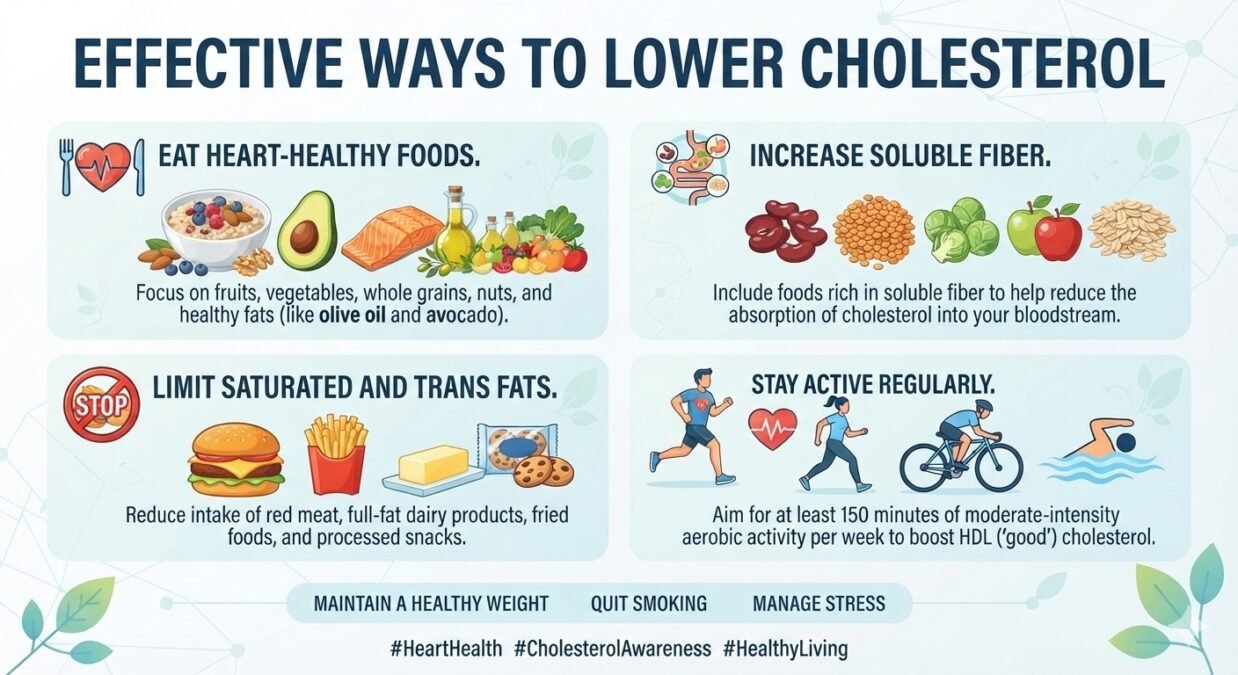

Learning how to lower cholesterol can be an important step toward protecting your heart and blood vessels. High cholesterol often has no obvious symptoms, so many people don’t know their levels are high until a blood test reveals the problem. The good news is that cholesterol can often be improved through a combination of healthier eating, regular physical activity, weight management, avoiding tobacco, good sleep, and, when needed, prescribed medicine.
Cholesterol itself isn’t automatically harmful. Your body needs it to make hormones, vitamin D, and substances that help with digestion. The concern begins when certain types of cholesterol become too high in the bloodstream. In particular, high low-density lipoprotein, or LDL cholesterol, can contribute to plaque buildup inside arteries. Over time, this can increase the risk of heart disease and stroke.
So, how can you improve your cholesterol naturally and safely? There’s no magic food or overnight solution. Instead, small changes made consistently can add up to meaningful results.
What Is Cholesterol and Why Does It Matter?
Cholesterol is a waxy, fat-like substance found throughout the body. Your body produces cholesterol naturally, and it also comes from animal-based foods. Because cholesterol is needed for several important body functions, the goal isn’t to eliminate it completely.
The more important issue is understanding the different blood fats and how they affect your health.
| Cholesterol or blood fat | What it means |
|---|---|
| LDL cholesterol | Often called “bad” cholesterol because high levels can contribute to plaque buildup in arteries |
| HDL cholesterol | Often called “good” cholesterol because it helps transport cholesterol toward the liver |
| Triglycerides | A type of fat in the blood used by the body for energy |
| Total cholesterol | A measurement that combines several cholesterol-related numbers |
High LDL cholesterol can contribute to fatty deposits inside artery walls. As these deposits build up, arteries may become narrower, which can increase cardiovascular risk. High triglycerides combined with low HDL or high LDL can also increase health risks.
That’s why cholesterol shouldn’t be judged by one number alone. Your age, family history, blood pressure, diabetes status, smoking history, and other health factors can also influence your overall heart risk.
How to Lower Cholesterol by Improving Your Diet
One of the most useful answers to how to lower cholesterol starts with your plate.
You don’t need to follow a strange or extremely restrictive diet. In fact, a sustainable eating pattern is usually more helpful than a short-term crash diet. The basic idea is to replace foods high in saturated fat with foods rich in fiber and healthier unsaturated fats.
The American Heart Association recommends a heart-healthy eating pattern that emphasizes vegetables, fruits, whole grains, beans, nuts, seeds, healthy fats, and lean sources of protein.
Try making these changes:
- Eat more vegetables with lunch and dinner.
- Choose whole grains more often.
- Add beans and lentils to meals.
- Eat fruit instead of sugary desserts more often.
- Choose fish and lean proteins.
- Use healthier unsaturated oils instead of butter or other sources of saturated fat.
- Choose nuts and seeds in sensible portions.
- Reduce highly processed foods.
- Limit foods high in saturated fat and trans fat.
- Cut back on foods and drinks with large amounts of added sugar.
The goal isn’t perfection. If your usual meal contains several foods high in saturated fat, changing even one part of the meal can be a useful beginning.
Reduce Saturated Fat to Help Lower LDL Cholesterol
When people ask how to lower cholesterol, saturated fat deserves special attention.
Saturated fat can raise LDL cholesterol. It is commonly found in foods such as fatty meats, butter, some full-fat dairy products, and certain desserts. Tropical oils such as palm oil can also contain significant amounts of saturated fat.
Instead of simply asking, “What foods should I stop eating?” try asking, “What can I replace them with?”
For example:
| Instead of choosing often | Try choosing more often |
|---|---|
| Fatty cuts of meat | Lean meat or fish |
| Butter | Unsaturated vegetable oils |
| Full-fat dairy | Lower-fat dairy options |
| Fried foods | Baked, grilled, or steamed foods |
| Processed meats | Fish, beans, lentils, or lean poultry |
| Rich desserts | Fruit or a lower-saturated-fat option |
| Highly processed snacks | Nuts, fruit, or whole-grain choices |
This approach can make a heart-healthy diet feel much easier. You’re not simply removing food; you’re replacing it with something useful.
Eat More Soluble Fiber
Fiber is another important part of how to lower cholesterol through food.
Soluble fiber can help reduce cholesterol absorption in the digestive tract. Good sources include oats, beans, lentils, fruits, and some vegetables. The NHLBI’s Therapeutic Lifestyle Changes program specifically recommends increasing soluble fiber as part of a cholesterol-lowering eating pattern.
Consider adding foods such as:
- Oatmeal
- Oat bran
- Beans
- Lentils
- Apples
- Pears
- Citrus fruits
- Barley
- Vegetables
- Other fiber-rich plant foods
If your current diet is low in fiber, increase it gradually and drink enough fluids. A sudden large increase may cause bloating or digestive discomfort.
A simple breakfast of oats topped with fruit can be an easy starting point. Likewise, replacing part of a meat-based meal with beans or lentils can increase fiber while also providing plant-based protein.
Choose Healthier Fats
Not all fats are the same.
Some fats can fit well into a heart-healthy diet, particularly unsaturated fats. The American Heart Association recommends replacing sources of saturated fat with healthier unsaturated fats rather than simply adding more fat to the diet.
Foods that can provide healthier fats include:
- Nuts
- Seeds
- Avocados
- Fish
- Olive oil
- Other non-tropical vegetable oils
For example, if you normally cook vegetables with a large amount of butter, consider using a smaller amount of an unsaturated vegetable oil instead.
Portion size still matters. A food can be nutritious and calorie-dense at the same time. The aim is balance, not unlimited consumption.
How to Lower Cholesterol With Regular Exercise
Diet is important, but movement matters too.
Regular physical activity can help improve cholesterol levels, support a healthy weight, and benefit blood pressure and overall cardiovascular fitness. The CDC recommends that adults aim for about 150 minutes of moderate-intensity physical activity each week, such as brisk walking or bicycling.
You don’t have to become a marathon runner. Far from it!
You could start with:
- Brisk walking
- Cycling
- Swimming
- Dancing
- Gardening
- Active household work
- Recreational sports
- Strength exercises
If you’re currently inactive, start at a comfortable level and gradually increase your activity.
For example, you might begin with a 15-minute walk and slowly work toward longer sessions. Breaking activity into smaller periods can make the habit easier to fit into a busy day.
The best exercise is often the one you’ll actually continue doing.
Maintain a Healthy Weight
Maintaining a healthy weight is another useful part of how to lower cholesterol.
Excess weight can be associated with higher LDL cholesterol, higher triglycerides, high blood pressure, and other cardiovascular risk factors. NHLBI guidance notes that adults with overweight or obesity may improve LDL and HDL cholesterol with modest weight loss.
This doesn’t mean you need to chase an unrealistic body shape.
Instead, focus on practical habits:
- Eat balanced meals.
- Watch portion sizes.
- Drink water instead of sugary drinks more often.
- Include vegetables and fruits regularly.
- Stay physically active.
- Limit highly processed snacks.
- Get enough sleep.
- Set realistic goals.
Even small improvements can be worthwhile. Weight management should be viewed as a long-term health habit rather than a temporary diet challenge.
Quit Smoking and Avoid Tobacco
Smoking isn’t only a lung health issue. It can also harm blood vessels and increase cardiovascular risk. The CDC notes that smoking can damage blood vessels and may lower HDL cholesterol.
If you smoke, quitting can be one of the most valuable things you do for your overall heart health.
Quitting isn’t always easy, and struggling with it doesn’t mean you’ve failed. Some people need several attempts before they quit successfully. Support from a healthcare professional, quit-smoking program, or trusted support person can make the process easier.
If you don’t smoke, don’t start. It’s a simple rule with a big payoff.
Get Enough Quality Sleep
Sleep is sometimes overlooked when discussing how to lower cholesterol, yet healthy sleep is part of an overall heart-healthy lifestyle.
NHLBI guidance recommends that adults generally aim for 7 to 9 hours of good-quality sleep each night.
To create a better sleep routine:
- Go to bed and wake up at similar times.
- Keep your bedroom comfortable and quiet.
- Reduce unnecessary screen use before bed.
- Avoid heavy meals close to bedtime.
- Get regular daytime physical activity.
- Create a relaxing bedtime routine.
Sleep alone isn’t a replacement for dietary changes or medical treatment, but it can support healthier habits overall.
Manage Stress in Healthy Ways
Long-term stress can make healthy routines harder to maintain. When people are stressed, they may sleep poorly, eat more processed foods, avoid exercise, or turn to smoking or alcohol.
Finding healthier ways to manage stress can therefore support your overall heart-health plan.
You might try:
- Walking outdoors
- Deep breathing
- Stretching
- Reading
- Spending time with family
- Listening to relaxing music
- Gardening
- Prayer or quiet reflection
- Talking with someone you trust
- Practicing mindfulness
There’s no single perfect stress-management technique. Pick something realistic that helps you slow down and reset.
Limit Highly Processed Foods and Added Sugar
Cholesterol management isn’t only about cholesterol-containing foods.
A heart-healthy eating pattern also limits foods that are highly processed and high in saturated fat, added sugars, and sodium. Current American Heart Association dietary guidance emphasizes vegetables, fruits, whole grains, healthy proteins, unsaturated fats, and minimally processed foods.
Examples of foods to limit include:
- Sugary drinks
- Many packaged desserts
- Highly processed snack foods
- Processed meats
- Foods high in saturated fat
- Foods with large amounts of added sugar
Instead, build meals around whole or minimally processed foods whenever practical.
A simple meal doesn’t have to be boring. Grilled fish with vegetables and whole grains, for instance, can be both nutritious and satisfying.
Understand the Role of Medicines
Lifestyle changes are powerful, but they aren’t always enough.
Some people have very high cholesterol because of genetics or other health conditions. Familial hypercholesterolemia, for example, can cause very high LDL cholesterol and may require medication in addition to lifestyle changes.
Doctors may prescribe cholesterol-lowering medicines, including statins, depending on a person’s LDL level and overall cardiovascular risk.
If your healthcare professional prescribes medication:
- Take it exactly as directed.
- Don’t stop it on your own.
- Tell your healthcare professional about side effects.
- Ask questions if you’re unsure about your treatment.
- Keep follow-up appointments.
- Continue healthy lifestyle habits.
NHLBI advises people taking cholesterol medicine to follow their prescribed treatment and have follow-up testing as recommended by their healthcare provider.
Medication isn’t a failure. For some people, it’s simply another important tool for reducing cardiovascular risk.
Be Careful With Cholesterol Supplements
Walk into a health store or browse online, and you’ll quickly find products promising to “flush out” cholesterol or fix cholesterol naturally.
Be cautious.
The American Heart Association does not recommend dietary supplements as a general approach to cholesterol management. Supplements can also interact with prescription medicines.
Before taking a supplement specifically for cholesterol, talk with a qualified healthcare professional.
A better first step is usually to focus on proven habits such as eating a heart-healthy diet, exercising, maintaining a healthy weight, avoiding tobacco, and following prescribed treatment.
Get Your Cholesterol Tested
You can’t reliably tell whether your cholesterol is high based on how you feel.
A blood test, often called a lipid panel, can measure cholesterol-related numbers including LDL, HDL, total cholesterol, and triglycerides.
Your healthcare professional can help explain what your results mean in the context of your personal risk.
Commonly discussed numbers include:
- LDL cholesterol
- HDL cholesterol
- Total cholesterol
- Triglycerides
There isn’t one cholesterol target that fits every person. Your appropriate goal can depend on factors such as your medical history and cardiovascular risk.
That’s why comparing your number with someone else’s isn’t particularly useful. Your doctor or healthcare team can interpret your results properly.
Foods That Can Support Better Cholesterol Levels
A heart-friendly grocery list can make healthy eating much easier.
Consider regularly including:
Fruits and vegetables
Fresh, frozen, or appropriately prepared vegetables and fruits can provide fiber and other important nutrients.
Whole grains
Oats and other whole grains can be useful alternatives to refined grains.
Beans and lentils
These foods provide plant protein and fiber, making them useful additions to many meals.
Nuts and seeds
Nuts and seeds provide unsaturated fats and other nutrients. Because they’re energy-dense, reasonable portions are important.
Fish
Fish can be a useful source of protein and, depending on the type, beneficial fatty acids.
Low-fat or fat-free dairy
These can provide protein and calcium while reducing saturated fat compared with some full-fat choices.
The overall pattern matters more than one “superfood.” There isn’t a single ingredient that can magically solve high cholesterol.
Foods to Limit When Trying to Lower Cholesterol
Knowing what to limit can be just as useful as knowing what to eat.
Try to reduce your intake of foods that are particularly high in saturated fat, trans fat, added sugar, or excessive sodium.
These may include:
- Fatty meats
- Processed meats
- Butter-heavy dishes
- Some full-fat dairy products
- Rich desserts
- Fried foods
- Highly processed snack foods
- Sugar-sweetened beverages
- Foods containing significant amounts of saturated fat
Reading nutrition labels can help you compare products and make better choices.
Don’t worry if you can’t change everything immediately. Pick one or two changes, make them routine, and then build from there.
A Simple Daily Plan for Better Cholesterol
If you’re wondering how to lower cholesterol in everyday life, a simple routine may help.
| Part of the day | Healthy habit |
|---|---|
| Morning | Choose a fiber-rich breakfast such as oats and fruit |
| Mid-morning | Choose fruit or another nutritious snack if hungry |
| Lunch | Add vegetables, beans, whole grains, or lean protein |
| Afternoon | Take a short walk or stay physically active |
| Dinner | Choose vegetables plus fish, beans, or lean protein |
| Evening | Avoid unnecessary processed snacks and create a relaxing sleep routine |
| Every day | Avoid tobacco and follow prescribed medicines |
The point isn’t to create a perfect schedule. It’s to make healthy choices easier to repeat.
Common Mistakes to Avoid
When learning how to lower cholesterol, it’s easy to fall for common mistakes.
Trying an extreme diet
Very restrictive diets may be difficult to maintain. A balanced eating pattern is generally more practical for long-term health.
Focusing on one food
Eating oats every morning won’t cancel out a diet that is otherwise high in saturated fat and processed foods.
Ignoring exercise
Diet matters, but regular movement has benefits beyond cholesterol alone.
Stopping medication without medical advice
If you’re taking cholesterol medicine, don’t stop it simply because your numbers improve. Talk to your healthcare professional first.
Expecting overnight results
Cholesterol management is a long-term process. Give your habits time to work.
Buying every “natural cholesterol cure”
Natural doesn’t automatically mean safe or effective. Ask a healthcare professional before using supplements.
How Long Does It Take to Lower Cholesterol?
There’s no single timeline that applies to everyone.
Your cholesterol response can depend on your starting levels, genetics, diet, physical activity, weight, medications, and other health factors.
Some people see changes after making lifestyle adjustments, while others need medication or additional interventions.
Rather than checking your cholesterol constantly, follow the testing schedule recommended by your healthcare professional. NHLBI notes that people starting cholesterol medicine may have a lipid panel checked after a period of treatment and then have additional testing based on their individual situation.
Patience matters. Healthy habits are not a quick fix; they’re an investment in your future.
When Should You Talk With a Healthcare Professional?
You should discuss cholesterol with a healthcare professional if a blood test shows elevated levels or if you have other cardiovascular risk factors.
It’s especially important to seek professional guidance if:
- You have very high LDL cholesterol.
- High cholesterol runs in your family.
- You have diabetes.
- You have high blood pressure.
- You have a history of heart disease or stroke.
- You’re taking cholesterol medication.
- You experience possible medication side effects.
- Lifestyle changes aren’t bringing your cholesterol toward your treatment goal.
Your healthcare provider can consider your complete health picture rather than looking at cholesterol in isolation.
Frequently Asked Questions About How to Lower Cholesterol
Can changing my diet really lower cholesterol?
Yes. Reducing saturated fat and choosing more fiber-rich and minimally processed foods can support healthier LDL cholesterol levels. The NHLBI TLC program specifically combines dietary changes, physical activity, and weight management to improve cholesterol.
Is exercise important for cholesterol?
Yes. Regular physical activity can help improve cholesterol and triglyceride levels while supporting healthy weight and cardiovascular fitness.
Should I stop eating all fats?
No. Your body needs fat, and some fats can be part of a healthy eating pattern. The goal is to replace more saturated fats with healthier unsaturated fats.
Can I lower cholesterol without medicine?
Some people can improve their cholesterol significantly through lifestyle changes. However, others need medication because of their cholesterol levels, genetics, or overall cardiovascular risk. Don’t stop or avoid prescribed treatment without discussing it with your healthcare professional.
Are oats good for cholesterol?
Oats contain soluble fiber, which is one reason they’re commonly included in heart-healthy eating patterns. They’re a useful food choice, but they work best as part of an overall healthy diet.
Does losing weight help cholesterol?
For people who are overweight or have obesity, weight loss can improve several cardiovascular risk factors, including cholesterol. Even modest weight loss may provide health benefits.
Is high cholesterol dangerous even when I feel fine?
Yes. High cholesterol often doesn’t cause noticeable symptoms. A blood test is needed to measure it, and long-term high LDL cholesterol can contribute to artery plaque buildup.
Building a Long-Term Cholesterol-Lowering Lifestyle
The most effective approach to how to lower cholesterol isn’t about making dozens of changes overnight.
Start small.
For example, during your first week, you might focus on eating more vegetables. During the next week, you could add regular walking. After that, you might replace butter with a healthier unsaturated fat and add more beans or oats to your meals.
Small steps can become automatic habits.
A practical long-term plan may include:
- Eating more vegetables and fruits.
- Choosing whole grains.
- Eating beans and lentils regularly.
- Including nuts and seeds in sensible portions.
- Choosing fish and lean protein.
- Reducing saturated and trans fats.
- Limiting highly processed foods and added sugar.
- Getting regular physical activity.
- Maintaining a healthy weight.
- Avoiding tobacco.
- Getting adequate sleep.
- Managing stress.
- Taking prescribed medication correctly.
- Checking cholesterol as recommended.
This type of approach is more realistic than trying to transform your entire lifestyle in a single weekend.
Final Thoughts on How to Lower Cholesterol
Understanding how to lower cholesterol is really about understanding the bigger picture of heart health. A healthier cholesterol level isn’t achieved by one miracle food, one supplement, or one intense workout. Instead, it comes from a collection of practical habits that you can maintain over time.
Focus on vegetables, fruits, whole grains, beans, nuts, seeds, healthier fats, and lean proteins. Reduce saturated fat, trans fat, highly processed foods, and added sugars. Stay physically active, work toward a healthy weight, avoid tobacco, sleep well, and manage stress. Most importantly, know your cholesterol numbers and work with your healthcare professional when treatment is needed.
Above all, don’t become discouraged if your numbers don’t change immediately. Healthy living is a journey, not a race. With consistent choices and appropriate medical guidance, learning how to lower cholesterol can become a meaningful part of protecting your heart and supporting a healthier future.
How to Lower Cholesterol: Part 2 – Practical Strategies for Better Heart Health
If you’ve already learned the basics of how to lower cholesterol, the next step is turning that knowledge into everyday habits. Cholesterol management isn’t about following a perfect routine for a few days and then returning to old habits. Instead, it’s about creating a lifestyle that supports healthier cholesterol levels month after month.
The good news? You don’t have to completely change your life overnight. A few smart decisions at breakfast, lunch, dinner, and during your daily routine can gradually make a meaningful difference.
From choosing better cooking methods to understanding food labels and staying active, there are many practical ways to support heart health. So, let’s take a closer look.
Understanding the Difference Between LDL and HDL
Before exploring more strategies for how to lower cholesterol, it’s helpful to understand why LDL and HDL receive so much attention.
LDL stands for low-density lipoprotein. It’s often called “bad” cholesterol because high LDL levels can contribute to plaque buildup in the arteries.
HDL stands for high-density lipoprotein. It’s commonly called “good” cholesterol because it helps carry cholesterol away from the bloodstream toward the liver, where it can be processed and removed.
However, cholesterol isn’t a simple “good versus bad” story. Your overall cardiovascular risk depends on several factors, including your age, blood pressure, diabetes status, smoking history, family history, and whether you already have cardiovascular disease.
That’s why your healthcare professional should interpret your cholesterol results in context.
How to Lower Cholesterol With Better Cooking Methods
What you eat matters, but how you prepare food matters, too.
Deep-frying can add substantial calories and fat to meals. Instead, consider cooking methods that require little added fat.
Useful methods include:
- Baking
- Grilling
- Roasting
- Steaming
- Boiling
- Air-frying with appropriate portions
- Stir-frying with a small amount of healthier oil
For example, instead of deep-frying chicken, you could bake or grill it. Rather than preparing vegetables in a large amount of butter, try steaming them and adding a small amount of an unsaturated vegetable oil afterward.
These little swaps can make healthy eating feel less complicated.
Make Breakfast More Cholesterol-Friendly
Breakfast can set the tone for the rest of the day.
A breakfast built around fiber and nutritious foods can be a better choice than one dominated by processed meats, pastries, or foods high in saturated fat.
Consider options such as:
- Oatmeal with berries or sliced fruit
- Whole-grain toast with avocado
- Low-fat yogurt with fruit and oats
- Beans with whole-grain bread
- Fruit with a small portion of nuts
- Vegetable omelets prepared with appropriate amounts of healthy fat
Oats are particularly useful because they provide soluble fiber. However, don’t rely on one food alone. A balanced eating pattern is more important than any individual ingredient.
Build a Better Lunch
Lunch is another opportunity to support your cholesterol goals.
A simple formula can make meal planning easier:
Vegetables + fiber-rich carbohydrate + lean or plant protein + healthy fat
For example, you could have:
- Grilled fish with vegetables and brown rice
- Lentil soup with a whole-grain side
- Bean salad with vegetables and a healthy dressing
- Chicken with a large vegetable salad
- Chickpeas with whole grains and fresh vegetables
If you’re eating at work, prepare your lunch in advance when possible. Planning ahead can reduce the temptation to choose whatever happens to be available when you’re hungry.
Create a Heart-Friendly Dinner
Dinner doesn’t need to be complicated.
Try filling a large portion of your plate with vegetables, then add a suitable protein source and a whole-grain or other fiber-rich carbohydrate.
Good combinations might include:
| Protein | Fiber-rich food | Vegetable choices |
|---|---|---|
| Fish | Brown rice | Broccoli |
| Lentils | Whole-grain bread | Spinach |
| Beans | Barley | Carrots |
| Skinless poultry | Whole grains | Green beans |
| Chickpeas | Whole-grain flatbread | Mixed vegetables |
The exact foods can vary according to your culture, budget, and personal preferences.
Healthy eating doesn’t have to mean abandoning familiar meals. Often, you can simply change the ingredients or cooking method.
Learn to Read Food Labels
Food labels can be extremely useful when you’re trying to understand how to lower cholesterol.
When shopping, pay attention to:
- Saturated fat
- Trans fat
- Added sugars
- Sodium
- Fiber
- Serving size
Don’t focus only on the front of the package. Marketing terms can sometimes make a product sound healthier than it actually is.
Turn the package around and check the nutrition information.
Also remember that serving sizes are important. If a package contains multiple servings, eating the entire package means consuming multiple servings of the listed nutrients.
A few seconds of label reading can help you make more informed choices.
Choose More Plant-Based Meals
You don’t necessarily have to become vegetarian to enjoy the benefits of more plant-based eating.
Simply replacing some meat-based meals with beans, lentils, peas, chickpeas, nuts, seeds, and other plant foods can increase fiber and reduce reliance on foods that may be high in saturated fat.
Try a meat-free meal once or twice a week.
For instance:
- Lentil curry with vegetables
- Chickpea salad
- Bean soup
- Vegetable and bean stew
- Lentil-filled whole-grain wraps
- Vegetable stir-fry with tofu
These meals can be filling, flavorful, and nutritious.
Don’t Forget About Triglycerides
When discussing cholesterol, people often focus entirely on LDL. However, triglycerides are another important type of blood fat.
High triglycerides can occur alongside other metabolic risk factors and may increase cardiovascular risk.
Lifestyle factors that can affect triglycerides include:
- Excess calorie intake
- Added sugars
- Alcohol consumption
- Physical inactivity
- Excess body weight
- Certain medical conditions
Reducing added sugars, becoming more physically active, and maintaining a healthy weight can support healthier triglyceride levels.
If your triglycerides are significantly elevated, speak with your healthcare professional because very high levels can require medical attention.
How Alcohol Can Affect Your Heart Health
Alcohol deserves a careful mention because its relationship with health is complicated.
Some people believe that drinking alcohol is necessary for heart health. That’s not the right message. You shouldn’t begin drinking alcohol to improve your cholesterol.
Alcohol can contribute to excess calorie intake and, in some people, higher triglyceride levels.
If you drink, discuss your alcohol intake with your healthcare professional, particularly if you have high triglycerides, liver problems, take certain medicines, or have other health concerns.
Stay Active Throughout the Day
You don’t need to spend your entire day in a gym to become more active.
Look for opportunities to move.
For example:
- Take a walk after a meal.
- Use stairs when practical.
- Walk while talking on the phone.
- Do household chores.
- Spend time gardening.
- Take short movement breaks during desk work.
- Play an active game with your family.
- Walk to nearby destinations when practical.
These activities may seem small, but they can help reduce the amount of time you spend sitting.
Then, gradually build toward regular moderate-intensity exercise according to your abilities and health status.
Add Strength Training
Cardio isn’t the only type of exercise worth considering.
Strength training can help build muscle, support physical function, and contribute to overall health.
Examples include:
- Bodyweight exercises
- Resistance bands
- Light weights
- Squats
- Wall push-ups
- Other resistance exercises
If you’re new to strength training, begin gradually and focus on good technique.
People with certain medical conditions should ask their healthcare professional before starting a new exercise program.
Avoid Sitting for Long Periods
Modern life makes sitting for hours surprisingly easy.
You might sit at work, sit in a car, sit while watching television, and then sit while using your phone. Breaking up these long periods can be a useful part of a more active lifestyle.
Try setting a reminder to stand or walk periodically.
Even a few minutes of movement can provide a welcome break.
Think of it this way: exercise is important, but reducing unnecessary inactivity matters, too.
Make Grocery Shopping Easier
Healthy cholesterol management starts before food reaches your kitchen.
A grocery list can prevent impulse purchases and help you focus on nutritious foods.
A basic heart-friendly shopping list might include:
Produce
- Apples
- Oranges
- Bananas
- Berries
- Leafy greens
- Broccoli
- Carrots
- Tomatoes
- Peppers
- Other seasonal vegetables
Whole grains
- Oats
- Barley
- Brown rice
- Whole-grain bread
- Other whole-grain products
Protein
- Fish
- Skinless poultry
- Beans
- Lentils
- Chickpeas
- Low-fat dairy
- Other suitable protein sources
Healthy fats
- Nuts
- Seeds
- Avocado
- Unsaturated vegetable oils
Shopping with a list can also make it easier to avoid filling your cart with highly processed snack foods.
Don’t Let a Busy Schedule Derail Your Goals
One of the biggest challenges in learning how to lower cholesterol is maintaining healthy habits when life gets busy.
You might work long hours, travel, care for family members, or simply feel too tired to cook.
That’s where simple meals become valuable.
Keep convenient healthy foods available, such as:
- Canned or cooked beans
- Frozen vegetables
- Oats
- Fresh fruit
- Unsalted nuts
- Whole grains
- Low-fat yogurt
- Pre-washed vegetables
Frozen vegetables can be particularly convenient. They can be cooked quickly and don’t require the same preparation as fresh produce.
Healthy eating doesn’t need to be fancy.
Plan Meals Before You’re Hungry
Hunger can make decision-making harder.
If you wait until you’re extremely hungry to decide what to eat, you’re more likely to grab whatever is quickest.
Meal planning can help.
Spend a little time planning:
- Breakfast options
- Lunches
- Dinners
- Healthy snacks
- Grocery items
You don’t need to plan every bite for an entire month. Even planning several meals ahead can make your week easier.
Understand That Genetics Matter
Lifestyle changes are important, but genetics can influence cholesterol significantly.
Some people inherit conditions that cause very high LDL cholesterol. Familial hypercholesterolemia is one example.
If close family members have had very high cholesterol or heart disease at unusually young ages, tell your healthcare professional.
This information can help determine whether additional testing or treatment is appropriate.
In other words, don’t blame yourself if lifestyle changes don’t completely solve the problem. Sometimes biology plays a major role.
Why Cholesterol Can Be High Even If You Eat Well
A healthy diet is powerful, but it isn’t the only factor affecting cholesterol.
Other influences may include:
- Genetics
- Age
- Certain medical conditions
- Some medications
- Weight
- Physical activity
- Smoking
- Hormonal changes
This is another reason why regular medical checkups matter.
If your cholesterol remains high despite healthy habits, don’t assume you’ve done something wrong. Talk with a healthcare professional.
Be Patient With Lifestyle Changes
It’s natural to want quick results.
You might eat healthier for a week and wonder why your cholesterol hasn’t immediately changed.
But cholesterol management is a long-term process.
Think about it like building fitness. You don’t become stronger after one workout. You build strength through repeated effort.
The same principle applies here.
Keep making healthy choices, follow your healthcare professional’s recommendations, and allow enough time for changes to become habits.
Build Habits Instead of Depending on Motivation
Motivation comes and goes.
Habits are more reliable.
Instead of saying, “I’ll exercise whenever I feel motivated,” choose a regular time for walking.
Instead of thinking, “I’ll eat healthy when I have time,” keep nutritious foods ready at home.
Instead of saying, “I’ll stop eating processed snacks,” replace them with healthier options that you actually enjoy.
The easier the healthy choice becomes, the more likely you are to repeat it.
How to Lower Cholesterol When Eating at Restaurants
Eating outside doesn’t mean you have to abandon your goals.
When ordering, consider:
- Grilled instead of deep-fried foods
- Vegetables instead of fries
- Whole grains when available
- Lean protein
- Smaller portions
- Sauces and dressings on the side
- Water or unsweetened drinks
You don’t have to order the “perfect” meal every time.
If a restaurant meal is heavier than usual, simply return to your normal healthy routine at the next meal. There’s no need for guilt or extreme compensation.
Don’t Fear Occasional Treats
A healthy eating pattern doesn’t have to be miserable.
If you enjoy a favorite dessert occasionally, that doesn’t automatically ruin your cholesterol plan.
The key is frequency, portion size, and your overall eating pattern.
A diet that allows reasonable flexibility may be easier to maintain than one that labels every enjoyable food as forbidden.
Balance is the name of the game.
Keep Track of Your Progress
Tracking can help you understand what works for you.
You might record:
- Exercise sessions
- Meals
- Weight changes
- Sleep habits
- Cholesterol test results
- Blood pressure readings if recommended
- Questions for your healthcare professional
Don’t become obsessed with daily changes.
Instead, look for long-term patterns.
For example, you may discover that you’re more active when you schedule walks in the morning or that you’re more likely to eat nutritious meals when you prepare ingredients ahead of time.
Questions to Ask Your Healthcare Professional
If you’re concerned about cholesterol, don’t hesitate to ask questions.
You could ask:
- What is my LDL cholesterol?
- What is my HDL cholesterol?
- What are my triglyceride levels?
- What cholesterol goal is appropriate for me?
- Do I have other cardiovascular risk factors?
- Should I make lifestyle changes?
- Do I need medication?
- When should I repeat my cholesterol test?
- Could another medical condition be affecting my cholesterol?
- Do my family history and cholesterol levels suggest a genetic condition?
Good communication with your healthcare team can make cholesterol management much less confusing.
A Practical Cholesterol-Friendly Habit Checklist
Here’s a simple checklist you can revisit each week:
| Healthy habit | Goal |
|---|---|
| Vegetables | Include regularly |
| Fruits | Include regularly |
| Whole grains | Choose often |
| Beans and lentils | Include regularly |
| Saturated fat | Keep intake lower |
| Highly processed foods | Limit |
| Physical activity | Stay consistently active |
| Smoking | Avoid |
| Sleep | Aim for adequate quality sleep |
| Medication | Take exactly as prescribed |
| Cholesterol testing | Follow professional advice |
You don’t have to check every box perfectly every day. The purpose is to create a direction for your lifestyle.
What If Your Cholesterol Doesn’t Improve?
Suppose you’ve improved your diet, increased physical activity, and worked on your weight, but your cholesterol remains high.
Don’t give up.
First, speak with your healthcare professional. Your genetics, medical conditions, medications, or other factors may be contributing.
Your provider may recommend additional lifestyle adjustments, further testing, or medication.
It’s important to remember that needing medicine doesn’t mean lifestyle changes were pointless. Healthy habits can provide many benefits beyond cholesterol, including better fitness and cardiovascular health.
The Bigger Picture of Heart Health
Learning how to lower cholesterol is only one part of protecting your heart.
Other important factors include:
- Healthy blood pressure
- Healthy blood sugar
- Regular physical activity
- Healthy weight
- Nutritious eating
- Avoiding tobacco
- Adequate sleep
- Stress management
- Regular medical care
These factors often work together.
For example, improving your diet can support cholesterol, blood pressure, and weight management at the same time.
That’s why it’s better to think about overall heart health instead of becoming fixated on one laboratory number.
Final Thoughts: How to Lower Cholesterol Successfully
The most useful lesson about how to lower cholesterol is that sustainable progress usually comes from many small decisions rather than one dramatic change.
Choose more fiber-rich foods. Reduce saturated fat. Eat more vegetables and fruits. Include beans, lentils, whole grains, nuts, seeds, and appropriate sources of lean protein. Stay active. Avoid tobacco. Sleep well. Manage stress. Keep track of your health information and follow medical advice when medication is needed.
Most importantly, don’t expect perfection.
There will be busy days, restaurant meals, missed workouts, and the occasional treat. That’s normal. What matters is returning to healthy habits instead of giving up altogether.
Your cholesterol numbers are only one part of your health story, but taking action today can help create a stronger foundation for tomorrow. With patience, consistency, and appropriate professional guidance, how to lower cholesterol can become less of a confusing question and more of a practical, manageable part of everyday life.
Explore more insightful articles on All Vantage News and never miss an update.Contact Us.