
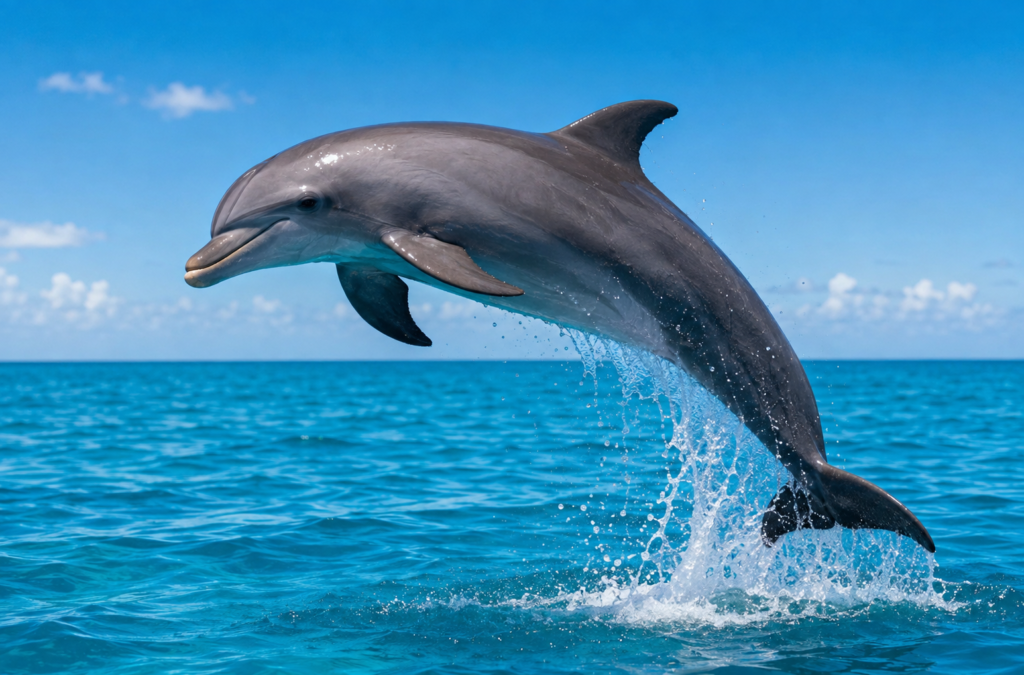

Understanding the Dolphin in Greater Detail
The dolphin is one of the most fascinating animals on Earth. In Part 1, we explored its basic biology, habitat, intelligence, diet, communication, family life, and the threats it faces. In this second part, we’ll go deeper into the remarkable world of dolphins and look at their social behavior, senses, movement, relationships, conservation, and role in ocean health.
Dolphins belong to a group of marine mammals called cetaceans, which also includes whales and porpoises. They are not fish. Instead, they breathe air through lungs and must regularly return to the surface. Many species are highly social and use sophisticated sounds and echolocation to communicate and understand their surroundings.
There’s plenty to discover. From the way a dolphin communicates with its pod to the way it responds to changes in its environment, almost every part of its life shows remarkable adaptation.
The Dolphin’s Place in the Animal Kingdom
To understand dolphins properly, it helps to know where they fit in the animal world.
Dolphins are mammals and belong to the order Cetacea. Within cetaceans, dolphins are generally grouped among toothed whales.
Their relatives include:
- Other oceanic dolphins
- Several species commonly called whales
- Porpoises
- River dolphins
The word “whale” and the word “dolphin” don’t always tell the whole biological story. For example, the killer whale, or orca, belongs to the dolphin family even though its common name contains the word “whale.” This is a useful reminder that common names can sometimes be confusing.
Dolphins have adapted to an aquatic lifestyle over millions of years. Their bodies may look very different from those of land mammals, but their basic mammalian characteristics remain.
They breathe air, maintain body temperature, give birth to live young, and females produce milk for their calves.
Dolphin Body Design and Movement
A dolphin’s body is almost like a perfectly designed swimming machine.
Its smooth shape reduces resistance as it travels through water. The powerful tail provides most of the forward thrust, while the flippers help with steering and stability.
Unlike fish, dolphins move their tails up and down rather than from side to side.
This movement comes from the powerful muscles in the animal’s body and tail.
When swimming slowly, a dolphin may make gentle movements. When it needs to escape danger or chase prey, it can increase its speed dramatically.
The body is also flexible enough to allow quick turns.
That agility matters because ocean life is rarely predictable. A dolphin may need to chase fast-moving prey one moment and avoid an obstacle or predator the next.
Why Dolphin Skin Is So Smooth
A dolphin’s skin is an important part of its survival.
Water creates resistance against anything moving through it. Smooth skin helps reduce this resistance and allows the animal to swim efficiently.
Dolphins also shed and replace the outer layers of their skin quickly compared with many land mammals. This constant renewal helps maintain a relatively smooth surface.
Scientists have studied dolphin skin and body shape because these natural adaptations can provide ideas for understanding movement through water.
In other words, nature has already solved many of the engineering problems that humans are still trying to understand.
Dolphin Senses: More Than Just Echolocation
Echolocation is probably the best-known dolphin sense, but it isn’t their only important sensory ability.
Dolphins also rely on:
- Vision
- Hearing
- Touch
- Taste
- Body awareness
- Acoustic perception
Their senses work together.
A dolphin may use vision when water is clear, but sound becomes especially important when visibility is poor.
This combination gives dolphins a flexible way to understand their environment.
Imagine swimming in dark water where you can barely see your hand. Humans would have trouble finding their way around. A dolphin, however, can use sound to gather information about nearby objects.
That’s one reason these animals are such interesting subjects for scientific research.
How Dolphin Echolocation Works
Echolocation is a highly specialized ability.
A dolphin produces rapid clicking sounds. The sounds travel through the water and bounce back after striking objects.
The returning echoes carry information.
By interpreting those echoes, a dolphin can determine details about its surroundings.
For example, it may detect:
- How far away an object is
- Whether something is moving
- The general shape of an object
- Where prey is located
- Where obstacles are positioned
Echolocation is particularly valuable during hunting.
It doesn’t mean that dolphins “see” the world exactly as humans see it. Rather, they receive information through sound and process it using their highly developed nervous systems.
This ability is one of the clearest examples of how animals can experience their environment in ways humans cannot.
Dolphin Communication and Signature Whistles
Communication is at the heart of dolphin society.
Dolphins use a wide range of sounds, including clicks, whistles, squeaks, and other vocal signals. NOAA describes dolphins as social animals with complex communication and echolocation systems.
One of the most interesting discoveries involves signature whistles.
Individual bottlenose dolphins can develop distinctive whistles that researchers use to identify them.
These sounds can function somewhat like individual acoustic labels.
A dolphin may produce its signature whistle when separated from other members of its group or when communicating socially.
Scientists continue studying dolphin vocalizations because there is still much we don’t know.
Modern acoustic research is opening new possibilities for understanding the structure of dolphin communication. For example, recent research has explored machine-learning methods for identifying and analyzing dolphin vocalizations, showing how technology can support marine biology research.
Dolphin Social Groups
Many dolphin species are highly social.
They often travel in groups called pods, although the exact size and structure of these groups vary between species and locations.
A pod can provide several advantages.
Safety
More individuals can watch for predators and potential dangers.
Food
Groups can sometimes cooperate to locate and capture prey.
Learning
Young dolphins can observe older individuals and learn important behaviors.
Social Bonding
Dolphins can interact through touching, swimming together, vocalizing, and other behaviors.
Social life isn’t exactly the same for every species. Some populations have flexible groups that change frequently, while others can show longer-lasting relationships.
This variety makes dolphin societies especially interesting to scientists.
Cooperation Among Dolphins
Dolphins are well known for cooperation.
During hunting, several dolphins may coordinate their movements to make prey easier to catch.
For instance, a group may surround a school of fish and prevent the fish from spreading out.
The dolphins can then take turns moving through the concentrated group.
This requires timing and awareness of what other individuals are doing.
Cooperation is also seen in other parts of dolphin life.
Individuals may coordinate movement, maintain contact over distance, or respond to signals from members of their group.
Some researchers have even documented dolphins interacting with other species in cooperative feeding situations. A recent report described observations of Pacific white-sided dolphins and northern resident killer whales apparently coordinating during salmon hunting.
Such observations remind us that animal relationships can be more complicated than we might expect.
Dolphin Play and Learning
Young dolphins learn by watching and interacting with others.
Play may be one way they develop physical coordination and social skills.
A young dolphin may chase another dolphin, practice swimming movements, or interact with objects in its environment.
These activities can help develop abilities needed later in life.
Learning doesn’t happen only during formal “lessons.” In the natural world, animals often learn through observation, repetition, exploration, and experience.
A calf growing up within a social group has many opportunities to observe experienced adults.
It can gradually learn where to find food, how to travel safely, and how to respond to different situations.
Dolphin Mothers and Calves
The relationship between a mother dolphin and her calf is extremely important.
After birth, the calf must quickly learn how to stay near its mother and reach the surface to breathe.
The mother provides milk and protection while the young animal develops.
A newborn calf isn’t immediately ready to live independently.
It needs time to develop:
- Swimming skills
- Feeding skills
- Social behavior
- Communication
- Predator awareness
- Navigation abilities
The mother’s experience can therefore make a major difference to the calf’s chances of survival.
The wider pod may also provide social opportunities that help the young dolphin learn.
Dolphin Feeding Strategies
Different dolphin species have developed different feeding strategies.
Some hunt individual fish, while others cooperate in groups.
Dolphins may search through open water, follow prey near the seafloor, or move into coastal areas depending on their species and available food.
Their diet can include fish, squid, crustaceans, and other marine organisms.
Echolocation can help locate prey, especially when the water is dark or cloudy.
Once prey is detected, a dolphin can use speed and agility to capture it.
Different populations can also develop local feeding traditions.
This is an exciting area of research because it shows that behavior isn’t always controlled only by instinct. Some feeding techniques can be learned socially and passed between generations.
Dolphin Migration and Movement
Not every dolphin species migrates in the same way.
Some populations remain in relatively small areas throughout the year, while others travel long distances as food availability and environmental conditions change.
Movement can depend on:
- Water temperature
- Food supply
- Breeding
- Seasonal conditions
- Predators
- Ocean currents
- Human activity
Dolphins may also move between coastal and offshore environments.
Understanding these movements is essential for conservation because a protected area may not be enough if dolphins regularly travel outside its boundaries.
Scientists use methods such as photo-identification, acoustic monitoring, satellite tracking, and boat surveys to learn where dolphins travel.
Dolphin Intelligence and Memory
Dolphin intelligence has been studied for decades.
Researchers have observed dolphins learning tasks, remembering individuals, responding to signals, and solving problems.
Their large and complex brains are one reason scientists are interested in their behavior.
However, it is important to avoid oversimplifying the subject.
Saying that dolphins are “smart” doesn’t explain everything about how their minds work.
Their intelligence evolved for a particular environment.
They need to understand:
- Complex social relationships
- Underwater sounds
- Group behavior
- Food locations
- Predators
- Navigation
- Communication
Their cognitive abilities are therefore closely linked to their life in the water.
Dolphin Culture and Learned Behavior
One of the most interesting ideas in dolphin research is animal culture.
Culture is often associated with humans, but scientists use the term more carefully when studying animals.
In this context, it can refer to behaviors learned socially and passed from one individual to another.
Some dolphin populations have unique feeding techniques or social behaviors that appear to spread through learning.
This suggests that not every behavior is simply hard-wired into an animal’s genes.
Instead, dolphins may learn useful traditions from experienced group members.
That’s quite a remarkable possibility.
Dolphins and Other Marine Species
Dolphins don’t live in isolation.
They interact with many other species in their environment.
Their relationships may include:
- Competition for food
- Predator-prey relationships
- Cooperative feeding
- Avoidance
- Mixed-species groups
Some dolphin species have been observed traveling with other dolphin species.
Mixed-species associations may sometimes provide feeding advantages, although researchers continue investigating why different species form these temporary groups.
The ocean is a giant network of relationships, and dolphins are an important part of it.
Dolphin Predators
Although dolphins are skilled predators themselves, some species can become prey.
Potential predators may include:
- Large sharks
- Killer whales
- Other large marine predators
Young calves are generally more vulnerable than healthy adults.
Living in groups can provide some protection because several animals can watch for danger.
However, social groups don’t make dolphins invulnerable.
In nature, survival depends on many factors, including age, health, experience, habitat, and availability of food.
Dolphin Health and Disease
Like all wild animals, dolphins can become sick.
They can be affected by infectious diseases, parasites, injuries, nutritional problems, and environmental pollution.
Scientists study dolphin health because it can reveal information about the wider marine environment.
NOAA notes that health assessments can help researchers estimate survival and reproduction in wild dolphin populations, even though much of a dolphin’s life happens underwater and is difficult for humans to observe directly.
This makes dolphins useful as indicators of environmental conditions.
When researchers notice changes in dolphin health, they may investigate whether pollution, food shortages, disease, habitat changes, or other factors are involved.
Dolphin and Marine Pollution
Pollution remains a major concern for marine mammals.
Chemical pollutants can enter the ocean through industrial activity, agriculture, waste, and other human sources.
Plastic pollution creates additional dangers.
Dolphins can become entangled in marine debris or encounter plastic while feeding.
Pollution may also affect the animals indirectly by damaging the food web.
A healthy dolphin population depends on a healthy environment.
Therefore, protecting dolphins isn’t just about helping one species. It also means protecting the wider marine system.
Dolphin and Underwater Noise
Sound is incredibly important to dolphins.
They use sound to communicate and echolocate, so excessive underwater noise can interfere with their natural behavior.
Sources of underwater noise may include:
- Boats
- Shipping
- Construction
- Sonar
- Industrial activity
NOAA identifies ocean noise as one of the factors that can affect dolphins and porpoises.
When human-made noise becomes intense or constant, it may make it harder for dolphins to detect important sounds.
This is why marine conservation isn’t only about visible pollution. What happens beneath the surface matters, too.
Dolphin Watching: Enjoy Wildlife Responsibly
Watching wild dolphins can be an unforgettable experience.
However, people must remember that dolphins are wild animals.
Getting too close can disturb feeding, resting, traveling, or social behavior.
This is particularly important for species that use certain coastal areas for resting during the day.
NOAA recommends responsible wildlife viewing practices because human activity can create risks for dolphins living near busy coastal areas.
Good wildlife watching means allowing the animals to choose what happens next.
If a dolphin moves away, the boat or swimmer should not follow it.
In short, admire the animal without becoming part of its problem.
Recent Concerns About Dolphin Tourism
Research continues to show why responsible tourism matters.
In Hawaii, scientists have recently raised concerns about spinner dolphins and the effects of repeated human disturbance in areas where these animals rest. A 2026 report described research finding unusually low proportions of calves in some monitored populations and linked the situation to concerns about human activity, although the study did not prove tourism was the sole cause.
NOAA research also documents that repeated human approaches can cause spinner dolphins to change their swimming behavior, leave resting areas, or show other disturbance responses.
These findings don’t mean people should never see dolphins.
Rather, they show that tourism must be managed carefully.
Responsible tourism can allow people to appreciate wildlife while reducing stress on animals.
Dolphin Conservation and Fishing
Fishing is important for human communities around the world, but fishing equipment can sometimes create accidental dangers for dolphins.
This problem is known as bycatch.
Bycatch happens when animals are unintentionally caught in fishing gear.
Dolphins may become trapped in nets or other equipment while searching for food.
Conservation programs work with fishing communities to reduce these risks.
Possible solutions include:
- Improving fishing gear
- Changing fishing methods
- Using acoustic devices where appropriate
- Creating seasonal protections
- Changing fishing locations
- Monitoring fishing activity
- Enforcing wildlife protection rules
Reducing bycatch is one of the major ways humans can help protect dolphin populations.
Dolphin Conservation Laws
Many countries have laws designed to protect marine mammals.
In the United States, dolphins and porpoises are protected under the Marine Mammal Protection Act. NOAA also identifies several dolphin and related species that have threatened or endangered status under the Endangered Species Act.
Legal protection is important because conservation requires more than good intentions.
Rules can establish:
- Protected habitats
- Restrictions on harassment
- Limits on harmful activities
- Fishing requirements
- Research standards
- Rescue procedures
Strong laws combined with scientific research can give vulnerable populations a better chance of recovery.
Dolphins as Indicators of Ocean Health
Dolphins can help scientists understand the health of marine ecosystems.
Because they are relatively long-lived predators, their health can reflect changes occurring throughout the food web.
Scientists may examine:
- Body condition
- Reproductive success
- Population size
- Disease
- Chemical exposure
- Feeding patterns
- Movement
- Survival rates
NOAA describes dolphins and porpoises as “sentinels” of ocean health because studying them can provide information about broader ecosystem conditions.
This makes dolphin research valuable far beyond the species itself.
The Importance of Dolphin Research
Studying dolphins helps answer important questions about marine biology.
Researchers want to understand:
- How dolphins communicate
- How they learn
- How populations move
- How pollution affects them
- How climate change influences their food
- How human activity changes behavior
- Which conservation methods work best
Modern research combines traditional field observations with new technologies.
Scientists can use underwater microphones, drones, photo-identification, satellite tracking, and computer models.
These tools allow researchers to observe animals without needing to capture them.
That is especially useful because responsible wildlife science aims to minimize disturbance.
Technology Is Changing Dolphin Research
Technology has opened new doors in marine research.
Drones can provide aerial views of dolphin groups. Underwater microphones can record sounds. Computer systems can analyze enormous amounts of acoustic data.
Artificial intelligence is also beginning to assist researchers.
Recent work on dolphin vocalizations has explored machine-learning systems that can identify and classify patterns in dolphin sounds.
This doesn’t mean computers have “translated” dolphin language into human language.
That claim would go far beyond current evidence.
Instead, technology is helping scientists organize sounds and identify patterns that might be difficult to detect manually.
There is still a great deal to learn.
Dolphin Conservation Starts With Education
Education is one of the strongest tools in conservation.
Children who learn about marine animals may grow into adults who make more responsible environmental choices.
Schools can teach students about:
- Ocean ecosystems
- Marine mammals
- Plastic pollution
- Sustainable fishing
- Wildlife protection
- Climate change
- Responsible tourism
Simple educational activities can make complicated ideas easier to understand.
For example, students might learn how a piece of plastic travels from a street drain into a river and eventually reaches the ocean.
Once the connection becomes clear, everyday actions start to matter more.
How Families Can Help Protect the Dolphin
Families can take simple steps to support healthy oceans.
At home, they can reduce unnecessary plastic use and recycle where suitable.
At the beach, they can collect rubbish and avoid disturbing wildlife.
During boat trips, they can follow local wildlife-viewing rules.
They can also choose educational wildlife experiences instead of activities that encourage touching, feeding, or chasing wild animals.
Small actions may seem insignificant.
But when communities work together, the combined impact can be substantial.
Dolphin Facts for Students
Students often find dolphins especially interesting because they combine intelligence, movement, and unusual biology.
Here are some useful facts for school projects:
- A dolphin is a mammal.
- Dolphins breathe air through lungs.
- A dolphin uses a blowhole to breathe.
- Many dolphins live in social groups.
- Dolphins use echolocation.
- Their tails move up and down while swimming.
- Dolphins can communicate through different sounds.
- Some species live in freshwater.
- Young dolphins are called calves.
- Mothers provide milk to their young.
- Dolphins eat fish and other marine animals.
- Some dolphins cooperate during hunting.
- Dolphins face threats from pollution and fishing bycatch.
- Protecting marine habitats helps dolphins and many other species.
Dolphin and Human Responsibility
The relationship between people and dolphins is an interesting one.
Humans admire dolphins, study them, photograph them, and sometimes travel specifically to see them.
At the same time, many human activities can affect dolphin habitats.
That creates a responsibility.
If we enjoy watching wild animals, we should also respect their needs.
If we use the ocean for transportation, fishing, tourism, or industry, we should consider how those activities affect marine life.
Conservation is therefore not about choosing dolphins over people.
It’s about finding smarter ways for people and wildlife to share the planet.
The Future of the Dolphin
The future of dolphins will depend on science, conservation, public awareness, and responsible human behavior.
Some dolphin populations are facing serious pressures, but conservation success is possible.
When governments protect habitats, fishing communities reduce bycatch, researchers monitor populations, and communities reduce pollution, conditions can improve.
There is also increasing public interest in marine conservation.
That interest can become a powerful force for positive change.
The future isn’t simply something that happens to dolphins.
Human choices can influence it.
Final Thoughts on Dolphin
The dolphin is one of the ocean’s most remarkable mammals. Its streamlined body, powerful swimming ability, complex social life, echolocation, communication, and intelligence make it an extraordinary subject of scientific study.
But the story of the dolphin isn’t only about intelligence and beauty. It is also about responsibility.
Dolphins depend on healthy oceans, clean habitats, available food, and safe spaces where they can rest, travel, reproduce, and raise their young. Human activities such as fishing, pollution, underwater noise, vessel traffic, and poorly managed tourism can interfere with those needs.
Fortunately, there are reasons to remain hopeful.
Scientific research is improving. Conservation programs are becoming more informed. New technology is helping researchers understand dolphin behavior and communication. Most importantly, people are becoming more aware of how closely human well-being is connected to healthy oceans.
The best way to admire a dolphin is not simply to watch it leap from the water. It’s to understand the remarkable life behind that leap and to help protect the environment that makes its life possible.
By respecting wildlife, reducing pollution, supporting responsible fishing, and protecting marine habitats, we can help ensure that the dolphin continues to thrive in oceans and waterways for generations to come.
Explore more insightful articles on All Vantage News and never miss an update.Contact Us.