
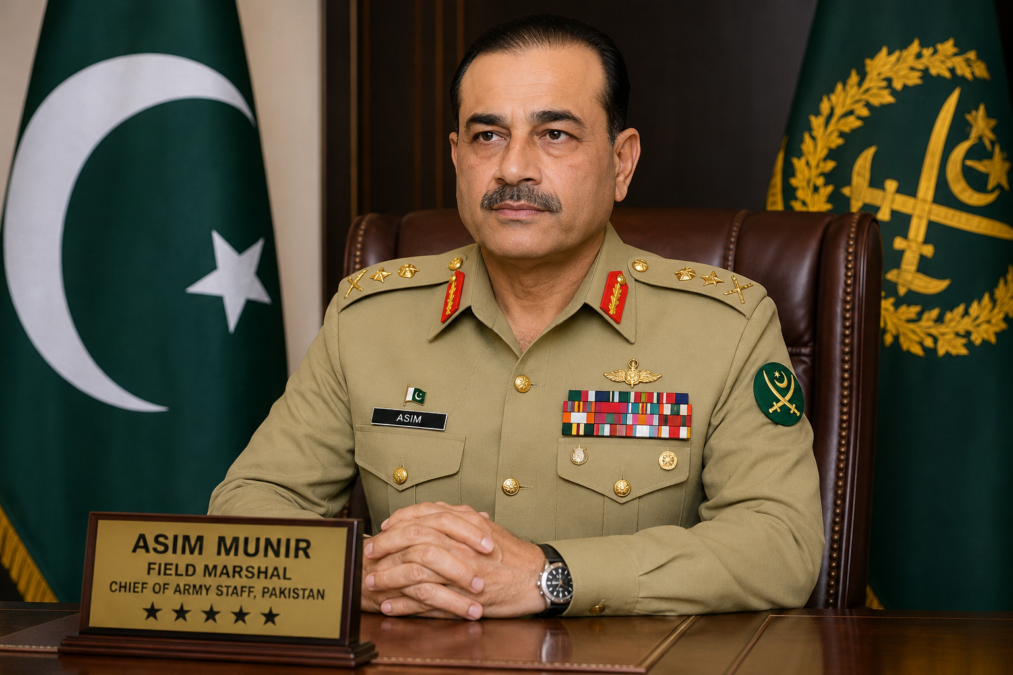

asim munir is one of the most prominent military figures in modern Pakistan. As Pakistan’s army chief, he has played an important role in national security, military strategy, and regional diplomacy. His career has included senior command positions, intelligence leadership, and major responsibilities during periods of tension in South Asia.
In May 2025, he was promoted to the rank of Field Marshal, a rare five-star military rank in Pakistan. Reuters reported that this was the first promotion to the rank in almost 60 years, following the 2025 conflict between Pakistan and India. He continued to serve as the country’s army chief after the promotion.
This article provides a balanced and easy-to-understand look at asim munir, his background, military career, leadership, major events, international relations, and the challenges connected with his position.
Who Is asim munir?
asim munir is a senior Pakistani military officer who became Chief of Army Staff in November 2022. The position of army chief is one of the most important military offices in Pakistan because the Pakistan Army has major responsibilities related to national defence and security.
Over the years, Munir has held several important appointments. His experience includes command responsibilities as well as work connected with military intelligence. These positions helped shape his understanding of national security and strategic affairs.
His public career has attracted considerable attention because his time as army chief has coincided with several important developments, including:
- Tensions between Pakistan and India
- Security challenges along Pakistan’s borders
- Political disagreements within Pakistan
- Regional conflicts involving neighbouring countries
- Pakistan’s changing relations with major world powers
- Increased international attention on Pakistan’s military leadership
As a result, asim munir has become a widely discussed name in both Pakistani and international news.
Early Military Journey of asim munir
A senior military career doesn’t happen overnight. It normally takes decades of training, discipline, responsibility, and professional experience.
Munir joined the Pakistan Army and progressed through different stages of military service. Like other officers who rise to the highest ranks, his career involved professional military education, command duties, and assignments in different parts of the country’s security structure.
His professional background became especially important when he was given senior intelligence responsibilities. Such positions require officers to study security threats, regional developments, political conditions, and information that may affect national defence.
This experience later became an important part of his profile as a senior military leader.
Military Intelligence Experience
One of the most notable parts of asim munir‘s career was his service in Pakistan’s intelligence structure.
He served as Director General of Inter-Services Intelligence (ISI), one of Pakistan’s most important intelligence organizations. His time in this position was relatively short, but the appointment itself demonstrated the level of confidence placed in him by the country’s military leadership.
Intelligence leadership can be demanding because it requires careful assessment of information rather than simply reacting to events.
An intelligence chief may have to consider:
- Border security
- Terrorism and militant threats
- Foreign military activities
- Regional political changes
- Internal security concerns
- Strategic relationships with other countries
- Possible future security risks
This type of experience can provide a broad understanding of national security. It also gave Munir experience beyond traditional battlefield command.
asim munir as Chief of Army Staff
In November 2022, asim munir became Pakistan’s Chief of Army Staff.
The appointment came at a politically and economically difficult time for Pakistan. The country faced security concerns, political polarization, economic pressure, and complicated relations with neighbouring states.
The army chief has a major responsibility for maintaining military preparedness. At the same time, the position requires dealing with rapidly changing regional circumstances.
During Munir’s tenure, Pakistan faced several important security challenges. These included attacks by militant groups, tensions on the western border, and renewed confrontation with India.
His leadership has therefore been closely connected with questions of national defence and strategic planning.
The 2025 Pakistan-India Conflict
One of the most important events associated with asim munir‘s leadership was the military confrontation between Pakistan and India in May 2025.
The confrontation followed a serious escalation after an attack in Indian-administered Kashmir. India carried out strikes in Pakistan, and Pakistan responded with military action.
The situation was especially dangerous because both Pakistan and India possess nuclear weapons.
Following the fighting, a ceasefire was reached. The exact international and bilateral interpretations of how the ceasefire was achieved differed. Reuters reported that the United States later became involved diplomatically, while India maintained that the ceasefire resulted from direct military communication between the two countries and rejected third-party mediation claims.
For Pakistan’s military leadership, the episode became a major test of preparedness and crisis management.
Promotion to Field Marshal
In May 2025, asim munir received one of the most significant promotions of his career.
Pakistan’s government approved his promotion from general to Field Marshal. Reuters described it as Pakistan’s first such elevation in nearly six decades. The previous Pakistani officer to hold the rank had been Ayub Khan, who became Field Marshal in 1965.
The government presented the promotion as recognition of Munir’s leadership during the conflict with India.
The rank of Field Marshal is a five-star military rank and is generally associated with exceptional military leadership. Importantly, Munir continued in his position as army chief after receiving the new rank.
Why Was the Promotion Important?
The promotion attracted attention for several reasons:
- It was extremely rare in Pakistan’s military history.
- It came after a major military confrontation.
- It strengthened Munir’s position within the country’s security establishment.
- It generated significant public and political discussion.
- It increased international interest in Pakistan’s military leadership.
Munir himself described the honour as recognition not only for him but for Pakistan’s armed forces and the nation, according to Reuters.
Leadership Style of asim munir
Leadership in the military is very different from leadership in a business or ordinary organization. Military commanders must make decisions in situations where national security, human lives, and international relations can be affected.
asim munir has generally presented himself as a disciplined and security-focused military leader.
His public role has emphasized themes such as:
- National defence
- Military preparedness
- National unity
- Counterterrorism
- Border security
- Strategic stability
- Pakistan’s sovereignty
His supporters view him as a firm leader who emphasizes national security. His critics, meanwhile, have raised concerns about the military’s wider influence in Pakistan’s political affairs.
A balanced understanding requires recognizing both perspectives rather than relying only on praise or criticism.
asim munir and Pakistan’s Internal Security
Pakistan has faced terrorism and militancy for many years. Security threats have appeared in different regions and have involved different groups.
The army has been deeply involved in counterterrorism operations. Consequently, the army chief has an important role in developing broad security policies and coordinating military responses.
During Munir’s tenure, militant violence remained a significant challenge.
Pakistan’s western borders are particularly important because developments in Afghanistan and Iran can directly affect Pakistani security.
For military planners, border security involves more than soldiers and weapons. It can also involve:
- Intelligence gathering
- Border management
- Counterterrorism operations
- Diplomatic cooperation
- Economic development
- Local administration
- International coordination
This makes national security a complicated task with no single solution.
Regional Relations and Diplomacy
Although an army chief is primarily a military officer, modern security leadership often includes international diplomacy.
This has become increasingly visible during Munir’s tenure.
Pakistan has important relationships with countries including:
- China
- Saudi Arabia
- Türkiye
- Iran
- The United States
- Afghanistan
- Gulf countries
Each relationship has its own opportunities and challenges.
Pakistan needs economic partnerships, regional stability, energy security, trade opportunities, and defence cooperation. At the same time, it must manage relationships with countries that may have competing interests.
This is where military diplomacy can become significant.
asim munir and the United States
One of the most notable international developments involving asim munir was his June 2025 meeting with U.S. President Donald Trump at the White House.
Reuters reported that Trump hosted Munir for a lunch meeting without accompanying senior Pakistani civilian officials, making the event unusual and internationally significant. The two discussed Iran, trade, regional security, and other issues.
The meeting demonstrated the importance of Pakistan’s security role in regional affairs.
It also showed that relationships between Pakistan and the United States can involve both military and economic interests.
However, such relationships are complicated. Pakistan must balance its connections with the United States, China, Gulf states, Iran, and other countries.
Pakistan, Iran and Regional Peace
The role of asim munir became even more visible in regional diplomacy in August 2026.
Reuters reported that Munir travelled to Tehran as part of Pakistan’s efforts to promote peace and stability amid the conflict involving Iran, the United States, and Israel.
The visit showed how Pakistan’s military leadership can become involved in wider diplomatic efforts when regional security is at risk.
According to Reuters, discussions in Tehran included:
- Preventing further escalation
- Regional peace and stability
- The possibility of a negotiated settlement
- The Strait of Hormuz
- Wider regional security concerns
Pakistan’s Interior Minister Mohsin Naqvi accompanied Munir during the visit. Reuters later reported that Pakistan and Iran described the discussions as constructive and said they had made significant progress on issues connected with de-escalation and peace.
This episode highlights an important point: military leadership isn’t always about preparing for conflict. At times, it can also involve helping prevent conflict.
A Look at asim munir’s Major Career Milestones
| Career Area | Importance |
|---|---|
| Pakistan Army service | Built his professional military career |
| Intelligence assignments | Developed experience in national security |
| ISI leadership | Gained senior intelligence experience |
| Chief of Army Staff | Became Pakistan’s top serving army officer |
| 2025 India-Pakistan crisis | Faced a major national security test |
| Field Marshal promotion | Received Pakistan’s rare five-star military rank |
| U.S. diplomatic engagement | Increased international visibility |
| Iran peace efforts | Became involved in regional diplomacy |
This timeline helps explain why asim munir has become such an important figure in discussions about Pakistan’s security and foreign relations.
Political Debate Around asim munir
No discussion of asim munir would be complete without mentioning the political debate surrounding Pakistan’s military.
The Pakistan Army has historically played a powerful role in the country’s politics. Supporters of military involvement often argue that the armed forces are essential for stability and national security.
Critics argue that the military should remain within its constitutional defence role and that elected civilian institutions should have the leading role in political decision-making.
These disagreements have made the army chief’s position highly sensitive.
It is therefore useful for readers to distinguish between:
Military leadership:
The army’s responsibilities related to defence, security, training, and strategic preparedness.
Political debate:
Arguments about how much influence the military should have in civilian political affairs.
Keeping these issues separate makes it easier to understand the wider discussion around asim munir without relying on political slogans.
Public Image and National Attention
Following the 2025 conflict with India, public attention toward asim munir increased significantly.
Reuters reported that support for the army and Munir rose after the confrontation, while analysts also noted that the conflict strengthened the military’s position within Pakistan’s political environment.
Public opinion, however, is never completely uniform.
Some Pakistanis see Munir as a strong defender of the country. Others have concerns about political developments and the role of the military.
A responsible article should therefore avoid presenting one side as the only truth. Public opinion can change with events, and different groups may have very different views.
Challenges Facing asim munir
The responsibilities of Pakistan’s army chief are enormous.
Among the major challenges are:
Border Security
Pakistan shares borders with several countries, each presenting different security conditions. The western border has been particularly important because of instability and militant activity in the region.
Relations With India
Pakistan and India have a long history of conflict and disagreement. Both countries are nuclear powers, making crisis management especially important.
Counterterrorism
Militant violence remains a serious challenge. Military operations alone may not solve every underlying cause, so broader national policies can also matter.
Regional Conflicts
Conflicts involving Iran, Afghanistan, the Gulf region, and other neighbouring areas can create new risks for Pakistan.
Economic Pressure
Security and economics are closely connected. A stable security environment can help support investment, trade, tourism, and long-term development.
International Relations
Pakistan must maintain relationships with multiple major powers without unnecessarily increasing tensions with any one partner.
These challenges mean that asim munir‘s leadership involves much more than military strategy.
The Importance of Strategic Stability
South Asia is home to some of the world’s most important and sensitive security relationships.
Pakistan and India both possess nuclear weapons. Because of this, even a limited military confrontation can create international concern.
Strategic stability depends on several factors:
- Clear communication
- Responsible leadership
- Strong crisis-management systems
- Military preparedness
- Diplomatic engagement
- Avoiding unnecessary escalation
- Respecting international obligations
The 2025 conflict demonstrated how quickly tensions can rise. It also showed why communication and diplomacy remain essential.
What Can We Learn From the Career of asim munir?
The career of asim munir offers several broader lessons about leadership and public responsibility.
Experience Matters
Senior leadership normally develops through years of professional experience. Military officers must learn from different assignments and challenges before reaching top positions.
Decisions Have Consequences
A decision made by a senior military leader can affect not only soldiers but millions of civilians.
Security Requires More Than Force
Modern national security involves diplomacy, economics, intelligence, technology, communication, and international partnerships.
Crisis Management Is Important
When countries face conflict, preventing further escalation can be as important as military preparedness.
Public Trust Matters
National institutions need public confidence. Transparency, professionalism, and responsible communication can help strengthen that confidence.
Frequently Asked Questions About asim munir
Who is asim munir?
asim munir is a senior Pakistani military officer who became Chief of Army Staff in November 2022. He was promoted to Field Marshal in May 2025.
When did asim munir become army chief?
He became Pakistan’s Chief of Army Staff in November 2022.
What rank does asim munir hold?
He was promoted to the rank of Field Marshal in May 2025. Reuters reported that this was Pakistan’s first promotion to that rank in almost 60 years.
Why did asim munir become internationally known?
His international profile increased because of his role as Pakistan’s army chief, particularly during the 2025 Pakistan-India conflict and subsequent international diplomatic engagements.
Did asim munir meet Donald Trump?
Yes. Reuters reported that U.S. President Donald Trump hosted Munir at the White House in June 2025.
Has asim munir been involved in regional peace efforts?
Yes. In August 2026, he travelled to Tehran as part of Pakistan’s efforts to promote regional peace and de-escalation amid the Iran conflict.
Why asim munir Remains an Important Figure
The importance of asim munir comes from the combination of his military position, professional experience, and the difficult regional environment in which he has served.
Pakistan sits in a strategically important part of Asia. It borders China, India, Afghanistan, and Iran and is connected to the wider Gulf and Central Asian regions.
Because of this location, Pakistan’s security decisions can have effects beyond its own borders.
Munir’s tenure has included some of the most serious security developments in recent Pakistani history. From the 2025 confrontation with India to diplomatic efforts involving Iran in 2026, his role has extended into matters that affect regional stability.
At the same time, discussions about asim munir should remain factual and balanced. Praise and criticism are both part of public debate, but readers benefit most from verified information and careful context.
The Future Role of asim munir
Looking ahead, asim munir will continue to face a demanding security environment.
Pakistan’s future challenges are unlikely to be limited to traditional military threats. Cybersecurity, terrorism, border management, economic security, climate-related risks, regional instability, and technological change can all influence national security.
The military will therefore need to adapt to a changing world.
For Pakistan, the ideal future would involve:
- Strong national institutions
- Stable civilian governance
- Professional armed forces
- Improved regional relations
- Economic growth
- Effective counterterrorism policies
- Peaceful diplomatic engagement
- Greater opportunities for young people
Military strength can help protect a country, but long-term national progress also depends on education, economic development, good governance, and peaceful relations with neighbours.
Final Thoughts on asim munir
asim munir has become one of the most influential military figures in Pakistan’s recent history. His journey from a professional army officer to Chief of Army Staff and then Field Marshal reflects decades of military service and responsibility.
His leadership has taken place during an especially complicated period. Pakistan has faced security threats, political uncertainty, economic difficulties, tensions with India, and major changes in the wider region.
His promotion to Field Marshal in 2025 marked a historic moment in Pakistan’s military history. His later diplomatic involvement, including the 2026 visit to Iran, also demonstrated how security leadership can overlap with efforts to prevent wider regional conflict.
Ultimately, the story of asim munir is not simply a story about one military officer. It is also a story about Pakistan’s changing security environment, the responsibilities of national leadership, and the importance of stability in a strategically sensitive region.
As Pakistan looks toward the future, the biggest goal should be lasting peace, economic progress, institutional strength, and a secure environment for its people. Understanding asim munir and his role in these developments can help readers better understand Pakistan’s modern military and regional affairs.
asim munir: A Deeper Look at His Leadership, Strategy and National Role
The story of asim munir goes beyond his position as Pakistan’s senior-most military officer. His career provides an opportunity to understand how military leadership, national security, diplomacy, and regional stability can intersect. As Pakistan continues to deal with security challenges and a changing geopolitical environment, the decisions made by its top military leadership remain important.
This second part explores asim munir from a broader perspective, including his professional qualities, strategic responsibilities, relationship with institutions, regional importance, and the possible lessons his career offers.
asim munir and the Meaning of Military Leadership
Military leadership is built around discipline, preparation, responsibility, and decision-making. A senior commander must think about immediate threats while also considering what might happen months or years later.
For asim munir, this responsibility has been especially demanding because Pakistan operates in a region where security issues can change quickly.
A successful military leader needs to understand:
- National defence requirements
- Changing security threats
- Modern military technology
- Intelligence assessments
- International diplomacy
- Regional politics
- Economic limitations
- The importance of communication
In other words, being a senior military commander isn’t simply about having authority. It also means accepting responsibility for difficult decisions.
Strategic Thinking in the Modern Era
The nature of warfare has changed dramatically. In the past, military power was often measured mainly by the number of soldiers, tanks, aircraft, and ships a country possessed.
Today, the picture is much broader.
Modern strategic planning can involve:
- Artificial intelligence
- Cybersecurity
- Satellite technology
- Electronic warfare
- Drones
- Precision weapons
- Intelligence networks
- Information security
- Economic resilience
For a country such as Pakistan, strategic planning must also take geography into account.
Pakistan’s location gives it considerable regional importance. It is positioned near South Asia, Central Asia, China, Afghanistan, Iran, and the Arabian Sea.
Therefore, decisions involving Pakistan’s security can have consequences beyond its borders.
asim munir and Counterterrorism
Counterterrorism has remained one of Pakistan’s major national security concerns.
For many years, Pakistan has experienced attacks involving militant organizations. These attacks have affected civilians, security personnel, businesses, and communities.
The military has played a major role in counterterrorism operations. During asim munir‘s tenure, dealing with militant threats has remained an important responsibility.
However, counterterrorism isn’t only about military operations.
Long-term security can also depend on:
- Better intelligence
- Border controls
- Economic opportunities
- Education
- Effective policing
- Community cooperation
- Regional diplomacy
- Strong government institutions
This broader approach matters because military action can address an immediate threat, while social and economic measures may help reduce the conditions that allow instability to continue.
Border Challenges and National Security
Pakistan has several important borders, and each one presents different security concerns.
The border with Afghanistan is particularly sensitive. Political developments in Afghanistan can influence Pakistan’s internal security, trade, refugees, and militant activity.
The border with Iran also has strategic importance. Cooperation between Pakistan and Iran can support regional stability, trade, and border security.
Meanwhile, the eastern border with India remains one of the world’s most closely watched military boundaries.
For asim munir, managing these different security environments requires careful planning.
A country can’t simply focus on one border while ignoring the others. That’s why strategic balance is essential.
asim munir and India-Pakistan Relations
Relations between Pakistan and India have been complicated for decades.
The two countries share historical, cultural, economic, and geographical connections, but they also have major political and territorial disagreements.
The military relationship is particularly sensitive because both nations possess nuclear weapons.
During the 2025 confrontation, asim munir became one of the central figures in Pakistan’s military response.
The conflict demonstrated how quickly regional tensions can become serious. It also reinforced the importance of communication and diplomacy.
For ordinary people, peace between Pakistan and India could provide significant benefits, including:
- Greater regional trade
- Increased tourism
- More cultural exchange
- Better economic opportunities
- Reduced defence pressure
- Improved regional cooperation
That doesn’t mean disagreements disappear overnight. However, responsible diplomacy can help prevent disagreements from turning into major conflicts.
The Importance of Nuclear Responsibility
Pakistan’s nuclear capability adds another layer to the responsibilities of its senior military leadership.
Nuclear weapons are primarily associated with deterrence, meaning they are intended to discourage a major attack by creating the possibility of devastating retaliation.
Because of this, nuclear-armed states need strong command systems and careful decision-making.
For asim munir, maintaining strategic stability is therefore an important part of the wider security environment.
The basic principle is straightforward:
Strong defence should be combined with responsible crisis management.
This is particularly important during periods of tension because even small misunderstandings can become dangerous if communication breaks down.
International Recognition and Diplomatic Engagement
A modern army chief can also become an important international figure.
This happened with asim munir as his tenure brought him into contact with leaders and officials from other countries.
His reported meeting with U.S. President Donald Trump in 2025 attracted international attention. The discussion included regional security and other matters important to Pakistan and the United States.
Later, Munir’s involvement in Pakistan’s diplomatic efforts concerning Iran demonstrated another side of his international role.
These developments show that military diplomacy can become an important tool for countries facing complicated regional circumstances.
asim munir and Pakistan’s Relationship With China
China is one of Pakistan’s most important strategic and economic partners.
The two countries have developed extensive cooperation in areas such as infrastructure, energy, defence, trade, and technology.
The China-Pakistan Economic Corridor, commonly known as CPEC, has been a major part of this relationship.
Security is important to CPEC because large infrastructure projects require a stable environment.
Pakistan has therefore placed significant attention on protecting Chinese citizens and projects operating in the country.
For asim munir, maintaining a secure environment for strategic partnerships is an important part of the broader national security picture.
Military Professionalism and Discipline
One of the traditional qualities associated with successful military organizations is discipline.
Discipline doesn’t simply mean following orders. It can also include:
- Being prepared
- Respecting procedures
- Remaining calm under pressure
- Maintaining professional standards
- Taking responsibility
- Working as a team
The military career of asim munir has developed through this professional structure.
Reaching the highest levels of military leadership generally requires years of experience, evaluations, training, and increasingly demanding responsibilities.
asim munir and the Role of Intelligence
Intelligence is sometimes misunderstood as simply collecting secret information.
In reality, modern intelligence involves collecting information, verifying it, analyzing patterns, identifying threats, and helping decision-makers understand possible future scenarios.
Munir’s previous intelligence experience is therefore an important part of his professional background.
An effective intelligence system can help military leaders answer questions such as:
- Where could a threat emerge?
- What capabilities does an opposing force have?
- What might happen next?
- Which information is reliable?
- What response options are available?
Good intelligence doesn’t guarantee perfect decisions, but it can reduce uncertainty.
A Balanced View of His Public Image
Public figures often attract both support and criticism.
The same is true of asim munir.
Supporters generally point to his military experience, leadership during security crises, and role in protecting Pakistan’s national interests.
Critics, on the other hand, discuss the wider political influence of the military in Pakistan.
Both viewpoints form part of the public conversation.
For readers, the best approach is to separate verified facts from political opinions.
For example, Munir’s military appointments and promotion are matters of public record. Opinions about whether the military should have greater or smaller influence in civilian affairs are political judgments.
Understanding that distinction helps create a more informed discussion.
Leadership During Difficult Times
The strongest test of leadership often comes during difficult periods.
When circumstances are calm, decision-making can appear simple. During a crisis, however, leaders must consider many competing factors at once.
For asim munir, major challenges have included:
| Challenge | Why It Matters |
|---|---|
| India-Pakistan tensions | Can affect regional peace |
| Terrorism | Threatens civilian and national security |
| Afghan instability | Can influence border security |
| Iran-related tensions | Can affect Pakistan’s western border |
| Economic pressure | Influences national resilience |
| International relations | Shapes strategic partnerships |
| Technological change | Creates new security requirements |
Managing all these issues requires more than military strength. It requires planning and coordination.
The Human Side of National Security
National security discussions sometimes focus heavily on maps, weapons, borders, and military equipment.
But behind every security issue are real people.
A peaceful environment allows families to live safely, children to attend school, businesses to operate, and communities to develop.
This is why the ultimate purpose of national security should be the protection and well-being of citizens.
The role of asim munir, like that of any senior national security leader, should therefore be understood within this larger purpose.
Military preparedness matters because it can protect a country’s sovereignty. At the same time, peace and stability create the conditions needed for national development.
Technology and the Future of Pakistan’s Military
Technology will continue to change the military landscape.
Drones have already become an important part of modern warfare. Artificial intelligence can assist with information analysis. Cyber operations can target communication systems and infrastructure.
Future military planning may increasingly depend on:
- Artificial intelligence
- Autonomous systems
- Cyber defence
- Space-based information
- Advanced surveillance
- Electronic warfare
- Digital communication
- Unmanned aircraft
Pakistan, like other countries, will need to adapt to these changes.
For asim munir, remaining prepared for future technologies is therefore likely to remain an important part of strategic thinking.
Why Regional Peace Matters to Pakistan
Pakistan’s economy and national development are closely connected with regional stability.
A peaceful region can encourage:
- Investment
- Trade
- Tourism
- Transportation
- Energy cooperation
- Educational exchange
- Business partnerships
By contrast, prolonged conflict can create uncertainty and economic costs.
This is why diplomatic efforts should complement military preparedness.
A strong defence can deter threats, while diplomacy can reduce the chance that those threats develop into conflict.
The Future of Pakistan’s Security Policy
Pakistan’s security policy will likely continue to evolve.
Traditional military threats will remain important, but new challenges are emerging.
Climate change, water security, cyberattacks, artificial intelligence, misinformation, economic instability, and transnational crime can all influence national security.
This means future military leadership will need a wider understanding of security.
The concept of national defence is becoming increasingly connected to the strength of the entire country.
A nation with:
- A strong economy
- Good education
- Reliable institutions
- Modern technology
- Social stability
- Effective diplomacy
can often respond to crises more successfully.
Lessons Young People Can Learn From asim munir’s Career
Regardless of political views, there are some general lessons that young readers can take from a long military career.
Discipline Creates Progress
Large achievements usually require consistent effort. Discipline helps people continue working even when motivation becomes weaker.
Education Supports Leadership
Professional knowledge is important in every field. Learning allows people to make better decisions.
Responsibility Grows With Position
The higher a person’s position, the greater the consequences of their decisions.
Teamwork Matters
No major organization succeeds through one person alone. Effective teams combine different skills.
Calmness Is Valuable
During a crisis, emotional decisions can make problems worse. Staying calm can create better choices.
These lessons apply not only to military careers but also to education, business, sports, and everyday life.
Frequently Asked Questions
What is asim munir known for?
asim munir is primarily known for serving as Pakistan’s Chief of Army Staff and for his long military career, including senior intelligence responsibilities.
When was asim munir promoted to Field Marshal?
He was promoted to Field Marshal in May 2025 following the military confrontation between Pakistan and India.
Why was the Field Marshal promotion significant?
It was historically unusual because Pakistan had not promoted an officer to that rank for nearly six decades. The promotion attracted considerable national and international attention.
What major security issues has he faced?
His tenure has included India-Pakistan tensions, terrorism, border security, regional instability, and changing international relationships.
Why is his role important internationally?
Pakistan occupies a strategically important geographical position and possesses nuclear weapons. Consequently, its military leadership attracts significant international attention.
Looking Toward a More Peaceful Future
The future of Pakistan depends on more than military strength.
A secure Pakistan also needs economic opportunity, education, political stability, technological development, and peaceful relations with neighbouring countries.
The career of asim munir shows how closely these areas can be connected.
Military leaders may be responsible for national defence, but lasting national progress requires contributions from many parts of society.
Teachers educate the next generation. Scientists develop new technologies. Entrepreneurs create businesses. Farmers produce food. Engineers build infrastructure. Doctors serve communities. Civil servants maintain institutions.
Every part of society has a role.
Conclusion: The Continuing Story of asim munir
asim munir has had a significant career in Pakistan’s military and has served during a period of major national and regional challenges. His experience in military intelligence, his appointment as army chief, his promotion to Field Marshal, and his involvement in regional diplomatic efforts have made him a highly visible figure.
His career also reflects the complicated security environment surrounding Pakistan. Relations with India, developments in Afghanistan, ties with China, relations with Iran and the United States, and the continuing fight against terrorism all contribute to the responsibilities of Pakistan’s senior military leadership.
Ultimately, the story of asim munir is still developing. The most important measure of any national security leadership is not simply the rank held or the power available, but how effectively that responsibility contributes to the safety, stability, and future prosperity of the country.
For Pakistan, the best path forward is one that combines strong national defence with peace, economic development, responsible institutions, and constructive diplomacy. In that broader picture, asim munir remains an important figure in understanding Pakistan’s modern security and strategic landscape.
Explore more insightful articles on All Vantage News and never miss an update.Contact Us.