
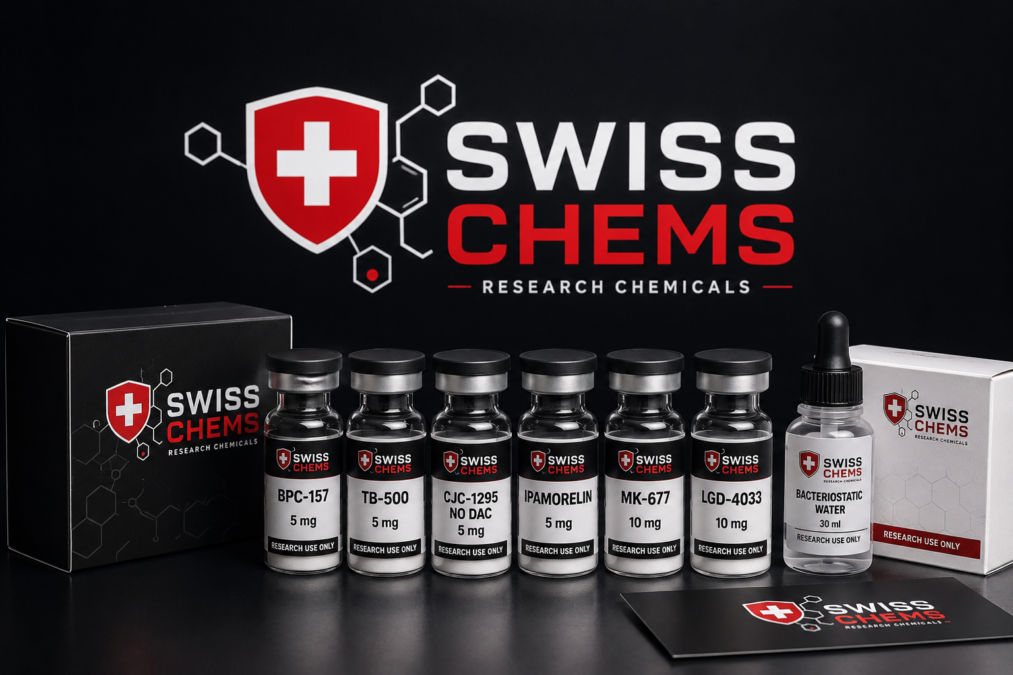

Swiss chems is a name that has appeared frequently in online discussions about research chemicals, peptides, SARMs, nootropics, and other laboratory-related compounds. For readers who come across the name for the first time, it’s important to understand what the company represents, what types of products have been associated with it, and why careful research matters before believing marketing claims.
The world of research chemicals can be confusing. Product pages may use scientific language, laboratory terminology, and phrases such as “research use only.” However, a scientific-looking label doesn’t automatically mean that a product has been approved for human use or proven safe. In fact, regulators have raised important concerns about certain products marketed by Swiss Chems.
The U.S. Food and Drug Administration (FDA) issued a warning letter to Swisschems on December 10, 2024. The letter stated that the FDA had reviewed the company’s website and found products marketed as semaglutide and retatrutide for sale in the United States. The agency concluded that those products were unapproved new drugs for the uses described on the website.
So, what should readers know? Let’s take a careful, balanced look at swiss chems, its research-chemical marketplace, laboratory testing, regulatory status, and the safety questions that consumers and researchers should consider.
What Is Swiss Chems?
Swiss Chems is associated with the online research-chemical market. Unlike a conventional community pharmacy, this type of vendor operates in a specialized area where compounds are often presented as being intended for laboratory or research purposes.
Products associated with the brand have included categories such as:
- Peptides
- SARMs
- Nootropics
- Research chemicals
- Other experimental compounds
The exact catalog can change over time, so readers shouldn’t assume that an older product list represents the company’s current offerings.
The phrase “research chemical” is particularly important. It generally refers to a chemical compound intended for scientific investigation rather than an approved medicine for routine treatment. That distinction matters because a research compound may not have gone through the same safety, quality, manufacturing, and clinical review required for an approved medicine.
In other words, a bottle or package can look professional without being equivalent to a regulated pharmaceutical product.
Why Swiss Chems Gets Attention Online
There are several reasons why swiss chems has attracted attention on forums, fitness communities, research discussions, and websites covering peptides and performance-related compounds.
One reason is the broad range of substances associated with the research-chemical market. Another is the growing public interest in compounds connected with metabolism, body composition, exercise, recovery, and cognitive research.
Online discussions, however, can be misleading. Some users report positive experiences, while others question product quality, testing, labeling, delivery, or consistency. These personal reports are not a substitute for controlled scientific evidence.
Independent testing can provide more useful information than anonymous online comments. For example, Finnrick currently lists 10 tests involving Swiss Chems products across several peptides, with both passing and failing results in its dataset. Its page shows four of ten classifiable tests as passing and reports results involving compounds including BPC-157, ipamorelin, and CJC-1295.
That mixed testing history is a good reminder: one test result should never be treated as proof that every product from a vendor is consistently pure or accurately labeled.
Swiss Chems and the Meaning of “Research Use Only”
One of the most important concepts surrounding swiss chems is the phrase “research chemicals only.”
At first glance, this phrase may sound reassuring. But it doesn’t automatically establish that a compound is safe, approved, or appropriate for people.
The FDA specifically addressed this issue in its December 2024 warning letter. According to the agency, Swisschems used “research chemicals only” labeling, but the FDA determined that evidence from the website indicated that certain products were intended for human use.
This distinction is essential.
A genuine laboratory researcher may work with an experimental substance to study:
- Molecular pathways
- Receptor activity
- Chemical stability
- Biological mechanisms
- Cellular responses
- Analytical properties
That’s very different from recommending the compound as a treatment for obesity, diabetes, muscle growth, or another health condition.
Readers should therefore avoid assuming that a “research use only” statement is the same thing as regulatory approval.
Swiss Chems and the FDA Warning Letter
The most significant regulatory issue connected with swiss chems is the FDA warning letter dated December 10, 2024.
The FDA said it reviewed the Swisschems website in October 2024 and observed the marketing of products described as “Semaglutide” and “Retatrutide” for sale in the United States. The agency said these products were unapproved new drugs for the referenced uses and stated that they were being introduced into interstate commerce in violation of relevant provisions of U.S. federal law.
The warning letter is important because it comes directly from a U.S. federal regulator rather than from an online reviewer.
The FDA also discussed marketing language found on product pages and social-media posts. According to the letter, the marketing included references to metabolic regulation, glucose regulation, weight management, and scientific studies.
The agency instructed the company to explain the corrective actions it would take. It also warned that failure to adequately address the violations could lead to legal action, including seizure or injunction.
This doesn’t mean every product ever associated with the name is identical or that every claim made online is automatically false. Rather, it means readers should take the regulatory history seriously when evaluating the company and its products.
What Are Peptides and Why Are They Discussed?
Peptides are short chains of amino acids. They play important roles in biology and can influence many processes in the human body.
Some peptides are naturally produced by the body, while others are manufactured for research or medical purposes.
Modern science studies peptides for areas such as:
- Hormone signaling
- Metabolism
- Cell communication
- Tissue processes
- Receptor activity
- Drug development
However, the fact that a peptide has a biological effect doesn’t mean that an unapproved version is safe for human use.
This is where online discussions can become complicated. A research paper may demonstrate that a particular molecule has an interesting biological mechanism, but that doesn’t automatically establish an appropriate dose, long-term safety, manufacturing quality, or medical usefulness.
That’s why scientific evidence needs to be considered as a whole rather than reduced to a single promising study.
Understanding SARMs in the Swiss Chems Discussion
SARMs, or selective androgen receptor modulators, are another category frequently discussed in online research-chemical communities.
SARMs are experimental compounds designed to interact with androgen receptors. Researchers have investigated them for potential effects involving muscle, bone, and other tissues.
They’ve also become popular in fitness-related discussions because of claims surrounding strength and body composition.
However, experimental status is important. People shouldn’t confuse a research compound with an approved dietary supplement or prescription medication.
There can also be concerns involving:
- Unknown long-term effects
- Hormonal changes
- Product contamination
- Incorrect labeling
- Inaccurate concentrations
- Interactions with other substances
- Differences between laboratory research and real-world human use
Therefore, a product being discussed heavily in fitness communities doesn’t establish that it is safe or effective.
Why Independent Laboratory Testing Matters
One of the biggest questions surrounding any research-chemical supplier is product quality.
A certificate of analysis, commonly called a COA, can provide information about a particular batch. However, readers need to understand what a COA actually proves.
A laboratory report may describe characteristics such as:
| Testing Area | What It Can Help Show |
|---|---|
| Identity testing | Whether the tested material matches the expected compound |
| Purity testing | How much of the measured sample appears to be the target substance |
| Potency testing | Whether the measured amount corresponds with the label |
| Contamination testing | Whether certain unwanted substances are detected |
| Batch testing | Information about one specific production batch |
A vendor-published COA should not automatically be treated as independent proof of quality.
For example, HighPeptides’ 2026 review notes that Swiss Chems publishes HPLC certificates but characterizes them as vendor-published certificates rather than independently commissioned blinded testing.
Independent testing can therefore be valuable because it creates another layer of verification.
And yet, even independent testing has limits. A test usually represents the specific sample that was examined. It doesn’t necessarily prove that every bottle or batch from the same company has identical quality.
Swiss Chems and the Importance of Batch-to-Batch Consistency
Imagine buying a product labeled with the same name twice and receiving materially different chemical compositions. That would be a serious quality concern.
Batch consistency is therefore a major issue in laboratory chemistry.
A strong quality-control system generally involves documented manufacturing processes, validated analytical methods, controlled storage, traceability, and appropriate testing.
Online research-chemical vendors may provide laboratory reports, but readers should still ask:
- Who performed the test?
- Was the laboratory independent?
- Was the sample randomly selected?
- Is the batch number visible?
- Does the report match the product label?
- What testing method was used?
- Does the laboratory have appropriate qualifications?
- Is the report recent?
- Was contamination evaluated?
These questions are far more useful than simply looking for a large purity percentage.
What Online Reviews Can and Cannot Tell You
Online reviews are everywhere, and swiss chems is no exception.
Some users report positive experiences. Others express doubts about particular products or batches. Reddit discussions, for example, contain both favorable and critical experiences involving Swiss Chems.
But here’s the catch: personal experience isn’t controlled scientific evidence.
A person might say that a product “worked,” but that statement doesn’t prove:
- What was actually inside the product
- Whether the effect came from the claimed ingredient
- Whether the person’s experience can be repeated
- Whether there were hidden side effects
- Whether another batch would behave the same way
Likewise, one negative online review doesn’t necessarily prove that every product from a company is defective.
The best approach is to treat reviews as anecdotal information, not as scientific proof.
Regulatory Approval Is Different From Scientific Interest
This is one of the most important lessons for anyone researching swiss chems.
A compound can be scientifically interesting without being an approved medicine.
Researchers may investigate a molecule for years before regulators determine whether it is safe and effective enough for a particular medical use.
Regulatory review can consider:
- Clinical trial evidence
- Manufacturing standards
- Safety information
- Dosage information
- Labeling
- Benefits and risks
- Quality controls
- Adverse-event information
The FDA’s public information on unapproved GLP-1-related products also emphasizes that some experimental substances have not been established as safe and effective for medical conditions. The agency specifically states that retatrutide and cagrilintide cannot be used in compounding under federal law and have not been found safe and effective for any condition.
That’s a useful distinction for readers: experimental does not mean approved.
Semaglutide, Retatrutide, and the Broader Research Landscape
Semaglutide and retatrutide are often discussed together online, but they have different regulatory and scientific histories.
The FDA warning letter concerning Swisschems specifically mentioned both products.
Semaglutide is an established pharmaceutical ingredient used in FDA-approved medicines for specific indications. FDA labeling databases list approved semaglutide products, including Ozempic and Wegovy.
Retatrutide, on the other hand, remains an investigational compound. The FDA’s substance database identifies retatrutide as a peptide and lists its scientific identifiers, but the presence of a substance record does not mean that the substance has received FDA approval.
This difference shows why readers should carefully distinguish between:
An approved medicine → an investigational compound → a research-chemical product sold online.
Those are three very different categories.
Safety Questions Readers Should Consider
Anyone researching swiss chems or another research-chemical supplier should put safety ahead of convenience.
Potential concerns can include:
- Unknown purity
- Incorrect labeling
- Unexpected contaminants
- Inconsistent concentrations
- Poor storage conditions
- Unclear manufacturing history
- Limited human safety data
- Drug interactions
- Unknown long-term effects
These concerns can become even more important when a product is intended to affect hormones, metabolism, the nervous system, or other biological systems.
A product may look harmless because it arrives in a small bottle with a professional label. Nevertheless, appearance tells you very little about chemical quality.
If someone is considering a substance for personal health, the safest route is to discuss the situation with a qualified healthcare professional and use medicines obtained through legitimate, regulated channels.
How to Evaluate a Research-Chemical Company
A careful evaluation should go beyond price and customer comments.
Here is a useful checklist:
- Regulatory history: Search official government databases for warning letters or enforcement actions.
- Independent testing: Look for testing performed independently of the seller.
- Batch identification: Make sure reports clearly identify the tested batch.
- Transparency: Look for clear information about company identity and quality procedures.
- Scientific evidence: Separate published research from advertising claims.
- Human evidence: Check whether claims are supported by appropriate clinical studies.
- Storage information: Chemical stability can depend on storage conditions.
- Legal status: Regulations differ between countries and can change.
- Medical status: Research chemicals aren’t automatically approved medicines.
This process might take a little longer, but it’s much more reliable than trusting a flashy product page.
Swiss Chems: Strengths and Concerns at a Glance
A balanced article shouldn’t ignore either side.
| Area | What Readers Should Consider |
|---|---|
| Product range | The brand has been associated with a broad research-chemical catalog |
| Online presence | Swiss Chems has received considerable attention in research and fitness communities |
| Laboratory reports | Vendor-published COAs have been reported, but independent verification remains important |
| Independent testing | Available public testing shows mixed results in at least one independent dataset |
| Regulatory record | FDA issued a warning letter in December 2024 |
| Research status | Some compounds discussed in this market are experimental |
| Consumer safety | Human use of unapproved research chemicals can carry significant uncertainty |
| Best evidence | Official regulators, peer-reviewed research, and independent testing are more valuable than anonymous reviews |
The key lesson is simple: don’t judge a research-chemical supplier solely by positive reviews, attractive packaging, or scientific terminology.
The Difference Between Evidence and Marketing
Scientific language can sound impressive.
Words such as “advanced,” “premium,” “laboratory tested,” “next generation,” and “research grade” may appear convincing. But responsible readers should always ask what evidence supports the claim.
For example, “laboratory tested” could mean a product was analyzed in a laboratory. It doesn’t necessarily tell you whether:
- The lab was independent.
- The sample was randomly selected.
- The test was performed correctly.
- The result applies to every batch.
- The product is safe for humans.
Likewise, citing a scientific paper doesn’t automatically prove that a commercial product provides the same result.
This is why scientific literacy matters. When you slow down and ask the right questions, marketing becomes much easier to evaluate.
Why Accurate Information Matters in the Research-Chemical Market
The internet has made scientific information easier to access than ever before. That’s fantastic. But it has also made it easier for incomplete or misleading claims to spread quickly.
A responsible health or science article should therefore:
- Identify uncertainty.
- Separate fact from opinion.
- Cite authoritative sources.
- Avoid unsupported medical claims.
- Explain regulatory status clearly.
- Avoid presenting experimental compounds as proven treatments.
- Encourage professional medical guidance when appropriate.
That approach may not sound as exciting as a dramatic advertisement, but it’s far more useful to readers.
Frequently Asked Questions About Swiss Chems
Is Swiss Chems a pharmacy?
Readers shouldn’t automatically treat Swiss Chems as equivalent to a conventional regulated pharmacy. The FDA warning letter specifically addressed products marketed by Swisschems and described the referenced semaglutide and retatrutide products as unapproved new drugs.
Does a COA prove that a product is safe?
No. A certificate of analysis can provide information about a tested sample, but it doesn’t automatically establish human safety, clinical effectiveness, or regulatory approval.
Are all online reviews reliable?
No. Reviews are personal experiences. They can provide clues, but they aren’t a substitute for controlled research or independent laboratory analysis.
Are research chemicals approved medicines?
Not necessarily. A research chemical may be investigated scientifically without being approved for human treatment.
Why is independent testing important?
Independent testing can provide evidence that isn’t based solely on the seller’s own claims. It can help researchers evaluate identity, purity, and other characteristics of a specific sample.
What did the FDA say about Swiss Chems?
In its December 10, 2024 warning letter, the FDA stated that Swisschems marketed semaglutide and retatrutide products for U.S. sale and concluded that those products were unapproved new drugs for the referenced uses.
Final Thoughts on Swiss Chems
Swiss chems is a notable name in the online research-chemical market, but understanding the company requires more than reading product descriptions or customer comments. The most responsible approach is to examine independent testing, scientific evidence, regulatory records, and the difference between experimental compounds and approved medicines.
The FDA’s December 2024 warning letter is an important part of the public record and should not be overlooked. At the same time, independent testing information shows why product quality should be evaluated on a batch-by-batch basis rather than assumed from a brand name.
Ultimately, swiss chems should be researched with a critical and evidence-based mindset. Don’t let impressive labels, enthusiastic reviews, or scientific buzzwords make the decision for you. Instead, look for reliable evidence, understand regulatory status, recognize uncertainty, and put safety first.
In the fast-changing world of research chemicals, knowledge is the best starting point. By checking authoritative sources, understanding laboratory testing, and distinguishing research products from approved medicines, readers can make much more informed decisions about what they encounter online.
Disclaimer: This article is for general educational and informational purposes. It isn’t medical advice and does not recommend purchasing, taking, injecting, or otherwise using research chemicals or unapproved medicines. Anyone considering a substance for personal health should consult a qualified healthcare professional and follow applicable laws and regulations.
Explore more insightful articles on All Vantage News and never miss an update.Contact Us.