
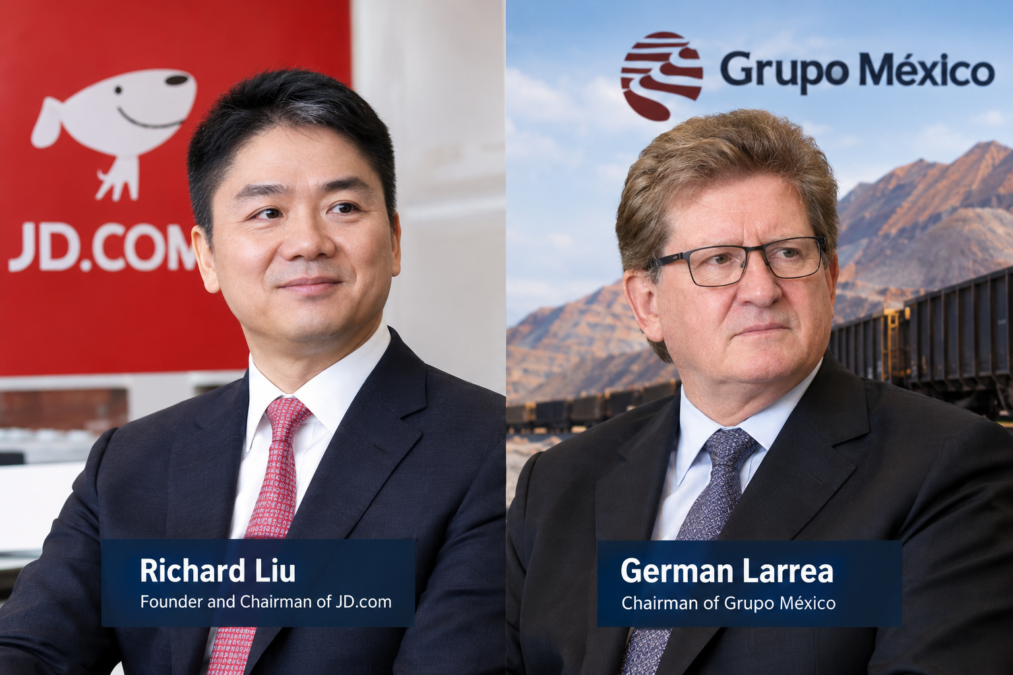

Introduction to richard liu and german larrea
The business world is full of people who have built successful companies, made important decisions, and influenced the way industries operate. Two names that often attract attention when discussing business leadership and wealth are Richard Liu and German Larrea. Although they come from different countries and work in different industries, both are connected with major business enterprises and the challenges of building long-term success.
Richard Liu and German Larrea represent two different approaches to business growth. Richard Liu, also known as Liu Qiangdong, is the Chinese entrepreneur who founded JD.com, one of China’s major e-commerce companies. German Larrea Mota-Velasco is a Mexican businessman associated with Grupo México, a major company with interests in mining, transportation, and infrastructure.
At first glance, their businesses may seem unrelated. One operates in the fast-moving world of online shopping and technology, while the other is connected to natural resources and industrial development. However, both business leaders demonstrate how vision, investment, organization, and long-term planning can shape a company’s future.
Understanding their careers also helps readers learn about entrepreneurship, international business, competition, and the responsibilities that come with building large companies. Rather than focusing only on wealth, it is useful to explore how their businesses developed, the industries they serve, and the opportunities and challenges they face.
This article examines Richard Liu and German Larrea, including their backgrounds, business achievements, leadership approaches, sources of wealth, and broader influence on the global economy.
Who Is Richard Liu?

Richard Qiangdong Liu
Also known as Liu Qiangdong
Richard Liu is a Chinese entrepreneur best known for founding JD.com. He helped transform a retail business into a large technology and supply-chain enterprise. He remains chairman of JD.com, although he stepped down as its chief executive officer in April 2022.
Richard Liu is an important figure in China’s digital economy. His career reflects the development of online shopping, modern delivery services, and technology-based retail operations.
Unlike entrepreneurs who focus mainly on developing software or online marketplaces, Liu’s business approach has placed considerable emphasis on managing products, warehouses, and delivery networks. This approach helped JD.com establish a business model that combines online shopping with extensive physical operations.
His story also demonstrates that an online company needs more than an attractive website. Customers expect genuine products, convenient payment options, reliable delivery, and support when something goes wrong. Building systems that meet these expectations requires investment, planning, and consistent management.
Richard Liu’s Early Life and Education
Richard Liu studied sociology at Renmin University of China, graduating in 1996. He later earned an Executive Master of Business Administration degree from China Europe International Business School in 2011.
His academic background is interesting because sociology focuses on people, communities, and how society functions. While it isn’t a traditional technical degree for an e-commerce founder, understanding people and their behavior can be useful when developing a business that serves millions of customers.
Liu’s early career involved retail and the distribution of electronic products. These experiences helped him understand the practical challenges of selling goods, managing inventory, and serving customers.
Rather than beginning with a fully developed online retail system, he gained business experience before moving into e-commerce. This progression highlights an important lesson: successful entrepreneurs often build their knowledge through a mixture of education, practical experience, and experimentation.
How Richard Liu Founded JD.com
Richard Liu began his entrepreneurial journey in Beijing in 1998 with a business focused on distributing electronic products. In January 2004, he launched an online retail website, laying the foundation for what became JD.com.
The growth of internet access created new opportunities for retailers. Customers could compare products, browse catalogs, and place orders without traveling to a physical store. However, online shopping also raised concerns about product quality, delivery reliability, and trust.
JD.com developed its operations around addressing many of these concerns.
Its business expanded from online retail into a broader technology and services company. Its activities include retail, logistics, healthcare, industrial services, and technology.
Some important elements of JD.com’s development include:
- Online retail: Giving customers access to a wide range of products.
- Logistics: Developing systems to store, sort, and deliver orders.
- Technology: Using digital systems to support sales and business operations.
- Customer service: Building processes to address questions, returns, and other customer needs.
- Business expansion: Entering related sectors to create additional sources of growth.
Of course, building such a business takes time. Warehouses, transportation networks, software, employees, and inventory all require resources. Liu’s business journey illustrates how an entrepreneur can combine digital tools with physical infrastructure to create a more complete shopping experience.
What Makes JD.com Different From Other Online Retailers?
JD.com operates in a competitive market that includes other major Chinese e-commerce businesses. One of its defining features has been its focus on supply-chain operations and logistics.
A supply chain is the system that moves products from manufacturers and suppliers to warehouses, retailers, and customers. In online shopping, this process can determine whether an order arrives on time and in good condition.
Consider what happens when someone orders a laptop online. The retailer needs to manage stock, verify the order, prepare the package, arrange transportation, and deliver it to the correct address. If any step fails, the customer may have a poor experience.
JD.com’s operating model gives significant attention to these connected activities.
| Business area | Why it matters |
|---|---|
| Online retail | Helps customers discover and purchase products |
| Warehousing | Keeps products organized and available |
| Delivery services | Moves orders to customers |
| Technology | Supports inventory, transactions, and operations |
| Customer support | Helps resolve order-related problems |
| Business services | Creates opportunities beyond direct retail sales |
This integrated approach can offer advantages, but it also comes with costs. Maintaining warehouses and delivery systems requires substantial spending, and demand can change quickly.
For entrepreneurs, the wider lesson is that a business should develop capabilities that match its customers’ needs. There isn’t one perfect business model for every industry.
Richard Liu’s Leadership and Business Philosophy
Richard Liu’s career is closely associated with a long-term focus on retail operations and customer trust. His role as founder and chairman has allowed him to influence the company’s broad direction even after stepping away from the CEO position.
In April 2022, JD.com announced that Lei Xu would succeed Liu as CEO. Liu remained chairman and was expected to focus on long-term strategy and mentoring younger management.
This transition is important because a large company cannot rely forever on its founder to handle every operational decision. As businesses expand, they need experienced managers, clear responsibilities, and systems that can function across different departments.
Several lessons can be drawn from Liu’s business career:
- Understand the customer: Products and services should solve real problems.
- Build reliable systems: Consistency matters when serving large numbers of people.
- Invest for the long term: Warehouses, technology, and logistics may take years to develop.
- Adapt to competition: Companies need to respond to changing customer expectations.
- Develop future leaders: A business becomes more resilient when responsibility is shared across a capable management team.
These principles don’t guarantee success, but they provide a useful framework for anyone interested in entrepreneurship.
Who Is German Larrea?

Germán Larrea Mota-Velasco
Mexican industrial businessman
German Larrea is a prominent Mexican businessman associated with Grupo México. He has held senior leadership roles in the company and is identified by Grupo México’s transportation business as its board chairman. His business interests are connected with mining, rail transportation, and infrastructure.
German Larrea represents a very different side of global business from Richard Liu. While Liu built his reputation in digital retail, Larrea is associated with industries that depend on natural resources, heavy equipment, transportation networks, and large industrial investments.
Mining and transportation play important roles in modern economies. Minerals are used in construction, electrical equipment, manufacturing, and other products. Railways help move raw materials and finished goods across long distances, supporting industries and trade.
Running businesses in these sectors requires long-term planning. Companies must manage costly equipment, technical operations, safety requirements, environmental responsibilities, and relationships with governments and communities.
Larrea’s career provides an example of leadership in industries where investments are large, operations are complex, and results can be affected by global commodity markets.
German Larrea’s Early Business Career
Public corporate biographies describe Larrea’s involvement in business dating back several decades. He founded Grupo Impresa, a printing and publishing company, in 1978 and led it until its sale in 1989. He also held senior positions in Grupo México before becoming its chairman and chief executive in the 1990s.
SEC
These details show that his business experience was not limited to mining from the beginning. Publishing and industrial operations require different skills, but both involve managing costs, employees, customers, and long-term business objectives.
In industrial businesses, leadership also requires understanding the relationship between investment and production. A company may spend years developing a mine, railway, or major facility before receiving the full benefits of that investment.
This makes strategic planning especially important. Leaders must consider future demand, operating expenses, access to resources, and the possibility that market conditions will change.
Understanding Grupo México
Grupo México is a major industrial group with operations in mining, transportation, and infrastructure. Its mining activities include copper production, while its transportation business operates rail networks.
The company’s activities connect different parts of the economy. Mining produces materials used by manufacturers, while rail transportation moves goods between industrial facilities, commercial centers, and other destinations.
Its broad business structure can be understood through three main areas.
- Mining: Extracting and processing minerals that are used in industrial production.
- Transportation: Moving freight through railway networks and related services.
- Infrastructure: Developing and operating projects that support industrial and economic activity.
Each area has its own challenges. Mining companies must manage geological conditions, production costs, worker safety, and environmental effects. Railway businesses need to maintain tracks, equipment, schedules, and safe operations. Infrastructure projects often require long planning periods and significant capital.
For this reason, industrial leadership depends on more than increasing revenue. It also involves managing risks, maintaining assets, meeting legal requirements, and planning for future demand.
German Larrea’s Leadership at Grupo México
German Larrea’s leadership has been closely linked to the growth and management of large industrial businesses. Corporate records describe him as having served as chairman and chief executive of Grupo México from the 1990s, following earlier executive roles in the company.
Leading an industrial group requires a different set of priorities from managing an online shopping platform. A digital retailer may need to improve its website, attract customers, and deliver packages more efficiently. A mining and transportation group must also consider equipment, geological conditions, infrastructure maintenance, worker safety, and environmental protection.
These responsibilities can influence decisions for many years.
For example, a mining company may need to invest in machinery and processing facilities before a new operation becomes productive. Meanwhile, a railway operator must maintain tracks and trains to move freight safely and reliably. Delays, equipment failures, or changing commodity prices can affect financial performance.
Larrea’s career highlights several important business principles:
- Long-term investment: Industrial operations often require substantial capital before generating returns.
- Operational efficiency: Equipment, labor, and resources must be managed carefully.
- Risk management: Businesses must prepare for changes in prices, demand, and operating conditions.
- Infrastructure development: Reliable transportation can support trade and economic activity.
- Corporate accountability: Large industrial companies need effective oversight and responsible management.
These principles are relevant to businesses of many sizes, although the resources and responsibilities of a major industrial group are much greater than those of a small company.
Richard Liu and German Larrea: Key Differences
Richard Liu and German Larrea have built their reputations in different business environments. Comparing them helps explain why successful leadership can take several forms.

Richard Liu
Technology and e-commerce
His business story centers on online retail, customer experience, digital technology, and the development of supply-chain and delivery systems.

German Larrea
Mining and industrial operations
His business career centers on mineral resources, railway transportation, infrastructure, and the management of capital-intensive industrial operations.
The following table summarizes the main differences.
| Feature | Richard Liu | German Larrea |
|---|---|---|
| Country associated with business | China | Mexico |
| Main business association | JD.com | Grupo México |
| Primary industries | E-commerce and technology | Mining, railways, and infrastructure |
| Business background | Retail and electronic products | Publishing and industrial management |
| Major operational focus | Online orders and supply chains | Industrial production and transportation |
| Important business challenge | Competition and delivery costs | Commodity markets and industrial risks |
| Long-term business priority | Technology and retail development | Industrial assets and infrastructure |
Despite these differences, both careers illustrate the importance of strategic decisions, strong management, investment, and the ability to respond to changing market conditions.
Richard Liu and German Larrea Net Worth
One reason people search for rich entrepreneurs is curiosity about their personal wealth. However, the net worth of business leaders such as Richard Liu and German Larrea should be approached carefully.
Both have business interests connected with large companies, but a company’s total value is not the same as its founder’s or chairman’s personal wealth.
A person’s estimated net worth generally includes the value of their assets, business ownership, investments, and other holdings, minus relevant liabilities. Public estimates can vary because ownership structures, market prices, and private investments change over time.
How Richard Liu’s Wealth Is Connected to JD.com
Richard Liu’s wealth is associated in part with his business interests in JD.com and related enterprises. As the company expanded, its activities grew beyond retail into logistics, healthcare, and technology.
The value of a publicly traded company’s shares can change significantly. As a result, an entrepreneur’s estimated wealth may rise or fall even if the person doesn’t sell any shares.
Other factors can also influence personal wealth, including ownership percentages, company performance, and investment decisions.
How German Larrea’s Wealth Is Connected to Grupo México
German Larrea’s wealth is associated with his interests in major industrial businesses, particularly those connected with Grupo México.
Mining companies can benefit when demand for their products is strong and commodity prices are favorable. However, their earnings can also face pressure when prices fall or operating costs increase.
The same principle applies to transportation and infrastructure businesses, where investment costs, demand, financing, and operating performance can affect company value.
For both men, exact wealth figures should be checked against current, credible financial reporting. Without a verified and consistently dated estimate, giving a specific dollar amount could create a misleading impression of accuracy.
How Their Businesses Influence the Global Economy
The business activities associated with Richard Liu and German Larrea affect different parts of the economy, but both are connected with systems people rely on every day.
Richard Liu’s Contribution to Digital Commerce
E-commerce allows customers to purchase goods without visiting a physical store. It also creates opportunities for manufacturers, distributors, small businesses, and logistics providers to reach buyers.
JD.com’s business model demonstrates how online retail depends on a wider network of operations. Digital ordering is only one part of the process; inventory management, transportation, and customer service are also essential.
A well-managed supply chain can help businesses reduce delays and provide a more reliable shopping experience. At the same time, the industry faces challenges such as intense competition, high operating expenses, data protection, and changing consumer expectations.
German Larrea’s Contribution to Industrial Activity
Mining and railway transportation support industries that produce construction materials, machinery, electrical equipment, and consumer goods.
Copper, for example, is widely used in electrical systems because it conducts electricity effectively. Railways can transport large volumes of materials and other freight over long distances.
These activities create economic opportunities, but they also carry responsibilities. Mining operations can affect land and water, while railway projects may affect communities and surrounding environments. Responsible management therefore requires attention to safety, environmental standards, and the needs of people living near industrial sites.
Both examples show that a company’s wider impact should be assessed through its economic contribution as well as its social and environmental responsibilities.
Challenges Faced by Richard Liu and German Larrea
Even successful business leaders face uncertainty. A strong business position does not remove the risks associated with competition, changing demand, or public expectations.
Challenges for Richard Liu and JD.com
JD.com operates in a highly competitive digital marketplace. Consumers can compare products and prices quickly, making it important for retailers to provide good service while controlling costs.
Some major challenges include:
- Competition from other online retailers and digital platforms.
- The expense of maintaining warehouses and delivery networks.
- Changing customer expectations regarding speed, convenience, and returns.
- The need to protect customer information and secure online transactions.
- Regulatory requirements affecting technology, retail, and business operations.
The company must balance customer satisfaction with sustainable financial performance. Offering convenient services is valuable, but the cost of delivering those services must also be managed.
Challenges for German Larrea and Grupo México
Industrial businesses face a different collection of risks. Commodity prices can fluctuate because of changes in global demand, production, and economic conditions.
Mining and transportation companies also need to maintain expensive equipment and follow applicable safety and environmental rules.
Important challenges include:
- Changes in copper and other commodity prices.
- High investment and maintenance costs.
- Worker health and safety.
- Environmental protection and responsible resource use.
- Relationships with regulators, local communities, and other stakeholders.
Addressing these challenges requires effective oversight, technical expertise, and long-term planning. It also requires transparency about business performance and the effects of industrial operations.
What Entrepreneurs Can Learn From Richard Liu and German Larrea
Although most people will never manage businesses on the scale of JD.com or Grupo México, their careers offer lessons that apply to small companies, independent professionals, and new entrepreneurs.
Start With a Clear Business Purpose
A business needs to solve a real problem. Online retail helps customers access products conveniently, while mining and transportation supply materials and services required by other industries.
For a small business, the same principle applies. Before investing money, an entrepreneur should identify the intended customers and understand what they need.
Build Systems That Can Grow
A business that works for ten customers may struggle when it has a thousand. Entrepreneurs should plan how to manage orders, payments, customer support, and quality as demand increases.
Liu’s association with a supply-chain-based business demonstrates why connected systems matter. Larrea’s industrial business environment likewise illustrates the importance of maintaining reliable infrastructure and operational processes.
Manage Money Carefully
Revenue alone doesn’t show whether a business is healthy. Owners must consider expenses, cash flow, investment requirements, and potential risks.
A growing business can still encounter financial trouble if its costs rise faster than its income. Planning and regular financial reviews can help prevent avoidable problems.
Adapt to Changing Conditions
Technology, customer preferences, regulations, and market demand can change quickly. Entrepreneurs need to monitor these developments and adjust their plans when necessary.
However, adaptation doesn’t mean changing direction every time a new trend appears. Good decisions balance short-term opportunities with long-term goals.
Value Trust and Responsibility
Customers and business partners are more likely to maintain relationships with companies they consider reliable.
Trust is built through honest communication, consistent service, fair treatment, and responsible decision-making. Large companies have an especially important responsibility because their choices can affect employees, suppliers, customers, communities, and investors.
Why Richard Liu and German Larrea Continue to Attract Interest
People search for these business leaders for several reasons. Some want to understand how they built their careers, while others are interested in their wealth, companies, leadership styles, or economic influence.
Their contrasting industries make the comparison especially useful. Liu’s career is connected with the expansion of digital commerce in China, while Larrea’s is associated with the management of major industrial assets in Mexico.
Their business stories also raise broader questions:
- How do companies maintain an advantage over competitors?
- What role does investment play in long-term growth?
- How can business leaders prepare their organizations for the future?
- How should large companies balance profit with responsibility?
- Why does strong management matter when a company expands?
There isn’t one answer to these questions. The right approach depends on the industry, the market, the company’s resources, and the needs of its customers and stakeholders.
Nevertheless, studying different business leaders can help readers understand the range of decisions involved in building and maintaining a large enterprise.
Frequently Asked Questions
Who is Richard Liu?
Richard Liu, whose Chinese name is Liu Qiangdong, is the founder and chairman of JD.com. He founded the company in 2004 and helped guide its development into a major e-commerce and technology business.
Who is German Larrea?
German Larrea Mota-Velasco is a Mexican businessman associated with Grupo México, a major industrial group with interests in mining, transportation, and infrastructure. He has held senior leadership roles within the company.
Are Richard Liu and German Larrea business partners?
There is no reliable evidence in the sources consulted establishing that Richard Liu and German Larrea are business partners. They are primarily known for their separate business activities in China and Mexico.
Are Richard Liu and German Larrea in the same industry?
No. Richard Liu is associated mainly with e-commerce, technology, and supply-chain services, while German Larrea is associated with mining, rail transportation, and industrial infrastructure.
Who is richer, Richard Liu or German Larrea?
A reliable comparison requires current wealth estimates prepared using comparable methods and dates. Their personal wealth can change with business valuations and ownership interests, so an unverified ranking shouldn’t be treated as fact.
What is the main difference between their leadership styles?
Their business environments require different priorities. Liu’s business experience is closely connected with digital retail, logistics, and customer experience. Larrea’s is connected with industrial operations, resource management, and infrastructure. A detailed assessment of their personal leadership styles would require more direct evidence than company roles alone provide.
Conclusion: What Richard Liu and German Larrea Teach Us About Business Success
Richard Liu and German Larrea offer two distinct examples of business leadership. Liu helped build JD.com into a major e-commerce and technology company, while Larrea became a prominent figure in Mexico’s mining, transportation, and industrial sectors.
Their careers demonstrate that business success can take many forms. Some companies grow by improving customer experiences and developing digital systems. Others build their position through industrial investment, resource management, and infrastructure.
Their stories also remind readers that success involves more than personal wealth. It requires effective management, careful financial decisions, the ability to respond to change, and an understanding of the responsibilities that come with operating a large business.
For aspiring entrepreneurs, the most useful lesson is to focus on solving real problems, building reliable systems, and earning the trust of customers and partners. Although no business journey guarantees success, these principles can provide a strong foundation for sustainable growth.
Ultimately, learning about richard liu and german larrea helps readers understand how different industries create value, why leadership matters, and how long-term planning can influence the development of major businesses.
Think
To pick up a draggable item, press the space bar. While dragging, use the arrow keys to move the item. Press space again to drop the item in its new position, or press escape to cancel.
To pick up a draggable item, press the space bar. While dragging, use the arrow keys to move the item. Press space again to drop the item in its new position, or press escape to cancel.
The Business Strategies Behind Richard Liu and German Larrea
The stories of Richard Liu and German Larrea show that there isn’t just one way to build a successful business. Some entrepreneurs focus on technology and customer convenience, while others invest in natural resources, transportation, and industrial development. Both approaches require planning, patience, and the ability to make difficult decisions.
Richard Liu built his reputation through JD.com, a company that combines online shopping with logistics and supply-chain operations. German Larrea is known for his connection with Grupo México, a major industrial group involved in mining and transportation.
Although their industries are different, their careers provide useful lessons about business strategy, competition, investment, and long-term growth.
Richard Liu’s Focus on Customer Experience
For an online retailer, customer satisfaction can influence whether people return to make another purchase. Shoppers want products that match their descriptions, secure payment methods, convenient delivery, and helpful customer support.
JD.com’s business model places considerable emphasis on its supply chain. By coordinating technology, inventory, warehouses, and delivery operations, the company aims to make online shopping more dependable.
This approach highlights several important strategies:
- Making products easy to find and purchase.
- Improving the accuracy of inventory information.
- Developing efficient order-processing systems.
- Providing reliable delivery services.
- Using technology to support business decisions.
However, these activities require substantial investment. Businesses must balance service quality with operating costs to remain competitive over time.
German Larrea’s Focus on Industrial Growth
German Larrea’s business interests operate in an environment where investment decisions can affect a company for many years. Mining operations require equipment, skilled workers, processing facilities, and transportation systems. Railway businesses also need regular maintenance and careful safety management.
For industrial companies, success often depends on how effectively they manage resources and plan for future demand.
Important strategies include:
- Investing in equipment and infrastructure.
- Maintaining safe and reliable operations.
- Monitoring changes in commodity prices.
- Improving productivity and controlling expenses.
- Meeting applicable environmental and regulatory requirements.
These priorities differ from those of an online retailer, but the underlying principle is similar: companies must develop capabilities that support their business goals.
How Technology Is Changing Their Industries
Technology has become important across nearly every sector of the global economy. Its influence can be seen in both digital retail and traditional industrial operations.
Technology in JD.com’s Business
E-commerce companies use digital tools to process orders, manage stock, analyze customer behavior, and coordinate deliveries. Automation and data analysis can help businesses identify patterns and improve efficiency.
For example, inventory systems can help a retailer identify which products need to be restocked. Delivery-planning software can also help organize shipments and reduce unnecessary travel.
These tools can make operations more efficient, although they require investment, maintenance, and responsible handling of customer data.
Technology in Mining and Transportation
Mining companies use technology for equipment monitoring, mineral processing, surveying, and operational planning. Railway operators can use digital systems to coordinate freight movement, inspect equipment, and schedule maintenance.
Such improvements can support productivity and safety. Nevertheless, technology doesn’t remove every risk. Human oversight, worker training, emergency planning, and effective management remain essential.
The wider lesson is that technology is most useful when it solves a clear business problem rather than being adopted simply because it is popular.
Richard Liu and German Larrea: The Importance of Long-Term Planning
Long-term planning helps companies prepare for challenges that may not appear immediately. A business decision that produces quick results might not always support sustainable growth.
Richard Liu’s business experience illustrates the importance of building a retail and delivery system capable of supporting large numbers of customers. German Larrea’s industrial business environment illustrates why major investments require careful assessment of future demand, costs, and risks.
For example, a company considering a new warehouse must estimate construction costs, staffing needs, transportation expenses, and expected demand. Similarly, an industrial company considering a major infrastructure project must evaluate investment requirements, maintenance, safety, and future commercial use.
A practical planning process includes:
- Defining a clear business objective.
- Researching customers and market conditions.
- Estimating costs and available resources.
- Identifying potential risks.
- Measuring results and adjusting the plan.
These steps are useful for both large corporations and small businesses.
What Small Business Owners Can Learn From Them
You don’t need to own a major corporation to apply lessons from successful business leaders. Small businesses can use many of the same principles on a more manageable scale.
Understand Your Customers
Before launching a product or service, identify the people who are most likely to need it. Research their problems, expectations, and spending habits.
For example, an online store might learn that customers value clear product descriptions and dependable delivery more than an enormous product catalog.
Build a Strong Reputation
A positive reputation develops through consistent service and honest communication. Businesses should provide accurate information, explain their policies clearly, and respond professionally when problems occur.
Trust can take years to establish but may be damaged by a single serious failure.
Keep Financial Records
Business owners should track revenue, expenses, cash flow, and outstanding payments. These records make it easier to understand whether a business is growing sustainably.
High sales don’t necessarily mean high profits. A company that spends too much to attract customers or deliver products may struggle even when demand is strong.
Learn and Adapt
Markets change, and businesses must be prepared to respond. Reviewing customer feedback, studying competitors, and testing new ideas can help owners make better decisions.
The goal isn’t to follow every trend. Instead, businesses should identify changes that genuinely improve their products, services, or operations.
The Challenges of Building a Lasting Business
Even major companies face uncertainty. Economic conditions, competition, regulations, and changing customer expectations can affect performance.
JD.com must continue to manage competition, logistics expenses, customer expectations, and technological developments. Grupo México faces challenges associated with industrial costs, commodity markets, infrastructure, worker safety, and environmental responsibilities.
These differences show why business leaders need strategies that match their industries.
A company operating in a fast-moving digital market may need to respond quickly to changes in consumer behavior. An industrial company may need to plan investments over a much longer period.
In both cases, effective leadership requires balancing opportunities with risks.
Frequently Asked Questions About Richard Liu and German Larrea
What is Richard Liu famous for?
Richard Liu is best known for founding JD.com, a major Chinese e-commerce company. His business career is associated with online retail, logistics, technology, and supply-chain development.
What is German Larrea famous for?
German Larrea is known for his connection with Grupo México, a major Mexican industrial group with interests in mining, transportation, and infrastructure.
Do Richard Liu and German Larrea have similar businesses?
No. Richard Liu’s business activities are primarily associated with e-commerce and technology, whereas German Larrea’s are associated with industrial operations and natural resources.
What can entrepreneurs learn from their careers?
Entrepreneurs can learn the importance of understanding customers, planning investments, managing costs, developing reliable systems, and adapting to changing market conditions.
Is personal wealth the only measure of business success?
No. Wealth is one measure, but business performance can also be assessed through profitability, customer satisfaction, innovation, employee development, responsible operations, and long-term stability.
Conclusion
Richard Liu and German Larrea demonstrate how different business strategies can shape major companies. Liu’s association with JD.com highlights the role of technology, customer experience, and logistics in modern commerce. Larrea’s association with Grupo México illustrates the importance of industrial investment, resource management, and transportation infrastructure.
Their careers provide useful examples for anyone interested in entrepreneurship and global business. The industries may differ, but both require careful planning, effective management, financial discipline, and an ability to respond to changing conditions.
Ultimately, richard liu and german larrea remain interesting subjects for understanding how business leaders operate in different economic environments. Their experiences show that lasting business development depends not only on ambition, but also on practical decisions, responsible management, and a clear understanding of the market.
Explore more insightful articles on All Vantage News and never miss an update.Contact Us.