
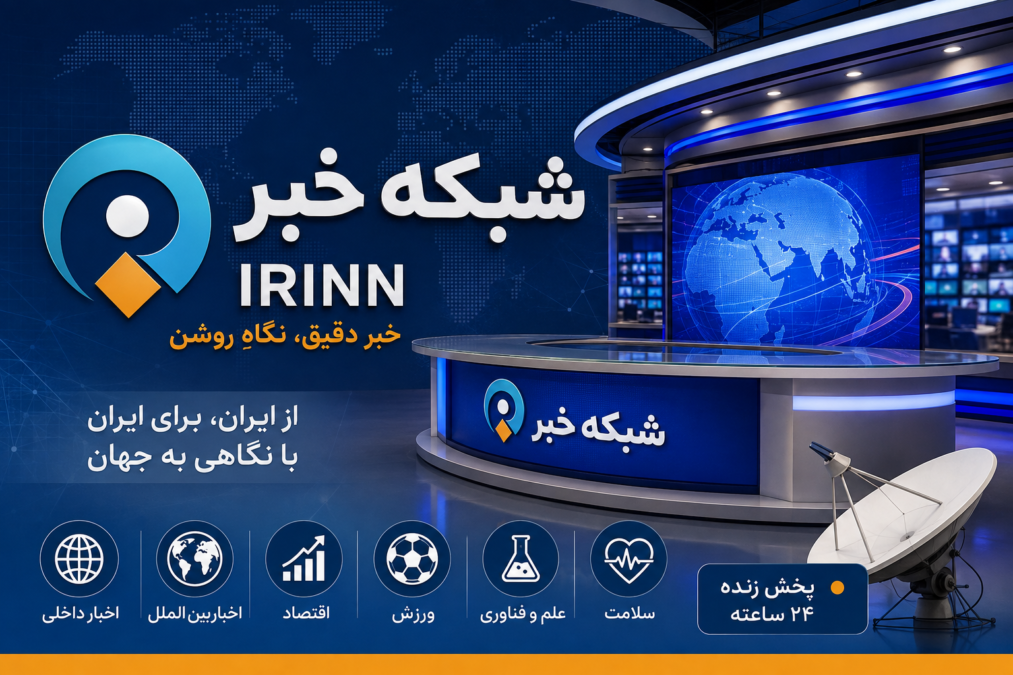

شبکه خبر is one of the best-known Persian-language television news networks in Iran. In English, it is commonly known as the Islamic Republic of Iran News Network (IRINN). The channel is part of Islamic Republic of Iran Broadcasting (IRIB) and is headquartered in Tehran. Available reference sources list October 24, 1999, as its launch date.
In today’s fast-moving media environment, people want news quickly, clearly, and in a format that is easy to understand. Television news remains important because it can combine spoken reports, live video, interviews, maps, graphics, and expert discussions. شبکه خبر has developed around this news-focused model and has covered political, social, international, sports, science, and medical subjects.
However, understanding a news network is about more than knowing its name. Readers and viewers should also understand how a news channel works, what types of information it provides, how live coverage operates, and why checking more than one reliable source can be useful.
This first part explores the background, history, purpose, programming, journalism, technology, and importance of شبکه خبر.
What Is شبکه خبر?
شبکه خبر is a Persian-language news television channel operated within Iran’s national broadcasting system. Its English name is Islamic Republic of Iran News Network, or IRINN.
The channel is primarily focused on news rather than entertainment. Its programming has traditionally emphasized current events, especially political news, while also including sports, science, and medical coverage.
A news network has a different role from a general television channel. Instead of spending most of its schedule on movies, dramas, or entertainment shows, a news channel is designed to keep viewers informed about events happening locally and internationally.
Typical news content can include:
- Breaking news
- Political developments
- Economic updates
- Social news
- International affairs
- Sports
- Science
- Medical information
- Interviews
- News reports
- Special coverage
- Live events
- Roundtable discussions
Because events can change rapidly, a news network needs systems that allow information to move from reporters to editors and then to viewers as efficiently as possible.
The History of شبکه خبر
The history of شبکه خبر goes back to 1999. Several reference sources identify October 24, 1999, as the network’s launch date.
The launch was significant because it created a television outlet with a strong focus on continuous news coverage.
A contemporary account of the network’s inauguration described the importance of rapid, accurate, and comprehensive news dissemination.
The media environment has changed dramatically since then.
In the late 1990s, television and newspapers were among the main ways many people received news. The internet was developing, but social media platforms and smartphones had not yet become a normal part of everyday communication.
Today, the situation is completely different.
A person can receive a breaking-news notification while walking down the street. A video can spread around the world within minutes. A journalist can send photographs from a mobile phone, and audiences can watch live events online.
Because of these changes, traditional television news has had to adapt to a digital world.
The Main Purpose of شبکه خبر
The central purpose of a news channel is to provide information about current events.
For شبکه خبر, this includes reporting on events inside Iran as well as important international developments.
The network’s news coverage can help audiences follow:
- Government activities
- Political events
- Economic developments
- International affairs
- Social issues
- Weather and emergencies
- Scientific developments
- Medical subjects
- Sports events
- Major public events
A good news report should answer basic questions such as:
What happened?
Where did it happen?
When did it happen?
Who is involved?
What information is confirmed?
Why does the event matter?
These questions help turn a complicated event into information that an ordinary viewer can understand.
شبکه خبر and Political Coverage
Political news is one of the most important parts of IRINN’s programming. Reference descriptions of the channel identify political coverage as its main focus, alongside areas such as sports, science, and medicine.
Political journalism can cover a wide range of subjects.
These may include:
- Government decisions
- Parliamentary activity
- Diplomatic meetings
- International relations
- Elections
- Statements by political leaders
- Regional developments
- International organizations
- Government policies
Political news can be complicated because a single event may have different interpretations.
For that reason, viewers should pay attention to the difference between a direct statement, a reported fact, an expert opinion, and an analysis.
A statement from a politician, for example, is not automatically the same thing as an independently verified fact. Responsible news consumption means understanding who made a claim and what evidence supports it.
شبکه خبر and International News
The modern world is deeply connected.
A political decision in one country can affect financial markets in another. A natural disaster can influence travel. A conflict can affect energy prices and international relations. A major scientific discovery can attract attention across continents.
This is why international reporting is an important part of a major news channel.
شبکه خبر has covered international developments alongside domestic news. Its programming has included reports and discussions about world events and international political developments.
International news may involve:
- Middle Eastern affairs
- International diplomacy
- Global economics
- Foreign elections
- International organizations
- Natural disasters
- Conflicts
- Trade
- Science
- Global health
- International sports
For viewers, international coverage can provide useful background about events beyond their own country.
At the same time, international stories are often complex. A viewer may benefit from comparing reporting from several reputable sources to understand different perspectives.
The Importance of Breaking News
Breaking news is one of the most recognizable features of a rolling news channel.
When an important event happens, people want information immediately.
For example, if a major earthquake occurs, viewers may want to know:
- Where was the earthquake?
- How strong was it?
- Are there casualties?
- Which areas are affected?
- Are roads open?
- What are officials saying?
- Are emergency services responding?
A news channel can provide updates as information becomes available.
But there’s an important point: early information can change.
During a developing event, initial reports may be incomplete. Numbers may be revised, locations may be clarified, and official statements may change as authorities gather more information.
Therefore, viewers should treat early breaking-news reports as developing information until additional details are confirmed.
How News Is Produced
Many people see only the final television broadcast. Behind that broadcast, however, a large team may be working.
A typical news production process can involve:
Reporter → Information Gathering → Verification → Editor → Producer → Presenter → Broadcast
Each stage serves a purpose.
Reporter
The reporter gathers information from sources, witnesses, officials, documents, and other relevant materials.
Editor
Editors review the material, check its structure, and decide what information should be included.
Producer
The producer helps organize the program and determines how different stories fit into the broadcast.
Presenter
The presenter communicates the information to viewers.
Technical Team
Camera operators, sound engineers, video editors, graphics teams, and transmission staff help turn the material into a television program.
It may look simple on screen, but producing a professional news broadcast is a team effort.
Live Broadcasting and شبکه خبر
Live broadcasting is particularly important for news organizations.
A live broadcast allows viewers to follow an event while it is happening. IRINN has also developed a second channel associated with live coverage. Reference sources describe IRINN 2 as focusing heavily on live broadcasts and coverage of events in Iran and around the world.
Live coverage can be useful for:
- Press conferences
- Official speeches
- Major ceremonies
- Political events
- Emergency situations
- International events
- Scientific events
- Sports
- Major public announcements
The advantage is obvious: viewers don’t have to wait for a later news bulletin.
Still, live television comes with challenges. A reporter may not have every detail at the exact moment an event occurs. That’s why careful wording and regular updates matter.
شبکه خبر and Sports Coverage
News isn’t limited to politics.
Sports is another area that can attract a large audience. IRINN’s programming includes sports news alongside political, scientific, and medical content.
Sports news can include:
- Match results
- National team updates
- Athlete achievements
- Tournament news
- International competitions
- Sports interviews
- Team announcements
- Major sporting events
Sports reporting requires both speed and accuracy.
A score can change in seconds, and an incorrect result can quickly spread online. Therefore, professional sports reporting depends on reliable information and official results.
شبکه خبر and Science News
Science is another important area of news.
Scientific reporting can introduce viewers to discoveries, research, technology, space exploration, environmental studies, and other subjects.
Science news should be explained carefully because scientific subjects can be difficult for general audiences.
A good science report doesn’t need to use complicated language. Instead, it should explain:
- What was discovered?
- Who conducted the research?
- Why does it matter?
- What evidence supports it?
- What are the limitations?
- What could happen next?
This approach helps ordinary viewers understand science without turning every report into a technical lecture.
شبکه خبر and Medical Information
Medical news is especially sensitive because people may use health information when making personal decisions.
IRINN has included medical news among its programming areas.
Medical reporting can cover:
- New research
- Public-health developments
- Medical technology
- Hospitals
- Disease outbreaks
- Health campaigns
- Scientific studies
- Statements from health authorities
However, viewers should remember that a television report is general information. Personal medical decisions should be discussed with qualified healthcare professionals.
A responsible audience should also distinguish between a preliminary scientific finding and an established medical recommendation.
The Role of Technology in Modern News
Technology has completely changed journalism.
In the past, collecting and transmitting information could take much longer. Today, reporters can use smartphones, digital cameras, laptops, internet connections, and satellite systems to send information quickly.
Modern news organizations can use technology for:
- Live video
- Digital editing
- Mobile reporting
- Online publishing
- Social media updates
- Graphics
- Remote interviews
- Digital archives
- Audience interaction
For شبکه خبر, this technological shift has made it possible to reach audiences through more than traditional television.
The modern viewer may watch a television broadcast in the morning, check an online news update at lunch, and watch a live stream on a phone in the evening.
In other words, news has become an always-connected experience.
شبکه خبر in the Digital Age
The rise of social media has created both opportunities and challenges for news organizations.
A major event can become widely known before a traditional television report is prepared. Social media users can upload photographs, videos, and comments almost instantly.
This speed can be helpful, but it can also create confusion.
A photograph might be real but incorrectly described. An old video may be presented as a new event. A headline may exaggerate what the original report actually says.
That’s why professional news organizations still have an important role.
Their job is not simply to repeat what people post online. They need to collect information, evaluate sources, verify claims, and provide context.
Why Source Checking Matters
In today’s media environment, checking sources is more important than ever.
When viewers hear an important claim, they can ask a few simple questions:
- Who reported it?
- When was it reported?
- Is the source identifiable?
- Is there supporting evidence?
- Are other reliable outlets reporting the same event?
- Is the information confirmed or still developing?
These questions don’t require advanced journalism training.
They’re basic habits that anyone can learn.
For major political, financial, medical, or emergency stories, checking multiple reliable sources can provide a clearer picture.
A Quick Overview of شبکه خبر
| Feature | Information |
|---|---|
| Persian name | شبکه خبر |
| English name | Islamic Republic of Iran News Network |
| Short name | IRINN |
| Country | Iran |
| Main language | Persian |
| Headquarters | Tehran |
| Launch date | October 24, 1999 |
| Parent organization | Islamic Republic of Iran Broadcasting |
| Main focus | News and current affairs |
| Other coverage | Sports, science, medical news |
| Broadcasting style | Rolling news, reports, interviews and live coverage |
The basic historical and organizational details above are supported by reference sources describing IRINN.
Why شبکه خبر Is Still Relevant
Television news continues to have an important role even though people now have access to websites and social media.
There are several reasons.
First, television can bring together video, sound, graphics, interviews, and live reporting in one place.
Second, during major events, audiences often want a continuous stream of updates.
Third, television news can help people who aren’t constantly checking social media stay informed.
The rise of smartphones hasn’t necessarily made television irrelevant. Instead, it has created a media environment where television, websites, streaming services, and social platforms exist side by side.
Looking Ahead
The future of شبکه خبر will likely be closely connected with the wider transformation of journalism.
Digital platforms are becoming more important. Audiences expect quick updates, mobile-friendly content, video clips, live coverage, and easy access to archives.
At the same time, the basic principles of good journalism haven’t changed.
Accuracy matters.
Clear communication matters.
Reliable sourcing matters.
Context matters.
And trust matters.
Technology can make information move faster, but it can’t replace careful reporting.
Final Thoughts for Part One
شبکه خبر has developed into a major Persian-language news network since its launch in 1999. It operates within IRIB and focuses primarily on current affairs, while also covering sports, science, medicine, and other areas.
Its development reflects the broader history of television journalism in an era that has moved from traditional broadcasting toward digital and online media.
For viewers, the most valuable approach is to stay informed while also thinking critically. News can help people understand the world, but responsible news consumption requires checking dates, identifying sources, separating facts from opinions, and comparing important claims when necessary.
In Part 2, the discussion can go deeper into the digital presence of شبکه خبر, live-streaming, news presentation, journalism standards, audience habits, social media, advantages and challenges, and the future of Persian-language television news.
Most importantly, شبکه خبر remains an important subject for anyone interested in Iranian media, television journalism, current affairs, and the changing relationship between traditional broadcasting and the digital news world.
Explore more insightful articles on All Vantage News and never miss an update.Contact Us.