
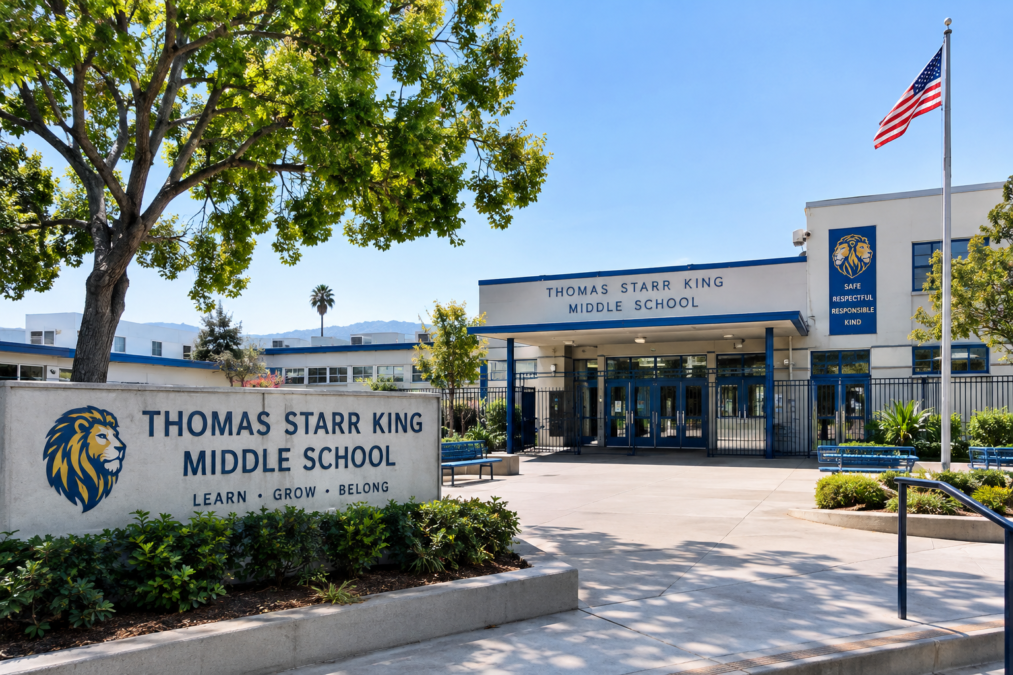

Introduction to thomas starr king middle school
thomas starr king middle school is a public middle school in Los Angeles, California, serving students in grades 6 through 8. Located at 4201 Fountain Avenue, the school is part of the Los Angeles Unified School District (LAUSD) and is known for offering a variety of educational pathways through its magnet programs.
For families looking for a middle school that combines traditional academics with creativity, technology, environmental learning, and media education, King offers several interesting choices. Instead of following only one educational theme, the school operates three major magnet programs: the Environmental STEAM Magnet, Film and Media Magnet, and Gifted/High Ability Technology & Arts Magnet.
That variety is one of the school’s most important strengths. After all, every student learns differently. Some children enjoy science and engineering, while others become excited when they pick up a camera, perform on stage, create digital art, or solve a challenging mathematics problem.
The school’s stated vision focuses on developing students’ intellect, creativity, curiosity, and compassion so they can contribute positively to their lives, their community, and the wider world.
Where Is thomas starr king middle school Located?
Thomas Starr King Middle School is located in the Silver Lake area of Los Angeles. Its official address is:
4201 Fountain Avenue
Los Angeles, CA 90029
The school serves students from a diverse range of communities. According to the school’s historical information, students have come from numerous elementary schools and a wide variety of cultural and language backgrounds.
The location is significant because Los Angeles is a large and culturally diverse city. Students can therefore enter middle school with different experiences, interests, languages, and family traditions.
This diversity can become an important part of the learning experience. In a classroom, students aren’t simply learning from textbooks; they can also learn from one another.
The History of thomas starr king middle school
The story of thomas starr king middle school goes back to 1926, when the school began educating students in its neighborhood. Over the decades, the school changed as the needs of its students and community changed.
One major development came in 1995, when the former junior high school was reorganized into a middle school serving grades 6 through 8. This transition introduced several changes, including grade-level houses, common planning periods, interdisciplinary instructional teams, and COREs.
Another important chapter began in the 2000s as the school developed specialized educational programs.
The Gifted/High Ability Technology & Arts Magnet began in 2000. Its goal was to provide a challenging learning environment for gifted and high-ability students while combining academic study with technology and the arts.
The Environmental STEAM program began in 2011 in response to community interest in sustainability education. It later gained STEAM certification during the 2019–2020 academic year.
The Film and Media Magnet started on August 12, 2013. It was developed as part of an effort involving educators, parents, and community leaders to create a more engaging academic environment connected to students’ interests.
These changes show how the school has continued to adapt. Rather than treating education as something fixed, King has developed different pathways to meet different student interests.
The Three Magnet Programs at thomas starr king middle school
One of the most interesting things about thomas starr king middle school is its three-magnet structure.
The three programs are:
| Magnet Program | Main Focus | Examples of Learning |
|---|---|---|
| Environmental STEAM Magnet | Science, technology, engineering, arts, mathematics, and environmental studies | Sustainability, environmental research, technology |
| Film and Media Magnet | Film, media, communication, and creative production | Filmmaking, journalism, theater, digital media |
| Gifted/High Ability Technology & Arts Magnet | Advanced academics combined with arts and technology | Research, robotics, animation, art, advanced mathematics |
Each magnet gives students an opportunity to explore a particular area while still studying core academic subjects.
This is helpful because middle school is a time when students begin discovering what they enjoy and what they may want to study later.
Environmental STEAM Magnet
The Environmental STEAM Magnet is designed around environmental education and the STEAM fields: science, technology, engineering, arts, and mathematics. The program also emphasizes sustainability and real-world problem solving.
Students gradually develop their understanding of environmental issues as they move through grades 6, 7, and 8.
In sixth grade, students explore current environmental concerns and consider ways people can reduce their impact on the planet.
In seventh grade, students use what they’ve learned to think about possible solutions to environmental problems.
By eighth grade, students examine environmental stewardship and environmental justice more deeply.
The program uses a set of values represented by the word EARTH:
- E — Embracing sustainability
- A — Practicing academic integrity
- R — Making real-world connections
- T — Integrating technology
- H — Acting in harmony with the community
This approach helps students see that science isn’t only something studied for a test. It can also be used to understand real problems and develop useful solutions.
Film and Media Magnet
For students who love movies, photography, storytelling, journalism, acting, or digital production, the Film and Media Magnet offers a particularly creative pathway.
The program combines academics with cinematic arts and other forms of media. Students can learn how to communicate ideas through film and media while developing teamwork, creativity, critical thinking, and problem-solving skills.
The school’s current course offerings include subjects such as:
- Explore Video
- History of Film
- Film Appreciation
- Screenwriting
- Digital Cinematography
- Journalism
- Photojournalism
- Theater
- Stage Design
- Art
- Music
- Orchestra
Students therefore have opportunities to explore both the creative and technical sides of media production.
And here’s the exciting part: learning through media can make ordinary academic ideas feel more practical. A student might write a story, turn it into a script, plan scenes, work with classmates, record footage, and finally produce a finished project.
That’s a lot more than simply memorizing information.
Gifted/High Ability Technology & Arts Magnet
The Gifted/High Ability Technology & Arts Magnet, often called the GAT Magnet, is designed for students who enjoy academic challenges and creative exploration.
The program began in 2000 and is described by the school as a small learning community with an enrollment of about 500 students. Its educational approach combines rigorous academics with project-based learning, discovery, art, and technology.
Students can explore areas such as:
- Advanced mathematics
- Computer science
- Robotics
- Animation
- Art
- Theater
- Music
- Research
- Technology
- Leadership
The program also emphasizes communication, collaboration, critical thinking, and creativity. Its motto, “Initiative and Imagination,” reflects the idea that students should become curious and active learners.
This kind of environment can be especially valuable for students who enjoy asking questions such as “Why?” and “What if?”
Academic Courses and Learning Opportunities
Academics remain an important part of thomas starr king middle school, regardless of which magnet pathway a student chooses.
The current course offerings include English, mathematics, science, history, physical education, health, and a wide range of electives. Some subjects are available at honors or accelerated levels.
For example, mathematics options can include:
- Math 6
- Honors Math 6
- Honors Highly Accelerated Math 6/7
- Math 7
- Honors Math 7
- Accelerated Algebra
- Math 8
- Geometry
English and history also have honors options at different grade levels.
This range allows students to work at different academic levels instead of expecting every learner to follow exactly the same pace.
Electives That Encourage Creativity
Middle school shouldn’t be all worksheets and exams. Students also need opportunities to discover their interests.
At King, elective choices include areas such as:
- Art
- Animation
- Robotics
- Computer science
- Band
- Orchestra
- Piano
- Theater
- Journalism
- Marine science
- Spanish
- Leadership
- Yearbook
- Video production
The exact choices can vary by grade and magnet program.
These subjects can help students develop confidence and practical skills. A student who isn’t naturally interested in a traditional classroom subject may discover a strong passion for filmmaking, robotics, music, art, or environmental science.
That’s one of the great things about a broad middle-school curriculum: sometimes a single elective can open a completely new door.
Student Life and School Community
Education is about more than grades. Students also need a supportive community where they can build friendships, practice leadership, and take part in activities.
The school lists clubs and activities such as chess, book club, arts and crafts, French club, leadership, MathCounts, environmental activities, and other student organizations.
These activities can help students practice skills that aren’t always measured by a traditional test, including:
- Teamwork
- Communication
- Responsibility
- Creativity
- Leadership
- Time management
- Confidence
- Problem-solving
In other words, school life can help prepare students not just for high school, but for the wider world.
Why Families May Consider thomas starr king middle school
There are several reasons families may find thomas starr king middle school interesting.
First, students have access to three distinct magnet pathways. Second, the school provides both traditional academic subjects and specialized electives. Third, students can explore technology, arts, environmental studies, film, media, and advanced academics within the same school community.
The school’s official vision also places importance on intellect, creativity, curiosity, and compassion.
For families comparing middle schools, these features are worth considering carefully. The best school isn’t necessarily the one with the longest list of programs. Instead, it’s the school whose educational approach matches the student’s needs, interests, learning style, and goals.
Conclusion to Part 1
thomas starr king middle school has developed from a neighborhood school established in 1926 into a diverse middle-school community with multiple specialized educational pathways. Its three magnet programs give students different ways to approach learning, whether they’re interested in environmental STEAM, film and media, or gifted academics combined with arts and technology.
The combination of core academics, advanced courses, creative electives, technology, environmental learning, and student activities gives learners plenty of opportunities to grow.
And that’s only the beginning. thomas starr king middle school has much more to explore, including its campus resources, student support services, extracurricular opportunities, magnet experiences, educational philosophy, and what makes its learning environment distinctive.
Thomas Starr King Middle School: Student Experience, Programs, and Opportunities
The Learning Environment at thomas starr king middle school
The learning environment at thomas starr king middle school is built around the idea that students need more than basic classroom instruction. They need opportunities to ask questions, explore ideas, work with others, and discover what they enjoy.
Middle school is an important stage in a young person’s education. Students are no longer elementary-school children, but they’re not high-school students yet either. During these years, they begin developing stronger study habits, greater independence, and a clearer understanding of their interests.
At King, the magnet structure gives students a chance to connect their regular academic work with a special area of interest. A student interested in nature may enjoy environmental studies, while another who loves movies may find a natural home in film and media.
The school also offers opportunities connected with technology and the arts. This broad approach can make learning more meaningful because students can connect classroom ideas with practical activities.
Technology and Innovation in Student Learning
Technology plays an important role in modern education, and thomas starr king middle school includes technology within several of its educational pathways.
Technology isn’t simply about using computers. In a good learning environment, students can use digital tools to research information, communicate ideas, create projects, solve problems, and present their work.
The Gifted/High Ability Technology & Arts Magnet, for example, combines academic study with technology and creative subjects. Students may encounter areas such as computer science, robotics, animation, and digital production.
These experiences can help students develop skills that are useful far beyond middle school.
Important technology-related skills can include:
- Digital research
- Computer literacy
- Problem-solving
- Creative production
- Coding and computational thinking
- Digital communication
- Project planning
- Collaboration
Of course, technology works best when it’s connected to a clear educational purpose. A computer isn’t the teacher; rather, it’s a tool that can help students become better learners.
Environmental Learning and Real-World Connections
The Environmental STEAM Magnet gives students another way to connect classroom learning with the real world.
Environmental education can introduce young learners to subjects such as sustainability, conservation, climate concerns, ecosystems, and responsible use of resources.
Instead of thinking about science as a collection of facts, students can be encouraged to ask practical questions:
- How can communities reduce waste?
- Why is clean water important?
- How do human activities affect ecosystems?
- What can individuals do to protect natural resources?
- How can technology help solve environmental problems?
These questions can lead to research, discussion, experiments, presentations, and projects.
The STEAM model adds the arts to the traditional STEM subjects of science, technology, engineering, and mathematics. That’s important because real-world problems rarely fit neatly into one subject.
For example, solving an environmental problem may require scientific research, mathematical analysis, engineering ideas, technology, and the ability to communicate the final solution clearly.
Film, Media, and Creative Communication
The Film and Media Magnet provides a particularly distinctive learning experience.
Film is more than entertainment. Creating a film requires planning, writing, communication, teamwork, technical knowledge, and creativity.
A student working on a video project may need to:
- Develop an idea
- Research the subject
- Write a script
- Plan scenes
- Organize a production
- Operate recording equipment
- Edit footage
- Add sound
- Present the finished project
Each step teaches a different skill.
Students interested in journalism can also learn how information is gathered and communicated. Photography can teach visual storytelling, while theater can help students become more confident speakers and performers.
These activities may be especially helpful for students who learn well through creative and hands-on experiences.
Arts Education at thomas starr king middle school
Arts education is another important part of thomas starr king middle school.
The school’s course offerings include different artistic and performing-arts subjects. Depending on the student’s program and grade level, learners may have opportunities in areas such as art, animation, theater, music, orchestra, piano, and other creative subjects.
Arts education can support several areas of development.
Creativity
Students learn to generate ideas and express themselves.
Communication
Performing and presenting can help students communicate with greater confidence.
Discipline
Learning an instrument, preparing a performance, or completing an art project requires practice.
Collaboration
Many creative projects require students to work together.
Confidence
Completing a challenging creative project can give students a sense of accomplishment.
These benefits make the arts a valuable part of a balanced education.
Extracurricular Activities and Student Interests
Classroom learning is only one part of school life. Clubs and extracurricular activities give students opportunities to meet classmates with similar interests.
Activities associated with the school include areas such as chess, book club, arts and crafts, French club, leadership, MathCounts, environmental activities, and other student organizations.
The exact availability of activities may change from year to year, so families should check current school information before making plans.
Extracurricular activities can teach students lessons that aren’t always found in textbooks.
For example, a club member may learn how to:
- Organize an event
- Work as part of a team
- Speak in front of others
- Manage responsibilities
- Meet deadlines
- Resolve disagreements
- Take leadership roles
- Support other students
In a nutshell, these experiences can help students become more confident and responsible members of their school community.
Leadership Opportunities for Students
Leadership is another useful part of middle-school development.
A student doesn’t have to be the loudest person in the room to be a good leader. Effective leadership can involve listening, organizing, helping others, making thoughtful decisions, and accepting responsibility.
School leadership activities can provide students with opportunities to practice these skills in a supervised educational setting.
Leadership experiences may help students understand that being a leader isn’t simply about having authority. It’s also about service.
A strong student leader might organize an activity, help classmates, communicate concerns, or work with teachers and other students to improve school life.
These are practical lessons that can remain valuable when students move into high school and eventually into college, work, and community life.
Building Communication Skills
Communication is one of the most important skills students can develop during middle school.
Whether students are writing an essay, discussing a science project, creating a film, performing in a theater production, or presenting research, they need to communicate their ideas.
At thomas starr king middle school, different academic pathways provide students with multiple ways to practice communication.
Written communication may involve:
- Essays
- Research projects
- Scripts
- Journalism
- Reports
- Creative writing
Verbal communication may involve:
- Classroom discussions
- Presentations
- Performances
- Group projects
- Student leadership
Visual communication may include:
- Photography
- Film
- Animation
- Art
- Digital projects
Having different forms of communication available can help students discover the methods that work best for them.
Preparing Students for High School
One of the major purposes of middle school is preparing students for the next stage of education.
High school usually brings greater academic responsibility. Students may have more complex assignments, larger projects, more demanding courses, and greater expectations for independence.
A middle-school environment that encourages organization, research, communication, collaboration, and independent thinking can help students make that transition more comfortably.
Advanced mathematics and honors-level academic opportunities can also give students the chance to challenge themselves when appropriate.
However, academic acceleration isn’t automatically the right choice for every student. Families should consider the student’s readiness, interests, workload, and overall well-being.
The goal shouldn’t simply be to take the hardest possible class.
The better goal is to find the right level of challenge.
Supporting Different Types of Learners
Every student is different.
Some students love mathematics. Others enjoy writing. Some are fascinated by science, while others become excited when they are given a camera or musical instrument.
That’s why having several educational pathways can be valuable.
The three magnet programs at thomas starr king middle school allow students to connect education with different interests.
A simple comparison looks like this:
| Student Interest | Potentially Suitable Pathway |
|---|---|
| Environment and sustainability | Environmental STEAM Magnet |
| Science and technology | Environmental STEAM or GAT Magnet |
| Advanced academics | Gifted/High Ability Technology & Arts Magnet |
| Robotics and computer science | GAT Magnet |
| Film production | Film and Media Magnet |
| Journalism | Film and Media Magnet |
| Theater and performance | Film and Media or GAT Magnet |
| Visual arts and animation | GAT or Film and Media Magnet |
This doesn’t mean a student can only enjoy one subject. In fact, students often have several interests at the same time.
A learner might love science and art, or technology and storytelling. That’s where interdisciplinary education becomes especially interesting.
The Importance of Project-Based Learning
Project-based learning can make schoolwork feel more connected to everyday life.
Instead of only answering questions from a textbook, students may be asked to create something, investigate a problem, or explain an idea.
For example, an environmental project might require students to research a local issue and suggest a solution.
A film project might require students to develop a story and turn it into a finished production.
A robotics project could involve designing, testing, and improving a machine.
Through projects like these, students learn that mistakes aren’t necessarily failures.
Sometimes, a mistake is simply information telling you what needs to change.
That mindset can encourage persistence and creative thinking.
Parent and Family Involvement
Parents and guardians play an important role in a student’s middle-school experience.
School success isn’t created by teachers alone. Students benefit when families, educators, counselors, and the wider school community communicate effectively.
Parents can support their children by:
- Checking school announcements
- Encouraging regular study habits
- Asking about assignments
- Supporting healthy routines
- Attending school events when possible
- Communicating with teachers when concerns arise
- Encouraging participation in positive activities
- Helping students manage their time
At the same time, students gradually need to become more independent.
The purpose of parental support isn’t to complete every assignment for a child. Instead, it’s to help the student develop the skills needed to manage responsibilities independently.
What Makes thomas starr king middle school Distinctive?
There are several features that make thomas starr king middle school stand out as an educational option.
Multiple Magnet Pathways
Students can choose from three major specialized programs with different areas of focus.
Strong Academic Foundation
The school offers core subjects alongside honors and accelerated opportunities.
Arts and Creativity
Students can explore visual arts, music, theater, animation, film, and other creative areas.
Technology
Technology is integrated into several programs, including computer science, robotics, and digital media.
Environmental Education
The Environmental STEAM pathway connects academics with sustainability and real-world environmental concerns.
Media Education
The Film and Media Magnet gives students opportunities to explore filmmaking, journalism, photography, and related subjects.
Together, these elements create a school environment where academic and creative learning can work side by side.
Possible Challenges Families Should Consider
Every school has strengths and challenges, and families should look at both.
One possible challenge is choosing between different educational pathways. Having several options is helpful, but it can also make the decision more complicated.
Parents may need to consider:
- Which magnet best matches the student’s interests?
- Is the student ready for an advanced academic workload?
- Does the student prefer creative or traditional learning?
- How important are technology and arts opportunities?
- What extracurricular activities are available?
- What transportation arrangements are practical?
- What are the current admission or application requirements?
Another consideration is that school programs can change. Courses, clubs, staffing, schedules, and enrollment information may be updated over time.
For that reason, families should always check the school’s current official information rather than relying entirely on older articles or third-party websites.
How Students Can Get the Most From Their School Experience
Simply attending school isn’t enough to guarantee a great educational experience.
Students can make the most of their time by becoming active participants in their own education.
Here are some useful habits:
- Ask questions when something isn’t clear.
- Keep track of assignments and deadlines.
- Read beyond the required material.
- Participate in classroom discussions.
- Join a club or activity.
- Try something outside your comfort zone.
- Work respectfully with classmates.
- Learn from mistakes.
- Ask teachers for help when needed.
- Set realistic academic goals.
Small habits can make a surprisingly big difference.
A student who consistently completes assignments, asks for help, participates in activities, and manages time well is building skills that can last for years.
A Balanced Approach to Academic Success
Academic success doesn’t mean getting perfect grades every day.
A balanced education should also help students develop confidence, curiosity, creativity, friendships, responsibility, and resilience.
That’s particularly important during middle school because students are going through many changes.
Some students may suddenly become more independent. Others may struggle with organization or confidence. Some may discover new interests that change their educational goals.
A supportive school environment can help students navigate these changes.
The best outcome is not simply a report card full of high marks. It’s a student who gradually becomes more capable of learning, thinking, communicating, and making responsible choices.
Frequently Asked Questions About thomas starr king middle school
What grades does thomas starr king middle school serve?
The school serves middle-school students in grades 6 through 8.
Where is the school located?
The school is located at 4201 Fountain Avenue in Los Angeles, California.
What magnet programs are available?
The school has three major magnet pathways:
- Environmental STEAM Magnet
- Film and Media Magnet
- Gifted/High Ability Technology & Arts Magnet
Does the school offer arts programs?
Yes. Students can explore various arts and creative subjects, including areas connected with visual art, music, theater, animation, and media.
Is technology part of the curriculum?
Yes. Technology is an important part of several programs, with opportunities connected to computer science, robotics, digital media, and other technology-related learning.
Does the school offer advanced academic courses?
Yes. Course offerings include honors and accelerated options in some academic subjects, particularly mathematics and other core areas.
Are extracurricular activities available?
Yes. The school has offered a variety of clubs and student activities, including academic, creative, leadership, and interest-based organizations.
Which magnet is best for a student?
There isn’t one universally “best” magnet. The best choice depends on the student’s interests, academic needs, goals, and learning style.
A student fascinated by environmental science may prefer the Environmental STEAM Magnet, while a future filmmaker might be more interested in the Film and Media Magnet.
Final Thoughts on thomas starr king middle school
thomas starr king middle school offers students more than a standard middle-school education. Its combination of academic courses, magnet programs, technology, environmental learning, arts, media, and extracurricular activities gives students many ways to explore their abilities.
The school’s three specialized pathways are especially valuable because they recognize an important truth: students don’t all learn in exactly the same way.
Some students thrive when they investigate environmental questions. Others become motivated by advanced mathematics or robotics. Still others discover their confidence through filmmaking, journalism, theater, photography, or music.
Ultimately, the value of thomas starr king middle school comes from the opportunities it provides students to learn, experiment, create, collaborate, and grow. With the right support from teachers, families, and the wider community, students can use these opportunities to build a strong foundation for high school and beyond.
For families researching thomas starr king middle school, the smartest approach is to look carefully at the current magnet offerings, academic expectations, enrollment information, activities, and student needs. When those pieces fit together, middle school can become much more than a transition between elementary and high school—it can become a time when students discover what they’re capable of achieving.
Thomas Starr King Middle School: Admission, Student Support, and Family Guide
Understanding thomas starr king middle school Before Applying
thomas starr king middle school is an important educational option for families in Los Angeles who are looking for a middle-school experience that combines core academics with specialized interests. The school serves students in grades 6 through 8 and provides three major magnet pathways.
Choosing a middle school is a big decision. After all, students spend several important years developing academic habits, friendships, confidence, and personal interests. A good choice should therefore be based on more than the school’s name.
Families should look at the complete educational experience, including:
- Academic programs
- Magnet options
- Student interests
- Extracurricular activities
- School expectations
- Transportation
- Family involvement
- Available student services
- Long-term educational goals
When parents take time to understand these areas, they can make a more informed decision.
Choosing the Right Magnet Program
One of the first questions families may ask is which magnet program is the right fit.
At thomas starr king middle school, students can explore different educational directions through the school’s three magnet programs.
Environmental STEAM Magnet
This pathway may appeal to students who enjoy:
- Science
- Nature
- Sustainability
- Environmental issues
- Technology
- Engineering
- Mathematics
- Hands-on projects
Students who naturally ask questions about the environment may find this pathway particularly engaging.
Film and Media Magnet
This program can be a strong match for students who enjoy:
- Movies
- Filmmaking
- Photography
- Journalism
- Writing
- Theater
- Storytelling
- Digital media
A student who loves creating stories or working with cameras may feel right at home in this type of environment.
Gifted/High Ability Technology & Arts Magnet
This pathway may be attractive to students who enjoy:
- Advanced academic work
- Mathematics
- Technology
- Computer science
- Robotics
- Animation
- Research
- Arts
Students don’t have to be interested in only one area. In fact, combining technology and creative subjects can give learners a broader educational experience.
How Families Can Evaluate Their Child’s Needs
Parents sometimes make the mistake of choosing a school based only on reputation.
A better strategy is to begin with the child.
Ask questions such as:
What does my child enjoy learning?
If a student loves science and environmental topics, an environmental-focused pathway may be worth considering.
How does my child learn best?
Some students learn through reading and discussion, while others learn better through projects and practical activities.
Does my child enjoy creative work?
If the answer is yes, programs involving film, theater, art, music, or animation may provide useful opportunities.
Is my child ready for academic acceleration?
Advanced courses can be rewarding, but students should be prepared for the workload and expectations.
What does my child want to explore?
Middle school is a great time to experiment. Students don’t need to know their future career yet.
That’s the beauty of education: interests can grow and change.
Understanding the Application Process
Families interested in thomas starr king middle school should review the current Los Angeles Unified School District and school information before applying.
Magnet schools and programs can have specific enrollment procedures, requirements, deadlines, and placement rules. These details can change between school years.
Therefore, parents shouldn’t rely entirely on an old blog post, social-media comment, or outdated school listing.
Instead, families should verify:
- Current enrollment dates
- Magnet application requirements
- Grade-level availability
- Program-specific requirements
- Transportation information
- Required documents
- Application deadlines
- Placement procedures
This is especially important because missing a deadline can create unnecessary problems.
A little preparation can save a lot of stress.
What Students Can Expect From Middle School
Starting middle school can feel exciting and, honestly, a little intimidating.
Students may have several teachers instead of one main classroom teacher. They may have different classrooms, changing schedules, more homework, and higher expectations.
At thomas starr king middle school, students also have the opportunity to become part of a specialized magnet community.
This can give students a stronger connection to a particular area of interest.
For example, a Film and Media student may regularly encounter creative projects, while an Environmental STEAM student may think about sustainability and environmental problems.
Students should expect to take responsibility for their learning.
That means:
- Arriving prepared
- Completing assignments
- Managing materials
- Asking for help
- Respecting teachers and classmates
- Participating in projects
- Meeting deadlines
These habits can become extremely useful in high school.
Student Support and Communication
Students sometimes need help with academics, friendships, organization, or personal challenges.
For this reason, communication between students, parents, teachers, and school staff is important.
Parents should encourage students to speak up when they don’t understand something.
There’s no shame in asking for help.
In fact, knowing when to ask for assistance is a sign of maturity.
A student might say:
“I don’t understand this assignment.”
“I need help organizing my work.”
“I’m having trouble keeping up.”
“I don’t understand this math concept.”
These simple statements can open the door to useful support.
Families should also monitor official school communication so they remain aware of important announcements and changes.
Building Good Study Habits
Middle school is an excellent time to develop strong study habits.
Students who build these habits early often find high school easier to manage.
A simple study routine might include:
Set a regular study time
Having a predictable routine can reduce procrastination.
Keep assignments organized
Students can use planners, calendars, or digital tools to track deadlines.
Break large projects into smaller tasks
A major project can feel overwhelming when viewed as one huge assignment. Breaking it into steps makes it easier.
Review lessons regularly
Short review sessions are often more manageable than trying to learn everything the night before a test.
Ask questions
If a topic is confusing, students should ask their teacher rather than simply guessing.
Take reasonable breaks
Studying for hours without stopping isn’t always productive. Short breaks can help students return to work with better focus.
These habits aren’t complicated, but they can make a meaningful difference.
Balancing Academics and Activities
Students shouldn’t feel that they must choose between academic success and extracurricular interests.
A balanced schedule can allow both.
For example, a student might spend part of the week focusing on mathematics and science while also participating in a club, music activity, theater project, or sports program.
However, students should avoid taking on more activities than they can realistically manage.
Too many commitments can lead to unnecessary stress and poor time management.
A good rule is simple:
Choose quality over quantity.
Being deeply involved in two meaningful activities can be more valuable than joining ten clubs without having enough time to participate properly.
The Role of Teachers
Teachers play a central role in a student’s experience.
A teacher does more than deliver information. Teachers can help students understand difficult concepts, develop confidence, improve work, and discover interests.
At a school with specialized programs, teachers may also connect classroom lessons with real-world projects.
For example, environmental education can turn scientific concepts into sustainability discussions.
Film education can turn writing skills into scripts and storytelling.
Technology education can turn mathematics and logical thinking into robotics or computer-based projects.
This connection between academic knowledge and practical activity can help students understand why their education matters.
The Value of Teamwork
Many activities at thomas starr king middle school can involve collaboration.
Teamwork teaches students how to:
- Listen to other people
- Share responsibilities
- Explain ideas
- Accept constructive criticism
- Solve disagreements
- Meet group deadlines
- Respect different opinions
These skills are useful in almost every future career.
Whether someone eventually becomes a scientist, artist, engineer, teacher, journalist, designer, entrepreneur, or healthcare professional, working with others will likely be part of the job.
Middle school therefore provides an early opportunity to practice these skills.
Creativity and Confidence
Creativity isn’t limited to artists.
A scientist can be creative.
An engineer can be creative.
A journalist can be creative.
A programmer can be creative.
A business leader can be creative.
Creativity often means looking at a problem from a different angle.
The arts, film, media, technology, and environmental programs at thomas starr king middle school can give students opportunities to practice this kind of thinking.
When students create something themselves, they also have a chance to experience the satisfaction of completing a difficult task.
That can build confidence.
Preparing for Future Careers
Middle school students don’t need to choose a career.
Still, early exposure to different subjects can help them understand their strengths.
A student who enjoys environmental science may later explore environmental engineering or conservation.
A student who loves filmmaking may become interested in media production, journalism, photography, or communications.
Someone fascinated by robotics may later explore engineering, computer science, or technology.
A student interested in art and animation may eventually study design, animation, illustration, or digital media.
These outcomes aren’t guaranteed, of course.
Interests can change.
That’s perfectly normal.
The purpose of middle school is exploration, not locking a child into a career path.
Advantages of thomas starr king middle school
There are several potential advantages families may consider when evaluating thomas starr king middle school.
Diverse educational pathways
The three magnet programs provide different approaches to learning.
Academic opportunities
Students can encounter standard, honors, and accelerated academic options depending on the subject and program.
Arts and technology
Students have opportunities to explore creative and technology-related subjects.
Environmental focus
The Environmental STEAM Magnet connects academic learning with sustainability and real-world issues.
Film and media education
Students interested in communication and visual storytelling can explore specialized subjects.
Extracurricular opportunities
Clubs and activities can help students develop social and leadership skills.
Community
The school’s diverse student population can expose learners to different perspectives and experiences.
Things Families Should Consider Carefully
While thomas starr king middle school offers many opportunities, parents should still consider whether the school is the right match for their individual child.
Important questions include:
- Does the magnet program match the student’s interests?
- Is the daily commute practical?
- Does the student prefer project-based learning?
- Is the academic workload appropriate?
- Are the student’s favorite extracurricular activities available?
- Does the school schedule fit the family’s needs?
- What are the current enrollment requirements?
No school is perfect for every student.
The goal is to find a strong match.
Transportation and Daily Routine
Transportation is an important practical issue that families sometimes overlook.
A school may have excellent academic programs, but the daily journey can still affect a student’s experience.
Before enrolling, families should investigate current transportation options and determine:
- How the student will travel to school
- How long the journey may take
- What happens if transportation is delayed
- Whether school-provided transportation is available
- How the student will travel home after activities
A predictable daily routine can make school life easier.
Students also need enough time for homework, sleep, family life, and activities.
Creating a Positive School Experience
Students can take several steps to create a successful middle-school experience.
First, they should treat teachers and classmates with respect.
Second, they should stay organized.
Third, they should try activities that interest them.
Fourth, they should not be afraid of mistakes.
And finally, they should remember that asking for help is okay.
A positive school experience doesn’t mean every day will be perfect.
There may be difficult assignments, disappointing grades, disagreements with classmates, or moments of frustration.
That’s normal.
What matters is learning how to respond.
Frequently Asked Questions
Is thomas starr king middle school a public school?
Yes. It is a public middle school in Los Angeles and is associated with the Los Angeles Unified School District.
What grades are served?
The school serves grades 6, 7, and 8.
What are the school’s main magnet programs?
The three major magnet programs are the Environmental STEAM Magnet, Film and Media Magnet, and Gifted/High Ability Technology & Arts Magnet.
Can students study technology?
Yes. Technology-related learning is included in several programs, with subjects and activities involving areas such as computer science, robotics, digital media, and technology.
Can students study the arts?
Yes. Students can have opportunities involving areas such as art, animation, music, theater, and media.
Is there an environmental program?
Yes. The Environmental STEAM Magnet focuses on sustainability and combines environmental learning with science, technology, engineering, arts, and mathematics.
Does the school offer film education?
Yes. The Film and Media Magnet provides students with opportunities to explore filmmaking and related media subjects.
Does the school offer advanced classes?
The school offers honors and accelerated course options in certain subjects. Availability can depend on grade level and current scheduling.
Should every student choose an advanced course?
No. The appropriate course level depends on the student’s preparation, interests, workload, and educational needs.
Are clubs available?
The school has offered various clubs and student activities. Families should check current school information for the latest list.
How can parents learn about current enrollment information?
Parents should use current official information from the school and Los Angeles Unified School District because enrollment procedures and deadlines can change.
Final Advice for Families
Choosing a middle school should be a thoughtful process.
Families considering thomas starr king middle school should look beyond a simple list of programs. They should consider how the school’s educational model fits their child’s personality, interests, academic needs, and daily routine.
Parents can make the process easier by discussing the decision with their child.
Ask what subjects they enjoy.
Ask what activities make them excited.
Ask whether they prefer traditional classes or project-based work.
Ask what they hope to try during middle school.
Most importantly, listen.
A student’s voice matters because they’re the person who will experience the school every day.
Final Thoughts on thomas starr king middle school
thomas starr king middle school provides a broad educational environment where students can explore academics, technology, environmental studies, film, media, arts, and extracurricular activities. Its three magnet pathways give families different options instead of forcing every student into exactly the same educational model.
For some learners, the Environmental STEAM Magnet may provide the ideal combination of science and real-world environmental learning. For creative students, the Film and Media Magnet can offer an exciting way to explore storytelling and communication. Students seeking advanced academics alongside technology and arts may find the Gifted/High Ability Technology & Arts Magnet especially interesting.
Ultimately, the success of thomas starr king middle school as a student’s educational choice depends on the match between the school and the learner. When students have the right opportunities, supportive adults, challenging but manageable work, and space to explore their interests, middle school can become a powerful foundation for the future.
Thomas Starr King Middle School: Educational Values, Community, and Future Preparation
The Educational Philosophy of thomas starr king middle school
thomas starr king middle school represents an educational approach that goes beyond memorizing facts and preparing for tests. A successful middle-school experience should help young people become curious, thoughtful, creative, responsible, and confident learners.
This idea is especially important during grades 6 through 8. Students are developing their own opinions and beginning to understand which subjects interest them most. They are also learning how to manage greater responsibilities.
A strong middle-school program can therefore provide three important things:
- A solid academic foundation
- Opportunities for personal exploration
- Support for social and emotional growth
The magnet structure at King gives students different ways to connect their education with their interests. This can make learning feel more purposeful.
For instance, a student studying environmental science may begin to understand how classroom science connects with sustainability. A student interested in film may discover that storytelling requires writing, planning, research, communication, and technical skills.
In other words, different interests can lead students toward the same larger goal: becoming capable lifelong learners.
Developing Curiosity Through Education
Curiosity is one of the most valuable qualities a student can develop.
A curious student doesn’t simply ask, “What is the answer?”
They may also ask:
- Why does this happen?
- How does this work?
- What would happen if we changed it?
- Can there be another solution?
- How can this information help people?
These questions can lead to deeper learning.
The different programs at thomas starr king middle school can give students opportunities to investigate subjects from several angles.
Environmental studies can encourage questions about the natural world.
Film and media can encourage questions about storytelling and communication.
Technology and arts programs can encourage questions about how creative and technical skills can work together.
This type of curiosity can become useful throughout a student’s education.
Learning Beyond the Traditional Classroom
A classroom doesn’t always have to look like rows of desks and a teacher speaking at the front.
Modern education can include:
- Research
- Experiments
- Group projects
- Presentations
- Creative productions
- Digital projects
- Performances
- Problem-solving activities
- Community-based learning
These experiences can make students active participants rather than passive listeners.
At thomas starr king middle school, specialized magnet programs provide opportunities for students to explore different styles of learning.
That doesn’t mean traditional instruction is unimportant. Core academic knowledge remains essential.
Instead, the goal is to combine foundational knowledge with opportunities to apply it.
The Connection Between Creativity and Academic Skills
Some people think creativity and academics are separate.
They’re not.
Writing a strong film script requires language skills.
Analyzing environmental data requires mathematics.
Building a robot requires scientific and technical understanding.
Creating an animation requires planning and visual thinking.
Presenting a project requires communication skills.
This is why interdisciplinary education can be powerful.
Students begin to see that subjects aren’t isolated boxes. Mathematics can support science. Writing can support filmmaking. Technology can support art. Research can support journalism.
Once students recognize these connections, education can become more interesting and meaningful.
Building Responsibility in Middle School
Responsibility becomes increasingly important as students grow older.
Elementary students may receive a lot of direct reminders from adults. Middle-school students are gradually expected to manage more of their own work.
At thomas starr king middle school, students can use this stage to develop habits that will be important later.
Responsible students learn to:
- Track assignments
- Bring needed materials
- Meet deadlines
- Complete projects
- Communicate with teachers
- Take care of school property
- Work respectfully with classmates
- Accept responsibility for mistakes
These habits don’t develop overnight.
Students may forget an assignment or miss a deadline from time to time.
That’s part of learning.
The important thing is to recognize the problem, understand what went wrong, and improve the next time.
Social Skills and Building Friendships
Middle school is also a social experience.
Students meet people with different personalities, interests, backgrounds, and opinions.
Learning how to work with different people is an important life skill.
Group projects, clubs, performances, and other activities can help students practice:
- Listening
- Cooperation
- Patience
- Respect
- Empathy
- Communication
- Conflict resolution
Friendships can also become an important source of support.
However, students may sometimes experience disagreements or social pressure.
Parents and educators can help by encouraging students to communicate honestly and treat others with respect.
A healthy school community isn’t one where disagreements never happen. It’s one where students learn constructive ways to handle them.
Diversity and Community
Los Angeles is a highly diverse city, and a public school community can bring together students from many different backgrounds.
This diversity can become an educational advantage.
Students can learn that people may have different:
- Family traditions
- Languages
- Interests
- Experiences
- Opinions
- Cultural backgrounds
Learning alongside people who are different from us can encourage understanding.
It can also prepare students for a world where they will eventually work with people from many different communities.
Respect is therefore more than a school rule. It’s an important life skill.
Environmental Responsibility and Student Awareness
The Environmental STEAM Magnet adds an important dimension to the school’s educational offerings.
Environmental education can help students understand that everyday choices can have wider effects.
Students may think about topics such as:
- Waste reduction
- Conservation
- Sustainability
- Natural resources
- Ecosystems
- Environmental responsibility
- Community impact
The value of this type of education isn’t simply learning environmental vocabulary.
It’s learning to think about consequences.
For example, students might ask how a product is made, what resources it uses, what happens when it is discarded, and how communities could make better choices.
These questions encourage responsible thinking.
Media Literacy in a Digital World
The Film and Media Magnet is especially relevant in an age when young people encounter enormous amounts of digital content.
Students today don’t only consume media.
They also create it.
That makes media literacy increasingly important.
Students should learn to ask:
- Who created this information?
- Why was it created?
- Is the information reliable?
- What evidence supports it?
- Could the message be misleading?
- How can images or editing influence an audience?
Film and media education can help students become more thoughtful consumers and creators of information.
This is an important skill because digital communication is now part of education, work, entertainment, and everyday life.
Research Skills and Independent Thinking
Research is another skill students can develop during middle school.
Good research involves more than searching for a sentence online.
Students need to learn how to:
- Understand a question
- Find relevant information
- Compare sources
- Identify useful evidence
- Organize notes
- Explain findings
- Cite information appropriately
- Present conclusions clearly
These skills can become increasingly important in high school and college.
They can also help students outside the classroom.
Whenever someone wants to make an informed decision, research skills are useful.
Preparing for High School Academically
The transition from middle school to high school can feel like a major step.
Students may encounter more demanding assignments, more independent study, and greater expectations.
The academic experiences available at thomas starr king middle school can help students build a foundation for that transition.
Students can work on:
- Reading comprehension
- Writing
- Mathematics
- Scientific thinking
- Historical analysis
- Research
- Presentations
- Time management
Students taking appropriate honors or accelerated classes may also learn how to manage more challenging academic material.
Still, preparation isn’t only about taking difficult courses.
A student who knows how to organize assignments, communicate with teachers, and study effectively may be better prepared than a student who simply takes advanced classes without developing good habits.
Preparing for High School Socially
Academic preparation is only half the story.
Students also need social confidence.
High school can involve larger communities, new classmates, different expectations, and more opportunities.
Students who have already learned to:
- Speak respectfully
- Ask for help
- Make friends
- Work in groups
- Handle disagreements
- Participate in activities
may find the transition easier.
Clubs, leadership opportunities, arts programs, and group projects can all help students practice these skills.
How Parents Can Help at Home
Parents don’t need to become their child’s second teacher.
Instead, they can create an environment that supports learning.
A few simple steps can help:
Encourage reading
Reading regularly can improve vocabulary, comprehension, writing, and general knowledge.
Create a study routine
A predictable schedule can make homework easier to manage.
Encourage questions
Parents can show children that asking questions is a positive part of learning.
Discuss school experiences
Instead of asking only, “Did you finish your homework?” parents can ask, “What did you learn today?”
Encourage healthy habits
Sleep, nutrition, movement, and reasonable screen habits can support a student’s overall routine.
Celebrate effort
Students need to understand that improvement and persistence matter, not only perfect grades.
How Students Can Become Stronger Learners
Students themselves have a major role in their success.
A strong learner doesn’t have to know everything.
Instead, a strong learner knows how to keep learning.
Useful habits include:
- Be curious.
- Read regularly.
- Ask questions.
- Keep notes organized.
- Review difficult material.
- Practice before tests.
- Learn from mistakes.
- Participate in class.
- Help classmates respectfully.
- Take responsibility for deadlines.
Perhaps the most important habit is persistence.
Sometimes a subject will be difficult.
That’s okay.
“I’m not good at this” can become “I’m not good at this yet.”
That small change in thinking can make a big difference.
A Practical Checklist for Families
Families researching thomas starr king middle school can use the following checklist.
| Area | Questions to Ask |
|---|---|
| Academics | Are the available courses appropriate for the student? |
| Magnet Program | Which pathway best matches the student’s interests? |
| Activities | Are there clubs and activities the student would enjoy? |
| Arts | What creative subjects are available? |
| Technology | What technology-related learning opportunities are offered? |
| Environment | Does the student enjoy sustainability and environmental topics? |
| Media | Would the student enjoy filmmaking or journalism? |
| Advanced Work | Is the student prepared for honors or accelerated classes? |
| Transportation | Is the daily commute practical? |
| Family Support | How can parents stay involved? |
| Future Goals | Will the program help the student prepare for high school? |
This checklist can make the school-selection process more organized.
Pros and Cons to Consider
Every educational choice has advantages and possible limitations.
Potential Advantages
Multiple magnet programs: Students can choose a pathway based on interests.
Academic variety: Different course levels can provide opportunities for students with different needs.
Creative opportunities: Film, media, arts, music, and other subjects can support creativity.
Technology exposure: Students can explore technology-related subjects.
Environmental education: Sustainability can connect classroom learning to real-world concerns.
Extracurricular activities: Clubs can encourage leadership and social development.
Potential Considerations
Choosing a pathway: Several options can make the decision more complicated.
Workload: Advanced courses and major projects may require strong organization.
Transportation: Families need to consider the daily commute.
Changing programs: Course and activity availability can change from one school year to another.
Student fit: A program that is excellent for one student may not be ideal for another.
The key is balance.
Families should consider both the school’s opportunities and the student’s individual needs.
Questions Students Should Ask Before Joining a Magnet
Students can also participate in the decision.
They might ask:
- What will I study?
- What projects will I complete?
- Will I work with technology?
- Can I participate in clubs?
- What creative subjects are available?
- How much homework should I expect?
- What happens if I need academic help?
- Will I be able to explore other interests?
Giving students a voice can make them feel more responsible for their educational journey.
Frequently Asked Questions About thomas starr king middle school
What is thomas starr king middle school?
It is a public middle school in Los Angeles serving students in grades 6 through 8 and offering specialized magnet programs.
What makes the school different?
Its three major magnet pathways give students opportunities to focus on environmental STEAM, film and media, or gifted/high-ability academics combined with technology and arts.
Is the school suitable for creative students?
It can be a strong option for students interested in areas such as film, theater, photography, art, music, animation, and media.
Is technology part of the school’s programs?
Yes. Technology-related learning appears across several pathways, including areas such as computer science, robotics, digital media, and technology-supported projects.
Does the school focus on environmental education?
Yes. The Environmental STEAM Magnet connects environmental studies with science, technology, engineering, arts, and mathematics.
Can students participate in clubs?
The school has offered a variety of student clubs and activities. Current availability should be confirmed directly with the school.
Are advanced classes available?
Honors and accelerated options are available in some subjects, depending on grade level and current course offerings.
What should parents consider before applying?
Parents should consider the student’s interests, academic readiness, transportation, program requirements, activities, and overall school fit.
Does a student need to know their future career before entering middle school?
No. Middle school should be a period of exploration. Students can discover new interests without committing to a future career.
How can students succeed at the school?
Good organization, regular study, respectful communication, participation, curiosity, and willingness to ask for help can all support success.
Why Middle School Matters
Sometimes middle school is treated as simply a bridge between elementary school and high school.
That’s a mistake.
These years can have a major effect on how students see themselves as learners.
A student who discovers a love of science may become more confident in academic subjects.
A student who performs in theater may become a stronger public speaker.
A student who creates a film may discover an interest in storytelling.
A student who builds a robotics project may begin imagining a future in engineering.
A student who studies environmental issues may become more aware of their responsibility toward the community and planet.
These discoveries matter.
They can influence future courses, hobbies, friendships, and eventually career interests.
Looking Toward the Future
The educational world continues to change.
Technology is becoming more important. Digital communication is everywhere. Environmental challenges require new ideas. Creative industries continue to evolve.
Students therefore need a broad set of skills.
They need to know how to:
- Think critically
- Communicate clearly
- Work with others
- Use technology responsibly
- Solve problems
- Research information
- Create new ideas
- Adapt to change
The different programs at thomas starr king middle school provide several ways for students to practice these abilities.
No middle school can predict exactly what the future will look like.
But a school can help students become ready for change.
Final Thoughts on thomas starr king middle school
thomas starr king middle school offers a broad educational experience built around academics, creativity, technology, environmental awareness, media, and student development. Its magnet programs allow students to explore different interests while continuing to build essential skills in core subjects.
For families, the most important lesson is simple: choosing a school should be about finding the right educational fit. Students have different strengths, personalities, interests, and goals. What works wonderfully for one learner may not work as well for another.
For students, the opportunity is equally important. Middle school is a time to explore, make mistakes, ask questions, build friendships, and discover new abilities.
Whether a student becomes fascinated by environmental science, excited about filmmaking, interested in robotics, passionate about art, or motivated by advanced academics, thomas starr king middle school can provide different avenues for exploration.
Ultimately, the strongest educational experience is one that encourages students to remain curious, work hard, treat others with respect, and believe they can continue improving. With those qualities, students can use their middle-school years as a strong foundation for high school, further education, and the opportunities that come afterward.
Thomas Starr King Middle School: A Complete Guide for Students and Families
Understanding the Full Experience at thomas starr king middle school
Choosing a middle school is an important decision for both students and families. The middle-school years can shape study habits, confidence, friendships, interests, and future academic goals. For this reason, families often want to know much more than a school’s name or location.
thomas starr king middle school offers an educational environment where students can explore academics, technology, arts, environmental studies, and media while completing the core requirements expected of middle-school learners.
The school is located in Los Angeles and serves grades 6 through 8. Its magnet structure gives students opportunities to explore specialized areas while continuing their general education.
The school has a long history. It has educated students since 1926 and later developed into a middle-school campus with specialized programs. Today, its three major magnet pathways are an important part of its identity.
These include:
- Environmental STEAM Magnet
- Film and Media Magnet
- Gifted/High Ability Technology & Arts Magnet
Each pathway offers a different learning experience, which means families can think about the student’s interests and learning style before making a decision.
Comparing the Three Magnet Programs
One of the most useful ways to understand thomas starr king middle school is to compare its magnet pathways.
| Magnet Program | Main Focus | Students Who May Enjoy It |
|---|---|---|
| Environmental STEAM Magnet | Environment, science, technology, engineering, arts and mathematics | Students interested in nature, science and sustainability |
| Film and Media Magnet | Film, media, storytelling and creative communication | Students interested in filmmaking, video and creative production |
| Gifted/High Ability Technology & Arts Magnet | Advanced academics, technology and arts | Students who enjoy challenging academic and creative work |
This comparison doesn’t mean that students must already know exactly what career they want.
Middle school is a time for discovery.
A student who chooses an environmental program today may become interested in engineering later. Someone who enjoys film might eventually study communications, writing, design, or technology.
The purpose of a specialized program is to provide opportunities, not to lock a student into one future.
Environmental STEAM as a Learning Opportunity
The Environmental STEAM Magnet brings together several academic areas.
STEAM generally connects:
- Science
- Technology
- Engineering
- Arts
- Mathematics
The environmental focus gives these subjects a real-world connection.
Students can think about how science explains the natural world, how mathematics helps measure information, how technology supports research, and how engineering can help solve practical problems.
The addition of arts is important, too.
Creativity can help students communicate scientific ideas in ways that are easier for other people to understand.
For example, a student might use a visual presentation, model, digital project, or other creative method to explain an environmental issue.
That kind of learning encourages students to think instead of simply memorizing.
Film and Media as Modern Education
The Film and Media Magnet gives students an opportunity to explore creative communication.
Film production can involve many different skills.
A student might need to:
- Write a concept
- Research a topic
- Develop a story
- Plan scenes
- Work with classmates
- Record video
- Edit material
- Present the final project
Notice how many academic skills are involved in one creative activity.
Writing supports storytelling.
Research supports accuracy.
Technology supports production.
Teamwork supports the creative process.
Speaking skills support presentations.
This is why film education can be much more than entertainment.
It can teach students how to communicate ideas effectively.
Gifted and High-Ability Learning
The Gifted/High Ability Technology & Arts Magnet provides another educational pathway.
Students who enjoy academic challenges may appreciate opportunities to explore subjects more deeply.
However, advanced learning isn’t simply about getting higher grades.
It can involve:
- Critical thinking
- Research
- Problem solving
- Independent learning
- Project development
- Collaboration
- Creativity
- Technology
The program’s connection with the arts is also valuable because creativity can strengthen academic learning.
A student can be analytical and creative at the same time.
In fact, many real-world problems require both qualities.
Core Academic Learning Still Matters
Specialized magnet programs are an important feature, but students still need a strong foundation in core subjects.
These commonly include:
- English
- Mathematics
- Science
- History
- Physical education
Course offerings at the school have also included honors and accelerated options, along with electives in areas such as robotics, animation, art, video, music, Spanish, marine science, leadership, service, and yearbook.
Course availability can change, so families should always check current school information before making plans.
The important point is that students can combine required academics with opportunities to explore personal interests.
Why Electives Matter
Electives can sometimes look less important than core subjects.
They’re not.
An elective may help a student discover an ability that wasn’t obvious before.
Imagine a student who thinks they’re not particularly talented at school. Then they join an art, robotics, music, or video class and discover that they can create something impressive.
That experience can build confidence.
Students may also discover future interests through electives.
A robotics class might create interest in engineering.
A video class might inspire filmmaking.
A music class might develop a lifelong passion.
A leadership course might encourage public service.
Exploration matters.
Building Confidence Through Projects
Projects can be especially useful because they give students something concrete to complete.
Instead of answering questions on a worksheet, students may have to create, research, organize, and present something.
This can teach persistence.
Projects also make mistakes visible.
A first attempt may not work perfectly.
The student then has to revise it.
That process teaches an important lesson:
Improvement is part of success.
This idea can help students in school and beyond.
The Importance of Teamwork
Many middle-school activities involve working with classmates.
Teamwork isn’t always easy.
Students may have different opinions about how a project should be completed.
One person may want to move quickly while another wants to spend more time planning.
Learning to handle these differences is useful.
Strong teamwork involves:
- Listening to others
- Sharing responsibilities
- Respecting different ideas
- Completing assigned tasks
- Communicating clearly
- Helping when appropriate
- Accepting constructive feedback
These skills are useful in high school, college, workplaces, and community activities.
Leadership Opportunities
Leadership doesn’t always mean becoming the class president.
A student can show leadership by:
- Helping organize a project
- Supporting a classmate
- Taking responsibility for a task
- Speaking during a presentation
- Joining a club
- Helping with school activities
- Encouraging a team
Small leadership experiences can gradually build confidence.
Students don’t need to be naturally outgoing, either.
Quiet students can become excellent leaders through planning, reliability, creativity, and careful listening.
Supporting Different Learning Styles
Students don’t all learn in exactly the same way.
Some prefer reading.
Others learn better through demonstrations.
Some enjoy hands-on activities.
Others prefer independent research.
Some students become excited when technology is involved.
Others are most comfortable expressing themselves through art or writing.
A diverse educational environment can give students different ways to engage with information.
At thomas starr king middle school, the variety of magnet programs and electives can give families more choices when thinking about student interests.
That doesn’t mean every class will match every student’s preferred learning style.
The goal is to provide enough variety for students to discover what helps them learn effectively.
How Technology Can Support Learning
Technology is now part of almost every modern academic environment.
Students may use digital tools for:
- Research
- Writing
- Presentations
- Data collection
- Creative production
- Communication
- Project planning
But technology should be treated as a tool rather than a replacement for thinking.
A student who knows how to use a computer but doesn’t know how to judge information may still make poor decisions.
That’s why digital literacy matters.
Students need to understand both how to use technology and how to use it responsibly.
The Role of Communication
Good communication can make school life easier.
Students should feel comfortable communicating with teachers when they don’t understand something.
They should also learn how to communicate respectfully with classmates.
Parents can help by teaching children that asking for help isn’t a weakness.
Actually, it can be a sign of maturity.
A student who says, “I don’t understand this yet. Can you explain it another way?” is taking an active role in learning.
Preparing for High School and Beyond
Middle school eventually leads to high school.
Students at thomas starr king middle school can use these years to prepare for that transition.
Preparation should include more than grades.
Students can work on:
- Independent study
- Time management
- Research
- Writing
- Mathematics
- Public speaking
- Organization
- Teamwork
- Self-confidence
By eighth grade, students should ideally have a better understanding of their strengths and areas where they need improvement.
They don’t need to have their entire future planned.
That’s a relief!
A thirteen-year-old doesn’t need to know exactly what career they’ll have at thirty.
What matters is building skills and curiosity.
What Parents Should Research Before Applying
School information can change from year to year.
Therefore, parents should verify current details before applying or enrolling.
Useful things to check include:
- Current magnet requirements
- Application deadlines
- Available courses
- Transportation arrangements
- Bell schedules
- Current extracurricular activities
- After-school programs
- Enrollment rules
- Academic support services
- School events
Parents should use official school and LAUSD information for the latest requirements rather than relying only on older online articles.
After-School Opportunities
Learning doesn’t have to stop when the final bell rings.
The school’s LACER after-school program has offered activities connected with academics, arts, and athletics.
After-school programs can provide several benefits.
They may help students:
- Explore interests
- Build friendships
- Practice skills
- Stay active
- Complete academic work
- Develop confidence
For working families, after-school programs can also be an important practical consideration.
Again, schedules and registration details can change, so current information should be checked directly.
Creating a Positive School Routine
A student’s daily routine can strongly influence academic success.
A simple routine might include:
Before school
- Wake up on time
- Eat breakfast
- Prepare materials
- Check the day’s schedule
During school
- Listen carefully
- Take useful notes
- Participate
- Ask questions
After school
- Review assignments
- Complete homework
- Take breaks
- Participate in activities
Before bed
- Prepare for the next day
- Organize school materials
- Reduce distractions
- Get enough sleep
It sounds simple, but consistency is powerful.
Dealing With Difficult Subjects
Every student eventually struggles with something.
Maybe mathematics becomes confusing.
Maybe a writing assignment feels overwhelming.
Maybe science requires more study than expected.
The best response isn’t to give up.
Students can try:
- Reviewing class notes
- Practicing additional problems
- Asking the teacher questions
- Studying with classmates
- Breaking large tasks into smaller steps
- Getting help early
Waiting until the night before a major test usually makes things harder.
Small amounts of regular practice can be much more effective.
Making the Most of Middle School
Students can get more from their experience by being willing to try new things.
A student might enter middle school interested only in one subject.
By the end of eighth grade, they may have discovered several new interests.
That’s a good thing.
Students should consider trying:
- A club
- A sport
- An art activity
- A technology project
- A leadership opportunity
- A school performance
- A new elective
Not every activity will become a favorite.
That’s okay.
Trying something and discovering it isn’t for you is still useful information.
A Simple Decision Guide for Families
Families considering thomas starr king middle school can use this simple framework:
Think about interests
What subjects does the student naturally enjoy?
Think about strengths
Does the student prefer academic challenges, creativity, technology, science, media, or a combination?
Think about learning style
Does the student enjoy projects and collaboration?
Think about practical needs
Is transportation manageable?
Does the daily schedule fit the family?
Think about future goals
What skills does the student want to develop?
Think about the student’s opinion
Most importantly, what does the student think?
A school decision should involve the young person whenever possible.
Frequently Asked Questions
Where is thomas starr king middle school located?
The school is located at 4201 Fountain Avenue in Los Angeles, California.
What grades does it serve?
The school serves middle-school grades 6 through 8.
What are the school’s major magnet programs?
The major pathways are Environmental STEAM, Film and Media, and Gifted/High Ability Technology & Arts.
Is it only for students interested in one subject?
No. Students continue to receive broad academic instruction while participating in their chosen magnet pathway.
Does the school offer arts?
Arts opportunities are part of the school’s programs and course offerings, with areas such as visual art, music, theater, and media-related activities available depending on the current schedule.
Does the school offer technology subjects?
Technology is an important part of several programs, with course offerings having included subjects such as robotics, animation, and digital media.
Is environmental science a major part of the school?
The Environmental STEAM Magnet has a specific focus on environmental learning and interdisciplinary STEAM education.
Is filmmaking taught?
The Film and Media Magnet provides students with opportunities related to film, media, storytelling, and creative communication.
Are advanced academic opportunities available?
The school has offered honors and accelerated courses in selected academic areas. Current availability should be confirmed with the school.
Does the school have after-school activities?
Yes. After-school opportunities have included academic, arts, and athletics activities through programs such as LACER.
What should a new student bring to middle school?
The most important things are curiosity, respect, organization, and willingness to learn. Specific school supplies should be confirmed through the school’s current instructions.
Should students worry about choosing the “perfect” magnet?
Not necessarily. Students are still exploring their interests during middle school. The best choice is usually the program that matches their current interests and learning needs.
How can parents support their child?
Parents can encourage good study habits, communicate with the school, support healthy routines, and show interest in their child’s academic and personal development.
Does middle school determine a student’s career?
No. Middle school is a period of exploration and foundation-building. Students can change their interests many times.
Final Takeaway for Families
A middle school should provide more than classrooms and textbooks.
Students need opportunities to think, create, communicate, cooperate, explore, and grow.
That broader idea is central to understanding thomas starr king middle school.
Its magnet structure gives students different ways to connect education with personal interests. Environmental STEAM can connect academics with sustainability. Film and Media can connect learning with storytelling and communication. Gifted/High Ability Technology & Arts can combine academic challenge with technology and creativity.
At the same time, students continue building essential skills in English, mathematics, science, history, physical education, and other subjects.
The best results, however, don’t come from a program name alone.
They come from the partnership among students, teachers, families, and the wider school community.
A motivated student can make the most of opportunities by asking questions, practicing regularly, joining activities, learning from mistakes, and treating others with respect.
Parents can help by encouraging independence without putting unnecessary pressure on their children.
Teachers can help by creating meaningful learning experiences and guiding students through challenges.
Together, these elements can create a strong educational foundation.
Conclusion: The Future of thomas starr king middle school Students
thomas starr king middle school provides students with an opportunity to experience middle school through academics, creativity, technology, environmental awareness, media, and community participation.
Its three magnet pathways make the school especially interesting for families looking for specialized learning opportunities within a middle-school setting.
Yet the most important outcome isn’t simply completing a particular program.
It’s helping students become capable young people who can think independently, communicate clearly, solve problems, work with others, and remain curious about the world around them.
The middle-school years go by quickly.
With the right support and a positive attitude, they can become a time of discovery and personal growth.
For families researching thomas starr king middle school, the best next step is to review the latest official school information, understand the current magnet options, consider transportation and scheduling, and think carefully about the student’s interests and needs.
For students, the message is even simpler: don’t be afraid to explore.
Try something new. Ask questions. Make mistakes. Learn from them. Help others. Work hard when things become difficult.
Those habits can take you much further than any single test score.
Ultimately, thomas starr king middle school can be viewed not simply as a place where students attend classes, but as a place where young learners can begin discovering who they are, what they enjoy, and what they might achieve in the years ahead.
Thomas Starr King Middle School: Facilities, Student Success, and Practical Family Guide
A Closer Look at thomas starr king middle school
When families research a middle school, they usually want answers to several simple but important questions. What does the school offer? What can students learn? What activities are available? How can parents support their children? And, perhaps most importantly, will the school provide an environment where a young learner can grow?
thomas starr king middle school is a Los Angeles public middle school serving grades 6 through 8. Its identity is closely connected with its magnet programs, which provide students with specialized opportunities while they continue studying core academic subjects.
The school has a long history dating back to 1926. Over time, it developed into a middle-school campus with a strong emphasis on specialized education, creativity, technology, and student exploration.
For families, this history is useful because it shows that the school has continued to develop rather than remaining fixed in one educational model.
Campus Facilities and Learning Spaces
A good school environment needs more than classrooms.
Students need places where they can read, practice, create, perform, collaborate, and relax.
The school has featured several campus resources, including:
- A library
- Gymnasium
- Auditorium
- Theater
- Garden
- Art gallery
- Technology resources
- Wi-Fi access
- Spaces for specialized learning
These facilities can support different types of education.
The library can encourage independent reading and research.
The gymnasium supports physical activity.
The theater and auditorium can provide spaces for performances and presentations.
The garden can connect with environmental learning.
The art gallery can support creative expression.
Together, these spaces help demonstrate that education can take many forms.
Why a Library Still Matters
Students live in a digital world, but libraries remain valuable.
A library gives students a place to discover books, conduct research, and develop concentration.
Reading also supports many other subjects.
A student who reads regularly may gradually improve:
- Vocabulary
- Writing
- Comprehension
- General knowledge
- Critical thinking
- Communication
Reading doesn’t always have to feel like homework.
Students can read novels, biographies, science books, magazines, history materials, or subjects connected to their personal interests.
Finding something enjoyable to read can turn a school requirement into a lifelong habit.
The Importance of Creative Spaces
Creative spaces are particularly useful in a school with programs connected to arts and media.
A student may understand an idea better by creating something rather than only writing about it.
For example, a student could communicate an idea through:
- Drawing
- Music
- Video
- Acting
- Animation
- Photography
- Presentation
- Writing
Creative work can also help students become more comfortable expressing their opinions.
Not every student will become an artist or filmmaker, and that’s perfectly fine.
The bigger benefit is learning how to communicate ideas creatively.
Physical Education and Student Well-Being
Academic success is important, but students also need physical activity.
Physical education can support healthy routines while teaching students about teamwork, discipline, and cooperation.
Sports and physical activities can also give students opportunities to develop friendships.
For some learners, athletics becomes an important part of their school identity.
For others, it may simply provide a healthy break from academic work.
Either way, physical activity has an important place in a balanced middle-school experience.
Making the Most of Academic Courses
Students at thomas starr king middle school can build their academic foundation through subjects such as English, mathematics, science, history, and physical education.
The goal should not simply be to complete assignments.
Students should try to understand why each subject matters.
English
English helps students develop reading, writing, grammar, vocabulary, and communication skills.
Mathematics
Math develops logical thinking, accuracy, problem-solving, and the ability to work with numbers and patterns.
Science
Science teaches students how to observe, investigate, test ideas, and understand the natural world.
History
History helps students understand how societies, people, decisions, and events have shaped the modern world.
Physical Education
Physical education supports movement, health, teamwork, and personal discipline.
Each subject contributes something different.
Together, they create a broad educational foundation.
Planning for Advanced Academic Work
Students who are ready for additional academic challenges may have access to honors or accelerated opportunities in selected subjects.
Advanced courses can be rewarding, but students should understand that they may also require more effort.
Before choosing a demanding course, students and parents can consider:
- Current grades
- Study habits
- Interest in the subject
- Time-management skills
- Outside activities
- Willingness to ask for help
The goal shouldn’t be to choose the hardest possible class.
The goal should be to choose a class that is challenging and manageable.
That’s an important difference.
Creating a Personal Study System
One of the best things a middle-school student can learn is how to study independently.
A simple system can make a big difference.
Keep one assignment list
Students can use a notebook, planner, or approved digital system to track homework and deadlines.
Break large assignments into pieces
Instead of thinking, “I have a huge project,” divide it into research, outline, first draft, revision, and final presentation.
Review regularly
Studying a little over several days is usually easier than trying to learn everything in one evening.
Ask for help early
If something doesn’t make sense, students shouldn’t wait until the night before an exam.
Review mistakes
Wrong answers can be useful because they show what needs more practice.
Managing Homework and Activities
Middle-school students may want to participate in clubs, sports, arts, and other activities.
That’s great.
But students also need balance.
A schedule might include:
| Activity | Suggested Approach |
|---|---|
| Homework | Complete important work first |
| Reading | Make time for regular reading |
| Sports | Keep practice consistent |
| Clubs | Choose activities that genuinely interest you |
| Family Time | Protect time for family and rest |
| Sleep | Maintain a healthy bedtime routine |
Trying to do everything can lead to unnecessary stress.
Students don’t need ten activities to have a successful middle-school experience.
Sometimes one or two meaningful activities are enough.
Parent Involvement Without Too Much Pressure
Parents naturally want their children to succeed.
However, too much pressure can sometimes make school feel frightening instead of exciting.
A healthier approach is to provide support while allowing students to develop independence.
Parents can ask:
- What did you learn today?
- What was interesting?
- Was anything difficult?
- Do you need help organizing your work?
- What activity did you enjoy?
These questions encourage conversation.
Parents can also praise effort and improvement.
Instead of focusing only on a final grade, they can recognize persistence, preparation, and progress.
Communicating With Teachers
Good communication between families and schools can solve problems before they become serious.
If a student is struggling academically, parents should encourage the child to communicate with the teacher when appropriate.
Students can practice saying:
- “Could you explain this again?”
- “I don’t understand this part.”
- “Can you show me an example?”
- “What should I practice?”
- “How can I improve?”
These simple questions teach students to advocate for themselves.
Self-advocacy becomes increasingly important as students move into high school and later education.
Supporting Students Through Change
Starting middle school can feel exciting and stressful at the same time.
Students may have new teachers, new classmates, new schedules, and new responsibilities.
Families can make the transition easier by preparing ahead of time.
Useful steps include:
- Reviewing the school schedule
- Learning important locations
- Organizing supplies
- Understanding transportation
- Discussing expectations
- Establishing a homework routine
- Encouraging positive friendships
Parents don’t need to solve every small problem.
Sometimes the best support is simply listening.
Helping Students Handle Mistakes
Mistakes are a normal part of education.
A student may receive a disappointing grade.
They may forget an assignment.
They may misunderstand a teacher’s instructions.
They may have a disagreement with a friend.
Instead of treating every mistake as a disaster, families can help students ask:
What happened?
Why did it happen?
What can I do differently next time?
This approach develops resilience.
Resilience is the ability to recover from setbacks and keep moving forward.
It’s one of the most valuable skills a student can develop.
Building Digital Responsibility
Students using technology for research and creative projects also need to understand digital responsibility.
They should learn to:
- Protect personal information
- Use reliable sources
- Avoid copying someone else’s work
- Communicate respectfully online
- Check information before sharing it
- Use school technology appropriately
Digital skills aren’t only technical skills.
They also involve judgment.
A student who understands responsible technology use is better prepared for the modern world.
Developing Public Speaking Skills
Many students feel nervous about speaking in front of classmates.
That’s normal.
However, presentations are valuable because they teach students how to organize and communicate ideas.
Students can improve by:
- Practicing aloud
- Knowing the topic well
- Preparing simple notes
- Speaking slowly
- Making eye contact when comfortable
- Using clear language
- Listening to feedback
Confidence often comes after practice, not before it.
The more students present, the more comfortable they may become.
Why Team Projects Can Be Valuable
Team projects sometimes frustrate students.
One person may do more work than another.
Someone may disagree with the group’s idea.
The project may take longer than expected.
Still, these challenges can teach valuable lessons.
Real workplaces, universities, and community organizations depend heavily on teamwork.
Students who learn how to cooperate during middle school gain experience that can help them later.
The goal isn’t to make every group project perfect.
The goal is to learn how to work with people.
Preparing for Future Careers
Students at thomas starr king middle school don’t need to choose a career yet.
However, they can start exploring possibilities.
Different interests can connect with many future fields.
| Middle-School Interest | Possible Future Areas |
|---|---|
| Robotics | Engineering, programming, technology |
| Environmental Science | Environmental science, sustainability, research |
| Film | Film production, media, communications |
| Art | Design, illustration, creative industries |
| Music | Performance, production, education |
| Writing | Journalism, communications, publishing |
| Leadership | Public service, management, community work |
| Science | Medicine, research, technology and many other fields |
These are examples, not fixed career paths.
A student can change direction many times.
That’s part of growing up.
The Value of Exploration
One of the strongest reasons to support a broad middle-school experience is exploration.
Students shouldn’t be expected to know exactly what they’re good at before trying something new.
They may discover abilities through unexpected experiences.
A student who never thought they liked science may enjoy environmental projects.
Someone who dislikes traditional writing may enjoy storytelling through video.
A student who feels uncomfortable speaking may become confident through theater.
Exploration creates possibilities.
A Student Success Formula
There is no magic formula for success, but several habits can make a major difference.
Curiosity + Organization + Effort + Respect + Persistence = Strong Foundation
Curiosity encourages students to learn.
Organization helps them manage responsibilities.
Effort helps them improve.
Respect strengthens relationships.
Persistence helps them continue when work becomes difficult.
These qualities can matter more over time than one excellent test score.
What Makes a School Experience Meaningful?
A meaningful school experience isn’t necessarily one where everything is easy.
In fact, challenges can be useful.
A meaningful experience can include:
- Discovering a new interest
- Making a new friend
- Completing a difficult project
- Improving a weak subject
- Performing on stage
- Building something
- Helping another student
- Learning from failure
- Becoming more independent
These experiences become memories and life skills.
Important Questions for New Families
Before joining thomas starr king middle school, families may want to ask the school about current information such as:
- Which magnet programs are accepting students?
- What are the current application requirements?
- Which electives are available this year?
- What support is available for students who struggle?
- Which after-school programs are currently operating?
- What transportation options are available?
- What are the current school hours?
- How can parents communicate with teachers?
- What clubs are currently active?
- What academic expectations should new students know?
Getting current answers directly from the school is always the safest approach because schedules, courses, programs, and application procedures can change.
Frequently Asked Questions About thomas starr king middle school
Is thomas starr king middle school a public school?
Yes. It is a Los Angeles public middle school associated with the Los Angeles Unified School District.
What grades are offered?
The school serves grades 6, 7, and 8.
What are the main magnet choices?
The school has three major magnet pathways: Environmental STEAM, Film and Media, and Gifted/High Ability Technology & Arts.
Can students study traditional academic subjects?
Yes. Students continue studying core areas such as English, mathematics, science, history, and physical education.
Are there creative subjects?
Yes. The school’s course offerings have included areas such as art, music, animation, video, theater-related activities, and other creative opportunities.
Is technology important?
Technology is an important part of several school programs and course offerings.
What if a student is interested in science?
The Environmental STEAM pathway may be particularly interesting for students who enjoy science, technology, engineering, mathematics, and environmental topics.
What if a student loves movies?
The Film and Media Magnet may appeal to students who enjoy filmmaking, storytelling, video, and media.
What if a student enjoys challenging academics?
The Gifted/High Ability Technology & Arts pathway may be worth exploring, subject to current program requirements and eligibility.
Are there after-school opportunities?
After-school programming has included academic, arts, and athletics opportunities, including LACER programming.
How should students prepare for middle school?
Students should develop organization, time management, reading habits, respectful communication, and willingness to ask questions.
Should parents help with homework?
Parents can provide support, but students should gradually learn to manage their own school responsibilities.
What is the most important skill for middle school?
There isn’t just one. Organization, communication, curiosity, resilience, and self-discipline all matter.
Can students change their interests?
Absolutely. Middle school is one of the best times to explore new subjects and discover new strengths.
Final Guide for Students and Parents
The decision to attend a particular school should never be based on one feature alone.
Families should look at the complete picture.
For thomas starr king middle school, that picture includes a long educational history, three specialized magnet pathways, core academic instruction, creative and technology opportunities, campus facilities, extracurricular possibilities, and opportunities for students to develop independence.
Students can benefit most when they take an active role in their education.
They should ask questions, participate in class, explore activities, and take responsibility for their work.
Parents can help by providing encouragement, maintaining communication, and creating a stable home routine.
Teachers and school staff play an important role by guiding students through academic and personal challenges.
When all of these pieces work together, middle school can become much more than a preparation stage.
It can become a period of discovery.
Conclusion: Building a Stronger Future
thomas starr king middle school offers a variety of educational opportunities for students entering an important stage of their lives. From Environmental STEAM to Film and Media and Gifted/High Ability Technology & Arts, the school’s magnet structure allows students to explore different interests while developing core academic skills.
Its facilities and activities can provide additional ways for students to learn outside traditional classroom lessons. Libraries, creative spaces, athletic facilities, performance areas, technology resources, clubs, and after-school opportunities can all contribute to a balanced student experience.
Still, the most important part of any school is the student.
A motivated learner can turn ordinary opportunities into meaningful experiences.
A student who asks questions can discover new knowledge.
A student who practices can improve.
A student who makes a mistake and tries again can develop resilience.
A student who helps classmates can build stronger relationships.
For families considering thomas starr king middle school, the smartest approach is to look at current official information, compare the available magnet programs, consider the student’s interests and learning needs, and think about practical issues such as transportation and daily schedules.
For students, the advice is simple: stay curious, stay organized, and don’t be afraid to try something new.
The middle-school years aren’t about having everything figured out.
They’re about building the skills, confidence, and curiosity that can help students move toward the future with greater purpose.
That is what makes the educational journey at thomas starr king middle school worth exploring.
Explore more insightful articles on All Vantage News and never miss an update.Contact Us.