
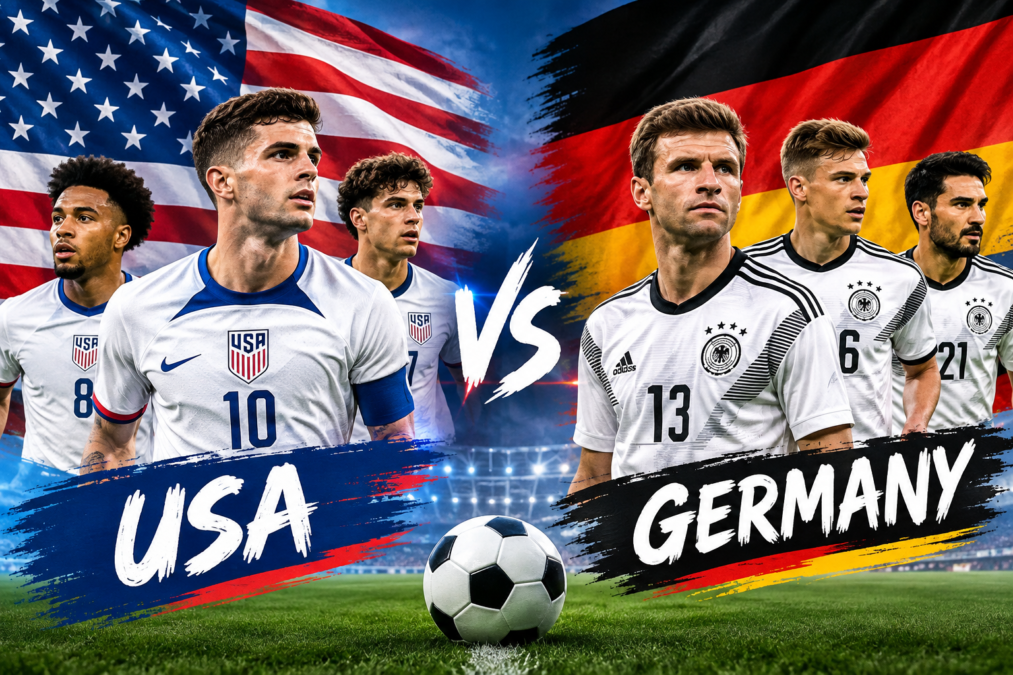

usa vs germany is an interesting comparison because both countries have a strong influence on the modern world. The United States of America and Germany are important in business, technology, education, culture, sports, science, and international relations. However, they are also very different in their history, political systems, geography, population, lifestyle, and economic structure.
The United States is one of the world’s largest countries by land area and has a population of more than 300 million people. Germany, on the other hand, is a smaller European country with a population of more than 80 million. While the USA is made up of 50 states, Germany is a federal republic made up of 16 states called Länder.
At first glance, these two countries may seem very different. Yet, both have developed strong economies, respected universities, advanced industries, and influential cultural traditions. Comparing them can help readers understand how different countries can achieve success through different systems and ideas.
This guide explores usa vs germany in a simple and detailed way, covering geography, history, government, economy, education, healthcare, lifestyle, technology, sports, culture, and future opportunities.
usa vs germany: Basic Facts
Before looking at detailed differences, it’s helpful to understand the basic facts about both countries.
| Category | United States | Germany |
|---|---|---|
| Official Name | United States of America | Federal Republic of Germany |
| Capital | Washington, D.C. | Berlin |
| Continent | North America | Europe |
| Federal Divisions | 50 states | 16 federal states |
| Main Language | English is the most widely spoken | German |
| Currency | US Dollar | Euro |
| Government | Federal presidential republic | Federal parliamentary republic |
| Major Cities | New York, Los Angeles, Chicago, Houston | Berlin, Hamburg, Munich, Frankfurt |
| Major Industries | Technology, finance, entertainment, manufacturing | Automotive, engineering, chemicals, machinery |
| Famous Sports | American football, basketball, baseball, soccer | Football, basketball, handball, motorsports |
These facts show that both nations are federal states, but their systems work in different ways.
usa vs germany: Geography and Location
Geography plays an important role in shaping a nation’s economy and lifestyle.
The United States covers a huge area. It stretches from the Atlantic Ocean to the Pacific Ocean and includes a wide variety of landscapes. There are mountains, deserts, forests, plains, beaches, lakes, and large rivers.
Germany is much smaller in size. It is located in Central Europe and shares borders with several countries, including France, Poland, Austria, Switzerland, Denmark, Belgium, and the Netherlands.
Germany’s central location gives it an important position in European trade. Goods can move easily between many European countries. The United States, because of its enormous size and access to two major oceans, has a different geographical advantage.
Important geographical features of the USA include:
- Rocky Mountains
- Appalachian Mountains
- Great Lakes
- Mississippi River
- Grand Canyon
- Atlantic and Pacific coastlines
- Large agricultural plains
Important geographical features of Germany include:
- Alps in the south
- Rhine River
- Black Forest
- North Sea coast
- Baltic Sea coast
- Central European plains
- Many forests and rivers
So, when comparing usa vs germany, the USA stands out for its enormous size and geographical variety, while Germany is known for its central European location and well-connected landscape.
usa vs germany: History and Historical Development
The histories of the United States and Germany are very different.
The United States declared independence from Great Britain in 1776. The country later developed a federal political system based on a written Constitution. Over time, the USA grew across North America and became one of the world’s most influential countries.
Germany’s modern political history developed differently. Germany became a unified nation in 1871. Before that, the region consisted of many separate kingdoms, states, and territories.
The 20th century was especially important for Germany. The country experienced World War I, the rise of Nazi Germany, World War II, and the division of Germany into East and West Germany after World War II.
The Berlin Wall became a powerful symbol of the division between East and West. In 1989, the wall fell, and Germany was reunified in 1990.
The United States also experienced major challenges, including the Civil War, economic crises, civil rights struggles, and major social changes.
Both countries have learned important lessons from difficult periods. Their histories continue to influence their governments, societies, and international relationships today.
usa vs germany: Government and Political Systems
One of the clearest differences in usa vs germany is their political structure.
The United States has a presidential system. The President serves as both the head of state and the head of government. The country has three major branches of government:
- Executive branch
- Legislative branch
- Judicial branch
The US Congress has two chambers:
- Senate
- House of Representatives
Germany uses a parliamentary system. Its federal government is led by the Federal Chancellor. The President of Germany serves as the head of state, while the Chancellor has the main responsibility for leading the government.
Germany’s parliament is called the Bundestag. Another important institution is the Bundesrat, which represents Germany’s federal states.
Both systems use federalism, meaning power is shared between the national government and regional governments. However, the way political leaders are selected and how government institutions operate are different.
usa vs germany: Economy and Business
The economies of both nations are highly developed, but they have different strengths.
The United States has one of the world’s largest economies. It has powerful industries in technology, finance, entertainment, healthcare, aerospace, retail, agriculture, and manufacturing.
American companies have become major global brands in areas such as software, social media, automobiles, aviation, food, and entertainment.
Germany is Europe’s largest economy and is particularly famous for manufacturing and engineering. German businesses have strong reputations for quality, precision, and technical knowledge.
Major German industries include:
- Automobile manufacturing
- Machinery
- Chemicals
- Pharmaceuticals
- Electrical equipment
- Industrial technology
- Renewable energy
Germany is especially famous for its automotive industry. Brands such as Volkswagen, BMW, Mercedes-Benz, Audi, and Porsche have become well known around the world.
The USA has a particularly strong technology and services economy, while Germany has a strong industrial and manufacturing base.
Economic comparison
| Economic Area | USA | Germany |
|---|---|---|
| Technology | Extremely strong | Strong and growing |
| Manufacturing | Strong | Extremely important |
| Finance | Global leader | Major European center |
| Automotive | Large industry | Major global strength |
| Agriculture | Very large | Modern and efficient |
| Entertainment | Global leader | Strong regional influence |
| Startups | Major global ecosystem | Growing startup ecosystem |
Neither country can simply be called “better” in every economic category. Each has developed different strengths.
usa vs germany: Education System
Education is another important part of usa vs germany.
The United States has many famous universities and colleges. American universities attract students from around the world. Higher education can offer a wide range of subjects, from business and engineering to medicine, arts, computer science, and social sciences.
Germany is also known for excellent education and research. Many public universities have relatively low tuition costs compared with universities in the United States, although rules can differ depending on the university, program, and student’s situation.
Germany also has a strong vocational education system. Students can combine classroom learning with practical workplace training. This approach helps prepare young people for careers in skilled industries.
Strengths of American education
- Large variety of university programs
- Strong research institutions
- Many internationally recognized universities
- Flexible academic choices
- Large campus communities
Strengths of German education
- Strong technical education
- Excellent engineering programs
- Important research institutions
- Strong vocational training
- Practical career preparation
For international students, the best choice depends on budget, subject, career goals, language ability, and preferred learning style.
usa vs germany: Healthcare Systems
Healthcare is one of the areas where the two countries have significant differences.
The United States has a mixed healthcare system involving private insurance, employer-based coverage, government programs, hospitals, doctors, and other healthcare providers.
Germany has a social health insurance system based on broad coverage. Most people are covered through statutory health insurance, while some people can use private insurance under certain conditions.
Both countries have highly trained medical professionals and advanced hospitals. However, the way healthcare is paid for and organized is quite different.
In the USA, healthcare costs can be high, especially without suitable insurance. Germany’s system places greater emphasis on broad insurance coverage and regulated healthcare access.
Of course, no healthcare system is perfect. Both nations continue to discuss ways to improve affordability, efficiency, and patient care.
usa vs germany: Cost of Living
Cost of living can vary greatly within both countries.
In the United States, cities such as New York, San Francisco, Los Angeles, and Boston can be expensive. Smaller cities and rural communities may be more affordable.
Germany also has differences between cities. Munich, Frankfurt, Hamburg, and Berlin can have higher living costs in some areas, particularly for housing.
When comparing living costs, people should consider more than rent.
Important expenses include:
- Housing
- Food
- Transportation
- Health insurance
- Education
- Electricity
- Internet
- Taxes
- Entertainment
A person’s lifestyle also matters. Someone who enjoys public transportation and a simple lifestyle may have different expenses from someone who owns several cars and lives in a major city.
usa vs germany: Work Culture
Work culture is another interesting area of comparison.
American workplaces often place strong emphasis on ambition, flexibility, innovation, and career growth. Employees may move between companies to seek better opportunities.
German work culture is often associated with planning, organization, technical skill, and work-life balance. German employees also benefit from strong labor protections and established workplace regulations.
This doesn’t mean every American workplace or every German company follows the same style. There are huge differences between industries and individual employers.
Still, some general differences can be seen.
American workplace culture may emphasize:
- Career advancement
- Individual achievement
- Innovation
- Flexible business practices
- Entrepreneurship
German workplace culture may emphasize:
- Planning
- Reliability
- Technical expertise
- Team responsibility
- Work-life balance
Both approaches can be successful when combined with respect, communication, and professionalism.
usa vs germany: Technology and Innovation
Technology has become central to both countries.
The United States has played a major role in the development of computers, the internet, smartphones, artificial intelligence, biotechnology, aerospace technology, and digital services.
Silicon Valley in California became one of the world’s best-known technology centers. Other American cities have also developed strong technology communities.
Germany has a different but equally important innovation tradition. The country is known for engineering, industrial automation, robotics, automotive technology, renewable energy, and advanced manufacturing.
Germany’s industrial companies have helped develop technologies used in factories around the world.
The USA often stands out for software and digital platforms, while Germany is especially strong in industrial engineering and manufacturing technology.
That’s quite a powerful combination when viewed globally.
usa vs germany: Culture and Lifestyle
American culture has had a huge international influence through movies, music, television, fashion, food, and social media.
Hollywood has helped make American entertainment famous worldwide. American music genres such as jazz, rock, hip-hop, country, and pop have also influenced global culture.
Germany has a rich cultural heritage of its own. The country is strongly associated with classical music, literature, philosophy, art, festivals, architecture, and modern design.
Germany is also famous for traditions such as Christmas markets and regional festivals.
American cultural highlights
- Hollywood
- Jazz
- Rock music
- Hip-hop
- Baseball
- Basketball
- American football
- Fast-food culture
- Diverse immigrant traditions
German cultural highlights
- Classical music
- Literature
- Christmas markets
- Football
- Traditional festivals
- Engineering culture
- Regional cuisine
- Historic architecture
Both countries are culturally diverse, although they express that diversity in different ways.
usa vs germany: Food and Cuisine
Food offers another fun way to understand usa vs germany.
American cuisine is highly diverse because the country has received people from many parts of the world. Burgers, barbecue, pizza, fried chicken, sandwiches, and regional dishes are popular examples.
Germany has a strong tradition of bread, sausages, potatoes, meat dishes, cakes, and regional foods. German cuisine differs from one region to another.
Popular German foods include:
- Bratwurst
- Pretzels
- Sauerbraten
- Schnitzel
- Potato dishes
- Rye and whole-grain breads
- Black Forest cake
Today, both countries offer food from almost every part of the world. In large cities, international cuisine is easy to find.
usa vs germany: Transportation
Transportation systems also reveal important differences.
Because the United States is so large, cars are very important in many communities. Some major cities have extensive public transportation, but many suburban and rural areas depend heavily on automobiles.
Germany has an extensive railway and public transportation network. Trains connect many cities and towns, making travel without a private car easier in many areas.
Germany is also famous for its highways, including the Autobahn. However, the Autobahn isn’t simply one giant road with no rules. Speed rules vary by location, and many sections have posted limits.
In the USA, transportation varies greatly from one state or city to another.
usa vs germany: Sports and Football
Sports are a major part of both societies.
The United States is famous for:
- American football
- Basketball
- Baseball
- Ice hockey
- Soccer
Germany is especially passionate about football, known as soccer in the United States.
The German national football team has a proud history and has won the men’s FIFA World Cup four times: 1954, 1974, 1990, and 2014.
The United States has also invested heavily in soccer. Major League Soccer has grown, and interest in the sport has increased across the country.
The USA has a major advantage in sports such as basketball and American football, while Germany has a particularly strong football tradition.
usa vs germany: Environmental Policies
Environmental protection is an important issue for both nations.
Germany has been a major supporter of renewable energy and climate-related policies. Solar and wind power have become important parts of the country’s energy transition.
The United States has also invested heavily in renewable energy, electric vehicles, battery technology, and clean technology. However, environmental policies can change depending on federal and state governments.
Both countries face challenges such as:
- Climate change
- Energy security
- Air pollution
- Water management
- Sustainable transportation
- Protection of forests and wildlife
Technology and innovation could play an important role in solving these problems.
usa vs germany: Travel and Tourism
Both countries attract millions of visitors because of their different landscapes and cultural attractions.
Visitors to the United States may explore:
- New York City
- Washington, D.C.
- Grand Canyon
- Yellowstone
- Los Angeles
- Miami
- San Francisco
- National parks
Visitors to Germany may enjoy:
- Berlin
- Munich
- Hamburg
- Rhine Valley
- Bavarian Alps
- Historic castles
- Black Forest
- Christmas markets
The USA is excellent for long-distance road trips and large natural landscapes. Germany is especially attractive for travelers who want to explore historic cities, castles, forests, and nearby European countries.
usa vs germany: Major Similarities
Although the differences are interesting, the similarities shouldn’t be ignored.
Both countries:
- Have federal political systems.
- Have advanced economies.
- Support scientific research.
- Have strong manufacturing industries.
- Have internationally respected universities.
- Produce important technological innovations.
- Have democratic political institutions.
- Have diverse populations.
- Have strong sports cultures.
- Play important roles in international affairs.
These similarities help explain why the relationship between the two countries has remained important for decades.
usa vs germany: Major Differences at a Glance
| Topic | USA | Germany |
|---|---|---|
| Size | Much larger | Smaller |
| Federal Units | 50 states | 16 states |
| Political System | Presidential | Parliamentary |
| Currency | US Dollar | Euro |
| Healthcare | Mixed public/private | Broad social insurance |
| Education | Often higher-cost | Public education often more affordable |
| Transportation | Cars are highly important | Rail and public transport are strong |
| Industry | Technology and services are huge | Engineering and manufacturing are major strengths |
| Football | Growing popularity | Deep national tradition |
| Work Culture | Often career-focused | Often emphasizes balance and planning |
| Energy | Diverse energy system | Strong focus on energy transition |
Common Misunderstandings About usa vs germany
When people compare countries, it’s easy to make broad statements that aren’t always correct.
For example, saying that “all Americans drive everywhere” isn’t accurate. Many Americans live in cities with good public transportation.
Likewise, saying “all Germans use trains” would also be incorrect. Many Germans own and use cars.
Another misunderstanding is that one country is automatically better than the other. That’s not a useful way to look at the comparison.
A country can be excellent in one area and face challenges in another. The better question is:
Which country is better for a particular goal?
For example:
- For certain technology careers, the USA may offer more opportunities.
- For some engineering careers, Germany may be especially attractive.
- For university research, both have excellent choices.
- For public transportation, Germany often has an advantage.
- For entertainment industries, the USA has enormous global influence.
That’s the real value of comparing nations.
An Unusual Search Phrase and Why Context Matters
Sometimes internet searches contain strange or unrelated phrases. The phrase “idiodid nicole kidman and keith urban splitms”, for example, does not naturally belong to a factual comparison of the United States and Germany.
When researching usa vs germany, readers should avoid mixing unrelated celebrity searches or random keywords into serious research. Reliable information should be checked against trustworthy sources, especially when discussing government, economics, education, healthcare, or history.
In other words, don’t believe every search result at first glance. A little fact-checking goes a long way.
Which Country Is Better for Students?
There isn’t one answer for everyone.
Students who want a large selection of universities, flexible degree programs, and a huge technology sector may find the USA attractive.
Students interested in engineering, technical subjects, vocational training, or affordable public education may find Germany appealing.
Before making a decision, students should consider:
- Tuition fees
- Living expenses
- Language
- University reputation
- Available courses
- Career opportunities
- Visa requirements
- Housing
- Personal goals
Choosing a country is a major decision, so careful research is essential.
Which Country Is Better for Business?
Again, it depends on the type of business.
The United States offers a massive consumer market and strong access to technology, finance, investment, and entrepreneurship.
Germany offers access to the European market and has strong industrial, engineering, and manufacturing networks.
For a technology startup, the USA may provide an especially large ecosystem of investors and technology companies.
For industrial manufacturing or engineering, Germany can be an excellent location.
Both countries can provide valuable opportunities for ambitious entrepreneurs.
The Future of usa vs germany
The future relationship between the United States and Germany is likely to remain important.
Both countries face major changes involving artificial intelligence, renewable energy, electric vehicles, cybersecurity, aging populations, global trade, and new technologies.
Cooperation can help both countries respond to these challenges.
There are also opportunities for greater cooperation in:
- Artificial intelligence
- Scientific research
- Clean energy
- Cybersecurity
- Advanced manufacturing
- Education
- Healthcare research
- Space technology
- Sustainable transportation
Neither nation has all the answers. By sharing knowledge and working together, both can improve their ability to solve complex problems.
Final Thoughts on usa vs germany
The comparison of usa vs germany shows that two successful countries can follow very different paths while achieving strong global influence. The United States is known for its huge economy, technological innovation, entertainment industry, universities, diverse population, and entrepreneurial culture. Germany is known for engineering, manufacturing, education, environmental initiatives, efficient infrastructure, and a strong industrial tradition.
The USA is much larger geographically, while Germany benefits from its central location in Europe. Their governments operate differently, their healthcare systems have different structures, and their education and workplace cultures also vary.
Yet, both nations share important qualities. They value education, innovation, research, economic development, and international cooperation. Both have faced difficult moments in history and have continued to change with the times.
Ultimately, usa vs germany isn’t simply a competition about which country is “best.” It’s an opportunity to understand two powerful societies, recognize their strengths, learn from their challenges, and appreciate the different ways nations can build a successful future. Looking ahead, continued innovation, education, cooperation, and responsible leadership can help both countries remain important contributors to the world.
usa vs germany: A Deeper Look at Two Global Powers
The usa vs germany comparison becomes even more interesting when we look beyond geography and culture. Both countries are powerful economies, important political partners, major technology centers, and influential members of the international community. However, their approaches to work, education, healthcare, business, defense, transportation, and daily life can be quite different.
The United States has a much larger population and economy. Germany, meanwhile, has a smaller population but remains one of Europe’s most important industrial and economic powers. Recent German government data shows that the United States had about 340 million people in 2024 compared with about 84 million in Germany. The same comparison places 2025 nominal GDP at roughly $30.8 trillion for the United States and $5.0 trillion for Germany.
That doesn’t mean one country is simply “better.” Instead, each has developed different strengths. Understanding those strengths gives readers a clearer picture of usa vs germany.
usa vs germany: Economic Power
The economy is one of the biggest areas where the two countries differ.
The United States has an enormous domestic market. Its economy includes technology, finance, healthcare, entertainment, manufacturing, agriculture, energy, transportation, retail, and professional services.
Germany has a smaller domestic market but is deeply connected to international trade. Manufacturing and exports play a particularly important role in its economy.
Germany is famous for producing high-quality industrial goods, machinery, vehicles, chemicals, medical equipment, and electrical products. The United States has enormous strengths in technology, financial services, software, entertainment, aerospace, and advanced research.
Recent official German statistics put 2025 nominal GDP at approximately $30.77 trillion for the United States and $5.05 trillion for Germany. The figures also show real GDP growth of about 2.1% for the United States and 0.2% for Germany in 2025.
Main American economic strengths
- Technology
- Financial services
- Software
- Aerospace
- Entertainment
- Agriculture
- Energy
- Healthcare
- Retail
- Advanced research
Main German economic strengths
- Automotive manufacturing
- Engineering
- Machinery
- Chemicals
- Pharmaceuticals
- Industrial equipment
- Electrical technology
- Renewable-energy technology
- Export manufacturing
Germany’s economy is currently facing pressure from changing global competition, particularly in manufacturing. Recent reporting has highlighted pressure from Chinese manufacturers and the need for German companies to adapt.
usa vs germany: Trade Between the Two Countries
The economic relationship between the United States and Germany is much stronger than many people realize.
According to U.S. government data reported through the U.S. Bureau of Economic Analysis, total U.S.-Germany trade in goods and services reached approximately $335.7 billion in 2025. The United States imported about $206.2 billion from Germany and exported approximately $129.6 billion to Germany.
This trade relationship creates opportunities for companies and workers in both countries.
Germany sells many products to the American market, especially:
- Vehicles
- Machinery
- Pharmaceuticals
- Industrial equipment
- Medical products
- Electrical equipment
The United States sells Germany products and services in areas such as:
- Aircraft
- Technology
- Pharmaceuticals
- Machinery
- Vehicles
- Financial services
- Digital services
According to Germany’s Federal Foreign Office, the United States was Germany’s second-largest trading partner in 2025, after China. German companies also have a large presence across the United States, with more than 6,000 companies operating in all 50 states.
So, when discussing usa vs germany, it’s important to remember that these countries aren’t just competitors. They’re also major business partners.
usa vs germany: Salary and Income
Salary comparisons can be complicated because wages depend on profession, city, experience, education, taxes, and benefits.
In general, American salaries can be higher in certain highly paid fields, especially technology, finance, medicine, and some management positions.
Germany may offer a different balance between salary, working hours, benefits, paid leave, and social protection.
For example, a software engineer in a major American technology center might have a very high salary but also face expensive housing and healthcare-related costs.
A German employee might earn less in a similar role but receive strong employment protections and other benefits.
Factors that influence income
- Profession
- Education
- Work experience
- Location
- Company size
- Industry
- Tax system
- Working hours
- Benefits
Therefore, simply comparing a salary number doesn’t tell the entire story.
A smart comparison should ask:
How much does a person earn, and what does that person receive in return for the cost of living and taxes?
That’s where the real comparison becomes useful.
usa vs germany: Working Hours and Holidays
Work culture is one of the most noticeable differences.
American work environments can be highly competitive. Career growth, performance, innovation, and individual achievement are often important.
Germany has a strong tradition of structured employment and worker protections. Many German workplaces emphasize planning, predictable schedules, and a clear separation between professional and private life.
Germany is also well known for paid vacation and regulated working conditions.
This doesn’t mean Americans never take vacations or Germans never work long hours. Of course they do. Industries and companies differ considerably.
Still, the general approach can be different.
American workplace advantages may include:
- Fast career growth
- Large job market
- High earning potential in some industries
- Strong startup culture
- Flexible career changes
German workplace advantages may include:
- Strong worker protections
- Emphasis on work-life balance
- Structured employment
- Strong vocational training
- Generous paid leave in many jobs
For someone choosing between the two countries, work culture can be just as important as salary.
usa vs germany: Military Strength and Defense
Military power is another major part of the usa vs germany comparison.
The United States has one of the world’s most powerful military forces. It has major capabilities in air power, naval forces, satellites, cyber operations, logistics, and advanced weapons systems.
Germany has a much smaller military, known as the Bundeswehr. However, Germany plays an important role in European security and NATO.
The two countries are also closely connected through NATO. Germany hosts U.S. military personnel, and transatlantic security cooperation remains important.
Germany’s Federal Foreign Office states that U.S. military personnel stationed permanently in Germany contribute to the security of Germany and Europe within the NATO framework.
Broad comparison
| Area | United States | Germany |
|---|---|---|
| Military scale | Very large | Smaller |
| Global reach | Extremely extensive | Mainly European/NATO focused |
| Navy | Major global force | Smaller |
| Air power | Very large | Modern European force |
| Nuclear weapons | Yes | No national nuclear arsenal |
| NATO role | Major | Important |
| Overseas military presence | Extensive | More limited |
The purpose of this comparison isn’t to promote conflict. In today’s world, military cooperation is often aimed at deterrence and maintaining security.
usa vs germany: Healthcare and Medical Care
Healthcare is another area where the systems are very different.
The United States has a mixed healthcare system involving private insurance, employer-sponsored coverage, government programs, hospitals, and private medical providers.
Germany has a broad social health insurance system. Most residents are covered through statutory health insurance, while private insurance is available for certain groups.
Both countries have highly developed medical research and advanced hospitals.
The United States is particularly influential in areas such as:
- Medical research
- Biotechnology
- Pharmaceuticals
- Cancer research
- Medical technology
- Specialist medicine
Germany also has strong hospitals, medical research institutions, pharmaceutical companies, and medical technology industries.
Key difference
The major difference isn’t necessarily the quality of doctors or hospitals. It is largely about how healthcare is organized and paid for.
American healthcare can offer excellent specialized treatment, but costs can be high.
Germany emphasizes broad insurance coverage and a structured social insurance model.
Neither system is perfect, and both countries continue to discuss healthcare reforms.
usa vs germany: Education and University Life
Education is another important factor for international students.
The United States has some of the world’s most famous universities. American universities often provide enormous choices in subjects, extracurricular activities, research programs, sports, and campus life.
Germany is highly respected for engineering, science, technical education, and research.
One major advantage of Germany is its public university system, where tuition arrangements can be much more affordable than at many American universities. However, students must always check the rules of the specific state and institution.
American university experience
American universities often offer:
- Large campuses
- Sports programs
- Student clubs
- Flexible degree structures
- Extensive research
- Many specialized courses
- Strong alumni networks
German university experience
German universities often offer:
- Strong technical programs
- Engineering education
- Research opportunities
- Practical learning
- Lower tuition at many public institutions
- Links with industrial companies
For international students, Germany can be especially attractive for students interested in engineering and technical fields.
The United States can be attractive for students who want a huge range of academic and career choices.
usa vs germany: Vocational Training
One area where Germany stands out is vocational education.
Germany has a well-known dual vocational training model. Students can combine classroom education with practical workplace experience.
This can help young people develop real job skills while learning.
Fields may include:
- Automotive technology
- Electrical work
- Construction
- Industrial machinery
- Healthcare
- Information technology
- Hospitality
- Business services
The United States also offers vocational schools, community colleges, apprenticeships, and technical programs, but the German dual system is particularly well known internationally.
This is an important lesson in usa vs germany: university isn’t the only path to a successful career.
usa vs germany: Technology and Artificial Intelligence
Technology is an area where both countries are investing heavily.
The United States has a massive technology ecosystem. Companies in Silicon Valley and other American technology centers have helped shape the internet, cloud computing, smartphones, artificial intelligence, social media, and digital services.
Germany has a different technology advantage. It combines digital innovation with industrial engineering.
German companies are particularly interested in:
- Industrial automation
- Robotics
- Smart factories
- Artificial intelligence
- Automotive software
- Renewable energy
- Manufacturing technology
- Industrial cybersecurity
The future could bring greater cooperation between the two countries.
American software expertise combined with German engineering could create powerful innovations.
usa vs germany: Automotive Industry
Cars are an excellent example of the different strengths of both economies.
The United States has a huge automotive market and major manufacturers. It is also becoming an important center for electric vehicles, batteries, autonomous driving, and automotive software.
Germany has a famous automotive tradition.
German brands such as:
- Volkswagen
- BMW
- Mercedes-Benz
- Porsche
- Audi
are recognized around the world.
German automotive companies have traditionally focused heavily on engineering, performance, quality, and manufacturing.
However, the industry is changing rapidly.
Electric vehicles, software, batteries, artificial intelligence, and autonomous driving are reshaping the global automotive market.
This means both countries face the same basic question:
Who can adapt fastest to the future of transportation?
usa vs germany: Transportation and Public Transit
Transportation is another area where the difference is easy to notice.
Because the United States is geographically enormous, private cars are extremely important in many areas.
Large American cities such as New York, Chicago, Boston, and Washington, D.C. have strong public transportation systems, but many suburban and rural areas depend heavily on cars.
Germany has a strong national railway network and extensive local public transportation.
People can often travel between major German cities by train instead of driving.
Transportation comparison
| Feature | USA | Germany |
|---|---|---|
| Private cars | Very important | Very important |
| Railways | Strong in selected regions | Strong national network |
| Urban transit | Excellent in some cities | Strong in many cities |
| Long-distance travel | Cars and airplanes | Trains, cars, airplanes |
| Cycling | Growing | Very common in many areas |
| Highways | Extensive | Extensive Autobahn network |
For someone who dislikes driving, Germany can often be easier to navigate using public transportation.
usa vs germany: Immigration and Diversity
The United States has a long history of immigration. People from almost every part of the world have moved to America, creating highly diverse communities.
Germany has also become increasingly diverse, especially because of European migration, international workers, refugees, students, and skilled professionals.
The two countries have different immigration laws and procedures.
People considering immigration should research:
- Visa requirements
- Work permits
- Student visas
- Family reunification
- Permanent residence
- Citizenship rules
- Language requirements
- Professional qualifications
Immigration rules can change, so official government sources should always be checked before making important decisions.
usa vs germany: Quality of Life
Quality of life is difficult to measure because people value different things.
Some people prioritize income and career opportunities.
Others care more about:
- Healthcare
- Safety
- Family time
- Public transportation
- Education
- Nature
- Housing
- Work-life balance
- Cultural activities
The United States may be especially attractive to ambitious professionals looking for a huge job market and high earning potential.
Germany may appeal to people who value public services, structured employment, transportation, and work-life balance.
The best choice depends on the person.
usa vs germany: Population and Demographics
The population difference is enormous.
Official comparative data shows that the United States had around 340 million people in 2024, while Germany had around 84 million. The same source projects a much larger population for the United States by 2050, while Germany’s population is projected to decline somewhat.
Germany also has a higher share of people aged 65 and above. In 2024, the comparative data showed about 23.2% of Germany’s population aged 65 or older, compared with 17.9% in the United States.
This difference matters because aging populations can influence:
- Pension systems
- Healthcare demand
- Workforce size
- Immigration policy
- Government spending
- Economic growth
Both nations will need to prepare for changing demographic patterns.
usa vs germany: Environment and Climate
Environmental issues are increasingly important in both countries.
Germany has invested heavily in renewable energy and reducing emissions. Its industrial base also gives it a strong reason to develop cleaner manufacturing methods.
The United States has enormous energy resources and is investing in solar power, wind energy, electric vehicles, batteries, nuclear technology, and other clean-energy solutions.
Recent comparative data shows that the United States has much larger total emissions because of its size and population, while Germany has reduced its fossil-fuel-related emissions significantly since 1990.
The future will likely depend on new technology.
Important areas for cooperation include:
- Solar energy
- Wind power
- Electric vehicles
- Battery production
- Hydrogen
- Energy efficiency
- Smart electricity grids
- Carbon reduction
- Sustainable manufacturing
There’s plenty of room for both countries to learn from one another.
usa vs germany: Tourism and Travel Experience
Travelers may experience the two countries very differently.
The United States is perfect for huge road trips. A visitor can travel across several states and experience deserts, mountains, forests, beaches, national parks, and major cities.
Germany offers a more compact travel experience. A visitor can move between historic cities, castles, forests, mountains, and neighboring countries relatively easily.
The USA is famous for:
- Grand Canyon
- Yellowstone
- New York City
- Los Angeles
- Las Vegas
- Miami
- San Francisco
- National parks
Germany is famous for:
- Berlin
- Munich
- Rhine Valley
- Bavarian Alps
- Black Forest
- Historic castles
- Christmas markets
- Hamburg
For a long road trip, the USA has an enormous advantage in scale.
For a European cultural journey, Germany offers excellent connections to surrounding countries.
usa vs germany: Cultural Exchange
The relationship isn’t limited to business and politics.
Americans and Germans have strong cultural connections through:
- Universities
- Student exchanges
- Music
- Art
- Tourism
- Business
- Sports
- Research
- Sister-city programs
Germany’s Federal Foreign Office reports that there are more than 200 German-American town-twinning arrangements and that Germany remains a popular destination for students from the United States.
These personal connections matter because international relationships aren’t built only by governments.
They’re built by ordinary people, too.
usa vs germany: Future Cooperation
The future of usa vs germany doesn’t have to be based on competition.
In many areas, cooperation can be more valuable than rivalry.
Both countries can work together on:
- Artificial intelligence
- Cybersecurity
- Medical research
- Clean energy
- Defense technology
- Advanced manufacturing
- Space exploration
- Education
- Scientific research
- Global trade
The two nations already have deep economic and security connections. Germany’s Federal Foreign Office describes the relationship as being built on historical ties, shared experiences, values, and interests.
Economic connections are especially strong. German companies have a major presence in the United States, while American companies operate throughout Germany.
Quick usa vs germany Comparison
| Category | United States | Germany |
|---|---|---|
| Population | Much larger | Smaller |
| Economy | Much larger overall | Europe’s major industrial economy |
| Main currency | US Dollar | Euro |
| Government | Presidential federal republic | Parliamentary federal republic |
| Technology | Global leader | Strong industrial technology |
| Manufacturing | Strong | Extremely important |
| Automotive | Huge market and industry | Global automotive leader |
| Healthcare | Mixed public/private | Broad social insurance |
| Public transport | Strong in major cities | Strong nationwide network |
| Education | Famous universities | Strong technical education |
| Vocational training | Growing | Highly developed |
| Military | Global-scale | Major NATO European force |
| Work culture | Often career-focused | Often structured and balance-focused |
| Tourism | Huge landscapes | Compact European access |
| Population aging | Lower share than Germany | Higher share |
| International role | Global superpower | Major European power |
What Can Each Country Learn From the Other?
A comparison becomes truly useful when it looks for lessons.
The United States could learn from Germany’s strengths in areas such as vocational training, public transportation, and certain approaches to worker protections.
Germany could learn from American strengths in startup culture, digital technology, venture capital, and rapid commercialization of new ideas.
Of course, both countries are already changing. Neither society is standing still.
The most successful future may come from combining the best ideas from different systems.
Final Thoughts on usa vs germany
The usa vs germany comparison reveals two nations with different histories, systems, cultures, and economic structures but remarkably strong international connections.
The United States has enormous economic scale, a huge consumer market, world-leading technology companies, powerful universities, global military capabilities, and a culture that encourages entrepreneurship.
Germany offers outstanding engineering, manufacturing, vocational education, public infrastructure, industrial expertise, and strong connections to the European market.
Their economies are also deeply connected. In 2025, the United States and Germany traded hundreds of billions of dollars in goods and services, while German businesses maintained a major presence throughout the American economy.
Ultimately, usa vs germany isn’t about declaring one country the universal winner. It’s about understanding what makes each country successful and where each faces challenges. By learning from one another, investing in people, supporting innovation, and maintaining strong international relationships, both countries can continue to contribute positively to the global community.
The story of usa vs germany is therefore not only a story of differences. It’s also a story of cooperation, opportunity, innovation, and a shared interest in building a stronger future.
usa vs germany: Society, Sports, Travel, Business and Future Prospects
Introduction to usa vs germany
The comparison of usa vs germany becomes even more interesting when we look beyond basic facts such as population, economy, and government. The United States and Germany are both highly developed countries, but they have different social systems, traditions, business cultures, sports interests, and ways of daily life.
The United States is a large country with a population of about 340 million, while Germany has a population of around 84 million. Current international statistics also show an important demographic difference: Germany has an older population, while the United States has a somewhat younger age structure and a larger projected population.
At first glance, the two countries may look very different. One is a large federal republic stretching across North America, while the other is a European country located at the center of the European Union. However, both countries are important economic powers, major centers of education and technology, and strong partners in international trade and security.
So, let’s take a closer look at the usa vs germany comparison from several practical and social points of view.
Social Life in the United States and Germany
Social life is one area where the usa vs germany comparison becomes especially interesting.
American society is known for its cultural diversity. People from many different backgrounds live, work, study, and build businesses across the country. Large cities such as New York, Los Angeles, Chicago, Houston, and Miami have highly diverse communities.
Germany is also multicultural. Immigration has played an important role in German society, especially in large cities such as Berlin, Frankfurt, Hamburg, Munich, and Cologne.
People in both countries value:
- Family relationships
- Education
- Personal freedom
- Career opportunities
- Travel
- Entertainment
- Sports
- Community activities
However, social habits can be different.
Americans often have a more informal communication style. It’s common to call someone by their first name, even in professional situations. Germans may appear more formal at first, especially when meeting someone for the first time.
German culture often places strong value on punctuality, planning, and personal boundaries. In the United States, social interactions can sometimes be more spontaneous and flexible.
Neither approach is automatically better. They simply reflect different cultural traditions.
Family Life and Personal Time
Family remains important in both countries, but lifestyles can differ.
In the United States, families may live far away from each other because people frequently move for jobs, education, or better opportunities. It isn’t unusual for adult children to live in another state from their parents.
Germany has a strong tradition of family life, but people also value personal time and structured working schedules.
One major difference is the attitude toward vacation.
Many German workers place strong importance on taking regular holidays and separating work from personal life. Americans also take vacations, but work culture can be more career-focused in many industries.
This difference can influence how people think about success.
In the United States, success is often connected with:
- Career growth
- Higher income
- Entrepreneurship
- Home ownership
- Professional achievements
In Germany, success may also be connected with:
- Stable employment
- Good work-life balance
- Social security
- Professional qualifications
- Personal satisfaction
Of course, these are general trends rather than rules. Millions of people in both countries live in many different ways.
Housing and City Life
Housing is another major part of the usa vs germany discussion.
The United States has enormous variation in housing. A person may live in a small apartment in Manhattan, a suburban home in Texas, or a large property in a rural state.
Germany also has different housing styles, but renting is particularly common in many German cities.
Large German cities often have:
- Apartments
- Historic buildings
- Modern residential developments
- Smaller living spaces
- Strong public transportation connections
American suburbs, on the other hand, often feature:
- Single-family houses
- Private yards
- Garages
- Larger homes
- Greater dependence on cars
This doesn’t mean every American lives in a house or every German lives in an apartment. However, the overall housing patterns are noticeably different.
Transportation: Cars Versus Public Transit
Transportation is one of the clearest differences in the usa vs germany comparison.
The United States is strongly associated with automobile culture. Many American cities and suburbs were designed around roads and highways. In several areas, having a car is almost necessary for everyday life.
Germany has a strong public transportation network, particularly in major cities.
People can use:
- Trains
- Trams
- Buses
- Underground rail systems
- Regional trains
- Bicycles
Germany is also famous for its autobahns, although the idea that every part of the German motorway system has no speed limits is incorrect. Speed limits apply on many sections.
The United States has an enormous highway system as well, with famous routes crossing the country from coast to coast.
For travelers, the choice can be simple:
USA: Often better suited to road trips and long-distance driving.
Germany: Often more convenient for travelers who want to move between cities by train.
Football and Sports Culture
Sports are a major part of the usa vs germany comparison.
In Germany, football—known as soccer in the United States—is extremely popular. German clubs have passionate supporters, and football stadiums can attract huge crowds.
The German national team is also one of the most successful teams in international football history.
Germany has won the men’s FIFA World Cup four times:
- 1954
- 1974
- 1990
- 2014
The United States has traditionally had a different sports culture.
American football, basketball, baseball, and ice hockey have historically been among the country’s biggest professional sports.
The United States is home to famous leagues such as:
- NFL
- NBA
- MLB
- NHL
- MLS
Soccer has also grown significantly in popularity in the United States.
This makes the sporting relationship between the two countries increasingly interesting.
A Simple Sports Comparison
| Sport | United States | Germany |
|---|---|---|
| American Football | Extremely popular | Less popular |
| Soccer/Football | Growing rapidly | Extremely popular |
| Basketball | Extremely popular | Popular |
| Baseball | Extremely popular | Less popular |
| Ice Hockey | Popular | Popular |
| Motorsport | Popular in selected regions | Very popular |
| Tennis | Popular | Popular |
Sports, therefore, show that national culture isn’t only about politics or economics. It can also be seen in stadiums, schools, television, and local communities.
Education and Student Opportunities
Education is another important area in the usa vs germany comparison.
The United States has many world-famous universities. American universities offer a huge range of programs and research opportunities.
Students can choose from:
- Public universities
- Private universities
- Community colleges
- Technical institutions
- Liberal arts colleges
- Graduate schools
Germany has a strong reputation for higher education and technical training.
German universities are especially respected for:
- Engineering
- Science
- Technology
- Research
- Medicine
- Business
- Technical education
Germany also has a strong vocational education system. Students can combine classroom learning with practical workplace experience.
This approach is attractive to people who prefer learning practical skills instead of following a purely academic path.
The United States, meanwhile, has a huge private education market and offers extensive opportunities for students who want to specialize in areas such as business, technology, medicine, law, and entertainment.
Germany remains an important destination for American students, and the two countries maintain strong academic and cultural exchanges. Germany’s Federal Foreign Office describes the relationship as having a broad network across science, culture, and civil society.
Technology and Innovation
Technology is another area where the usa vs germany comparison is fascinating.
The United States has enormous strength in:
- Software
- Artificial intelligence
- Cloud computing
- Social media
- Aerospace
- Biotechnology
- Digital services
- Consumer technology
American technology companies have created some of the world’s most recognizable digital platforms.
Germany has traditionally been especially strong in:
- Industrial engineering
- Manufacturing technology
- Automotive engineering
- Robotics
- Industrial software
- Renewable energy technology
- Mechanical engineering
In simple terms, the United States is often associated with digital innovation and large technology platforms, while Germany is famous for industrial engineering and high-quality manufacturing.
However, these boundaries are becoming less clear.
German companies are investing more heavily in artificial intelligence and digital systems, while American companies are increasingly interested in advanced manufacturing.
The future may therefore bring greater cooperation rather than a simple competition.
Business Culture
Business culture is an important difference between the two nations.
American companies often emphasize:
- Speed
- Competition
- Growth
- Innovation
- Entrepreneurship
- Individual performance
German companies often emphasize:
- Planning
- Quality
- Engineering
- Long-term stability
- Training
- Reliability
American business meetings may move quickly toward a decision. German business discussions may involve more preparation, technical details, and careful evaluation.
For someone doing international business, understanding these differences can make a huge difference.
A successful American businessperson working with German partners should be prepared, punctual, and clear.
A German professional working with an American company may benefit from being flexible, direct, and comfortable with rapid changes.
Germany and the United States as Trading Partners
Trade is one of the strongest connections between the two countries.
Germany’s Federal Foreign Office says the United States was Germany’s second most important trading partner in 2025, behind China. It also notes that German exports have sent their largest share to the United States each year since 2015. More than 6,000 German companies are present across all 50 U.S. states.
German companies are particularly important in industries such as:
- Automobiles
- Chemicals
- Machinery
- Pharmaceuticals
- Industrial equipment
- Engineering
American companies are also deeply involved in Germany’s economy, especially in:
- Technology
- Finance
- Pharmaceuticals
- Manufacturing
- Consulting
- Digital services
Trade patterns can change, though.
For example, German official statistics reported that Germany’s goods export surplus with the United States fell significantly in the first quarter of 2026. German exports to the United States decreased by 12.1% year over year, while imports increased by 1.9%. Automobile and automobile-parts exports played a major role in the change.
This shows that international trade isn’t fixed. Tariffs, economic conditions, consumer demand, and government policies can quickly change business relationships.
Automotive Industry
When discussing the usa vs germany topic, cars deserve special attention.
Germany has some of the world’s most famous automotive brands and a long history of engineering excellence.
German automotive strengths include:
- Premium vehicles
- Engineering
- Performance
- Safety technology
- Manufacturing
- Vehicle research
The United States has a different but equally important automotive tradition.
American automotive culture is strongly connected with:
- Pickup trucks
- SUVs
- Muscle cars
- Large vehicles
- Electric vehicles
- Long-distance driving
The two countries are also competing and cooperating in electric vehicle technology.
Germany’s automotive industry is under pressure to adapt to changing global competition and the rapid growth of electric vehicles. This means the industry will need innovation, efficient production, software development, and new battery technology.
The United States is also experiencing a major transformation as electric vehicles, autonomous driving, and connected cars become increasingly important.
Environmental Differences
Environmental policy is another area where the usa vs germany comparison offers useful lessons.
Germany has invested heavily in renewable energy and climate policies. The country has worked to reduce its dependence on fossil fuels and increase the use of renewable sources.
The United States has also invested heavily in clean energy, although environmental policy can vary significantly between states and administrations.
According to Germany’s Federal Statistical Office, 2024 fossil-fuel carbon dioxide emissions were about 13.6 tonnes per person in the United States compared with about 7.0 tonnes per person in Germany. Germany’s emissions per person had fallen much more since 1990 than those of the United States.
The comparison isn’t simply about which country is “better.” Both countries have major environmental challenges because of their large industrial and transportation systems.
Both can benefit from:
- Renewable energy
- Electric transportation
- Energy-efficient buildings
- Better public transportation
- Cleaner manufacturing
- Recycling
- Sustainable technology
Population and Demographic Challenges
Population is becoming one of the most important long-term issues in the usa vs germany discussion.
The United States had about 340 million people in 2024, compared with approximately 84 million in Germany. Current projections suggest the U.S. population could reach around 381 million by 2050, while Germany’s population could decline to around 78 million.
Germany faces a particularly strong aging challenge.
In 2024, about 23.2% of Germany’s population was aged 65 or older, compared with 17.9% in the United States.
This creates important questions for Germany:
- Who will fill future jobs?
- How can pension systems remain sustainable?
- How can healthcare services meet rising demand?
- How can companies find skilled workers?
- How can immigration support the labor market?
The United States also faces an aging population, but its larger population and immigration patterns give it a different demographic situation.
Germany’s population fell slightly in 2025 to about 83.5 million, according to Destatis.
Tourism: USA or Germany?
Tourists can find completely different experiences in the two countries.
The United States offers enormous geographic variety.
Visitors can experience:
- Beaches
- Deserts
- Mountains
- National parks
- Large cities
- Theme parks
- Historic towns
- Road-trip routes
Germany offers a more compact travel experience.
Visitors can explore:
- Medieval towns
- Castles
- Alpine regions
- Christmas markets
- Historic cities
- Forests
- Museums
- River valleys
A person visiting the United States may need several hours—or even a full day—to travel between major destinations.
In Germany, many popular destinations can be reached by train within a few hours.
For adventure and huge landscapes, the United States has a major advantage.
For compact European travel and historic attractions, Germany can be extremely convenient.
Food Culture
Food also tells an interesting story.
American food culture is highly diverse because of centuries of immigration.
Popular American foods include:
- Burgers
- Barbecue
- Pizza
- Fried chicken
- Sandwiches
- Tacos
- Pancakes
- Regional seafood
Germany is famous for foods such as:
- Bratwurst
- Pretzels
- Schnitzel
- Bread
- Sauerkraut
- Potato dishes
- Cakes and pastries
German bread culture is particularly well known for its variety.
At the same time, both countries have become much more internationally connected. In major cities, people can find food from almost every part of the world.
Healthcare and Everyday Well-Being
Healthcare remains one of the biggest differences between the two systems.
The United States has a highly advanced medical sector with world-leading hospitals, research institutions, and specialists.
However, healthcare costs can be high, and access depends heavily on insurance and personal circumstances.
Germany operates a broad health insurance system based on statutory and private insurance options.
German healthcare aims to provide broad access while combining public regulation with insurance-based financing.
Both countries have excellent doctors, hospitals, researchers, and medical technology.
The difference is mainly in how healthcare is organized and paid for.
Work-Life Balance
Work-life balance is another important part of the usa vs germany comparison.
American workers may experience a culture that places strong emphasis on ambition, career development, and professional success.
Germany is often associated with more structured working conditions and stronger separation between professional and private life.
This can influence:
- Vacation planning
- Working hours
- Family time
- Weekend activities
- Retirement planning
- Employee protections
Again, there are major differences between industries and individuals.
A technology worker in California may have a completely different lifestyle from a factory worker in another American state. Likewise, a German startup employee in Berlin may have a different schedule from a traditional manufacturing worker in Bavaria.
Safety and Public Order
Safety is difficult to compare using one simple measurement because crime rates can differ by city and region.
Both countries contain very safe communities and areas with greater challenges.
Germany generally has a strong reputation for public order, while the United States has enormous regional differences.
When comparing safety, travelers and residents should look at the specific city rather than assuming that an entire country is identical.
Important factors include:
- Local crime rates
- Neighborhood conditions
- Transportation
- Emergency services
- Healthcare access
- Road safety
- Local laws
Military and International Cooperation
The United States is one of the world’s most powerful military nations, with extensive global capabilities.
Germany has a smaller military but plays an important role in European security and NATO.
The two countries are closely connected through the transatlantic alliance.
Germany’s Federal Foreign Office states that NATO cooperation and the presence of U.S. military personnel in Germany contribute to the security of Germany and Europe.
This relationship demonstrates that the usa vs germany comparison isn’t always about competition.
In many areas, the countries work together.
They cooperate in:
- Defense
- Science
- Trade
- Education
- Security
- Technology
- Culture
- Climate policy
What the USA Can Learn From Germany
The United States has many strengths, but there are also areas where German experience may provide useful ideas.
The USA could learn from Germany’s:
- Public transportation
- Vocational training
- Apprenticeship programs
- Energy efficiency
- Urban planning
- Some aspects of worker protection
- Compact city design
These ideas wouldn’t necessarily work exactly the same way in the United States because the countries have different sizes, populations, laws, and traditions.
Still, international comparison can inspire useful improvements.
What Germany Can Learn From the USA
Germany can also learn from American strengths.
These include:
- Startup culture
- Venture capital
- Digital platforms
- University-business partnerships
- Rapid commercialization
- Large-scale technology companies
- Flexible business models
American companies often move quickly from an idea to a product.
Germany’s strong engineering culture combined with American-style entrepreneurship could create powerful opportunities.
What Both Countries Can Learn From Each Other
The strongest lesson from the usa vs germany comparison is that neither country has a perfect system.
The United States offers enormous scale, entrepreneurial energy, cultural diversity, and technological power.
Germany offers engineering excellence, social systems, vocational education, and a strong tradition of industrial quality.
Together, these strengths can complement one another.
For example:
| American Strength | German Strength | Possible Shared Benefit |
|---|---|---|
| Startup culture | Engineering | New industrial technologies |
| Large technology market | Manufacturing | Smart production |
| University research | Vocational training | Skilled workforce |
| Large investment market | Industrial expertise | New businesses |
| Digital innovation | Quality manufacturing | Advanced products |
| Entertainment | Cultural heritage | Tourism cooperation |
The Future of usa vs germany
The future of the usa vs germany relationship will likely involve both competition and cooperation.
Economic competition will continue in industries such as:
- Electric vehicles
- Artificial intelligence
- Renewable energy
- Pharmaceuticals
- Manufacturing
- Digital technology
At the same time, cooperation will remain important.
The countries have deep economic and social connections. Germany has thousands of companies operating across the United States, while American businesses remain important participants in Germany’s economy.
Trade may also face challenges from tariffs and changing global supply chains. Recent German trade data already show how policy changes can affect automobile exports and the overall trade balance.
Therefore, future success may depend on flexibility.
Companies that can adapt quickly, invest in technology, and understand international markets are likely to have an advantage.
Final Thoughts on usa vs germany
The usa vs germany comparison isn’t really about deciding which country is the winner.
Both countries have unique advantages.
The United States is larger in population and economic size, with enormous strength in technology, entrepreneurship, entertainment, higher education, finance, and global business.
Germany is smaller but highly influential, especially in engineering, manufacturing, automobiles, vocational education, environmental technology, and industrial research.
Their cultures are different, yet their relationship is deep.
They share economic connections, educational exchanges, scientific cooperation, cultural links, and security partnerships. Germany’s government describes the relationship as being built on historical ties, shared experiences, values, and interests.
The most useful way to understand usa vs germany is to recognize that each country has developed solutions according to its own history, geography, population, and social values.
The United States shows the power of scale, innovation, and entrepreneurship.
Germany shows the value of engineering, planning, skills, and long-term industrial strength.
In the years ahead, the countries won’t simply compete with each other. They’ll also need each other. Whether the topic is technology, trade, climate change, education, security, or business, cooperation can create opportunities that neither country could achieve alone.
That is what makes the usa vs germany comparison so valuable: it isn’t just a comparison between two countries. It’s a way to understand two different approaches to building a modern society—and the many ways those approaches can learn from one another.
Explore more insightful articles on All Vantage News and never miss an update.Contact Us.