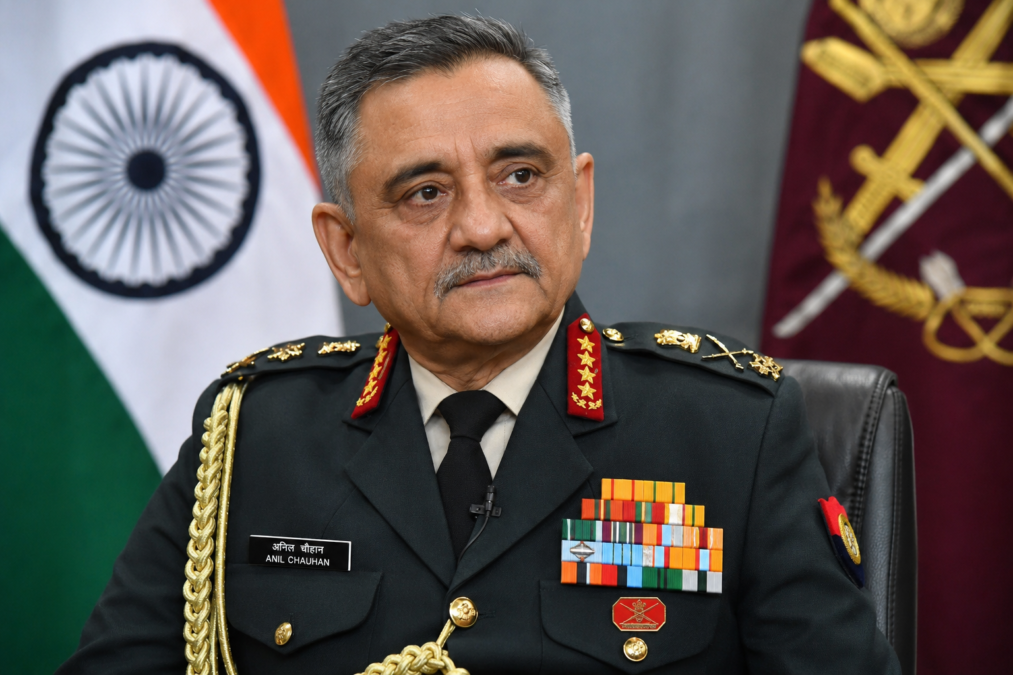

general anil chauhan is a distinguished Indian military officer whose career spans more than four decades of service, command, strategic planning, and national security responsibilities. Born on 18 May 1961, he joined the Indian Army in 1981 and was commissioned into the 11 Gorkha Rifles. Over the years, he served in important command and staff positions, including leadership roles in Jammu and Kashmir, the Northeast, and the Eastern Command.
He is particularly known for his experience in counter-insurgency operations and for holding senior positions that required careful planning and coordination. In September 2022, the Government of India appointed him as the country’s second Chief of Defence Staff (CDS). He took charge on 30 September 2022 and also served as Secretary of the Department of Military Affairs and Permanent Chairman of the Chiefs of Staff Committee.
His tenure as CDS ended on 30 May 2026. The government had earlier extended his service up to that date, and Lieutenant General NS Raja Subramani was appointed as his successor.
The story of General Anil Chauhan is therefore not simply about military rank. It is a story of professional development, responsibility, discipline, strategic thinking, and decades of public service.
general anil chauhan at a Glance
Before looking closely at his career, it helps to understand some of the key facts about him.
| Detail | Information |
|---|---|
| Full Name | Anil Chauhan |
| Date of Birth | 18 May 1961 |
| Birthplace | Uttarakhand, India |
| Military Branch | Indian Army |
| Regiment | 11 Gorkha Rifles |
| Commissioned | 1981 |
| Major Training Institutions | National Defence Academy and Indian Military Academy |
| Major Command | Eastern Command |
| Former Position | Chief of Defence Staff |
| CDS Tenure | September 2022 – May 2026 |
| Previous Senior Appointment | General Officer Commanding-in-Chief, Eastern Command |
| Key Expertise | Military operations, counter-insurgency, strategic affairs |
| Important Staff Role | Director General of Military Operations |
| UN Experience | United Nations mission in Angola |
| Major Decorations | PVSM, UYSM, AVSM, SM, VSM |
The Government of India’s official biography confirms his commissioning into the 11 Gorkha Rifles in 1981, his education at the National Defence Academy and Indian Military Academy, his senior command appointments, and his extensive operational experience.
Early Life and Background of General Anil Chauhan
General Anil Chauhan was born on 18 May 1961 in the region of present-day Uttarakhand. His early years eventually led him toward a career in India’s armed forces.
Rather than entering military service without preparation, he followed the formal military education route expected of future officers. He became an alumnus of the National Defence Academy (NDA), Khadakwasla, and later attended the Indian Military Academy (IMA), Dehradun.
These institutions play an important role in preparing officers for the responsibilities of military leadership.
Military education is not limited to physical fitness. Officers are trained in areas such as:
- Leadership
- Strategic thinking
- Military planning
- Discipline
- Team management
- Decision-making
- Communication
- Operational preparedness
- Understanding of national security challenges
After completing his military training, Chauhan was commissioned into the 11 Gorkha Rifles in 1981. This began a long career that would eventually take him to some of the highest levels of India’s defence establishment.
Joining the 11 Gorkha Rifles
The 11 Gorkha Rifles became an important part of General Anil Chauhan’s professional identity.
The Gorkha regiments of the Indian Army have a long military tradition, and serving in such a regiment provides officers with experience in demanding operational environments.
For Chauhan, the beginning of his career was about learning the fundamentals of command and soldiering. Like many senior officers, he progressed through increasingly responsible appointments.
Over the decades, his experience expanded from unit-level responsibilities to large formations and strategic headquarters.
That progression matters because senior military leadership isn’t built overnight. An officer must first understand the practical realities faced by soldiers before moving into roles involving larger formations and national-level planning.
Rise Through the Indian Army
General Anil Chauhan’s career developed steadily over nearly four decades.
The Ministry of Defence has described his career as including a wide range of command, staff, and instrumental appointments. It also highlights his extensive experience in counter-insurgency operations in Jammu and Kashmir and the Northeast.
As he moved through different ranks, his responsibilities became broader.
At the rank of Major General, he commanded an Infantry Division in the strategically important Baramula sector of Northern Command. Later, as a Lieutenant General, he commanded a corps in the Northeast.
These positions required an understanding of difficult terrain, operational planning, logistics, personnel management, and coordination.
A senior military commander must also balance immediate operational requirements with longer-term objectives. In other words, the job isn’t simply about giving orders. It involves understanding the wider situation and making decisions under pressure.
Experience in Counter-Insurgency Operations
One of the most important parts of General Anil Chauhan’s career was his exposure to counter-insurgency operations.
The official government biography specifically notes his extensive experience in Jammu and Kashmir and North-East India.
Counter-insurgency environments are complex because military operations can involve security, intelligence, local conditions, logistics, and coordination between different institutions.
For a commander, this requires patience and careful judgment.
The experience gained in such environments can help senior officers understand:
- How to assess changing security conditions
- How to coordinate military formations
- How to manage personnel under pressure
- How to evaluate intelligence
- How to plan operations
- How to respond to unexpected developments
- How to maintain discipline and professionalism
Chauhan’s operational background later became relevant to his work at the strategic level.
Command in the Northern Sector
As a Major General, Chauhan commanded an Infantry Division in the Baramula sector under the Northern Command.
The Northern Command is responsible for some of India’s most challenging geographical and security environments.
Leadership in such an area demands more than military knowledge. Terrain, weather, communications, logistics, and operational readiness can all influence decision-making.
A commander working in a difficult environment has to prepare for multiple possibilities. One moment may require routine planning, while another may demand an immediate response.
This type of experience helped build the professional foundation for Chauhan’s later senior appointments.
Leadership in the Northeast
Later in his career, General Anil Chauhan commanded a corps in the Northeast as a Lieutenant General.
The Northeast has its own geographical, cultural, logistical, and security considerations. Military leadership there requires an understanding of the region’s unique circumstances.
Serving in different parts of the country can give a senior officer a broader perspective.
Instead of viewing national security from only one geographical position, an officer gains experience with different operational environments.
This variety became one of the defining features of Chauhan’s career.
General Officer Commanding-in-Chief of Eastern Command
One of General Anil Chauhan’s most important Army appointments was becoming the General Officer Commanding-in-Chief (GOC-in-C) of Eastern Command.
He assumed this position in September 2019 and held it until his retirement from the Army in May 2021.
This was a senior leadership responsibility.
At this level, an officer is responsible for overseeing a major Army command and coordinating a wide range of operational and administrative activities.
The appointment demonstrated the trust placed in Chauhan’s experience and leadership abilities.
His time in Eastern Command also added another important dimension to his professional background before he moved into national-level strategic work.
Role as Director General of Military Operations
General Anil Chauhan also held important staff appointments, including the position of Director General of Military Operations (DGMO).
The DGMO role is closely connected with military operations and operational planning.
Unlike a field command, a staff position at Army Headquarters requires a broader view. It involves studying information, coordinating plans, supporting senior leadership, and understanding how different military activities fit together.
This kind of experience can be particularly valuable for an officer who later becomes responsible for coordination across the armed services.
It also illustrates why General Anil Chauhan’s career included both field command and headquarters responsibilities.
United Nations Mission Experience
General Anil Chauhan also served with a United Nations mission in Angola.
International assignments can provide military officers with valuable exposure to multinational operations.
Working within a United Nations environment requires officers to communicate and cooperate with personnel from different countries and professional backgrounds.
Such experiences can develop:
- International awareness
- Multinational coordination skills
- Diplomatic communication
- Understanding of peace-support operations
- Cross-cultural teamwork
This international exposure became another part of Chauhan’s broad professional background.
Retirement From the Army in 2021
General Anil Chauhan retired from the Indian Army on 31 May 2021 after a career of nearly four decades.
At the time of retirement, he had already held one of the Army’s most senior command appointments as GOC-in-C of Eastern Command.
However, retirement did not mark the end of his contribution to India’s national security discussions.
His later appointment as Chief of Defence Staff demonstrated that his expertise remained valuable at the national strategic level.
Interestingly, his return to senior military service after retirement was unusual. The Indian Express described his appointment as the first instance of a retired officer returning to uniform to serve as the country’s most senior military officer.
Appointment as Chief of Defence Staff
The Government of India appointed Lieutenant General Anil Chauhan (Retired) as the second Chief of Defence Staff on 28 September 2022. He formally assumed office on 30 September 2022.
He succeeded General Bipin Rawat, India’s first CDS.
The appointment was significant because the CDS position was created to strengthen coordination and integration among India’s armed services.
As CDS, Chauhan also served as:
- Secretary, Department of Military Affairs
- Principal Military Adviser to the Defence Minister on tri-service matters
- Permanent Chairman of the Chiefs of Staff Committee
These responsibilities placed him at the center of India’s military coordination structure.
What Does the Chief of Defence Staff Do?
To understand General Anil Chauhan’s importance, it’s useful to understand the CDS position itself.
The Chief of Defence Staff is a senior military position designed to strengthen coordination among the:
- Indian Army
- Indian Navy
- Indian Air Force
Modern warfare increasingly depends on joint operations. Land, sea, air, space, cyber, intelligence, communications, and technology can all influence military outcomes.
Therefore, military services need to work together rather than operating completely separately.
As CDS, Chauhan had a central role in supporting this broader approach.
The Government of India stated that he would serve as the Principal Military Adviser to the Defence Minister on tri-service matters and head the Department of Military Affairs.
Focus on Jointness and Military Integration
One major theme associated with the CDS position is jointness.
Jointness means improving coordination among different branches of the armed forces.
For example, a modern operation may require information from one service, aircraft from another, naval capabilities, communications systems, and intelligence support.
When these capabilities work together effectively, military planning can become more coordinated.
During his time as CDS, General Anil Chauhan was therefore part of India’s continuing effort to strengthen joint military structures and coordination.
This is a long-term process. It requires changes in organization, planning, training, logistics, communications, and institutional culture.
In plain terms, the goal is to help the services work together more effectively.
Strategic Importance of His CDS Tenure
General Anil Chauhan became CDS at a time when military technology and security challenges were changing rapidly.
Modern defence planning involves many areas beyond traditional battlefield operations.
These include:
- Cybersecurity
- Space capabilities
- Unmanned systems
- Artificial intelligence
- Long-range precision systems
- Electronic warfare
- Intelligence and surveillance
- Joint operations
- Defence technology
- Indigenous defence production
A senior military leader therefore needs both operational experience and an understanding of future security challenges.
Chauhan’s combination of field command, staff experience, strategic responsibilities, and international exposure provided a broad foundation for the CDS role.
Awards and Military Decorations
General Anil Chauhan has received several prestigious military decorations for his service.
His official list of decorations includes:
- Param Vishisht Seva Medal (PVSM)
- Uttam Yudh Seva Medal (UYSM)
- Ati Vishisht Seva Medal (AVSM)
- Sena Medal (SM)
- Vishisht Seva Medal (VSM)
The Ministry of Defence has specifically listed these awards in its official biography and later government announcements.
These decorations reflect different aspects of distinguished military service.
Awards in a military career aren’t simply symbols. They represent official recognition of service, leadership, operational performance, and professional contribution.
general anil chauhan and Leadership Lessons
The career of general anil chauhan offers several lessons about leadership.
Experience Builds Confidence
His career developed over many years, allowing him to experience different operational and administrative environments.
Adaptability Matters
He moved between field commands, staff appointments, international responsibilities, and strategic leadership positions.
Teamwork Is Essential
Modern defence requires cooperation between different services and institutions.
Professional Development Never Stops
Senior military leadership requires continuous learning because security challenges evolve.
Responsibility Comes With Authority
Higher rank brings greater responsibility. A senior commander must consider the welfare of personnel and the wider national interest.
Calm Decision-Making Is Valuable
Military leadership often requires decisions in uncertain circumstances. Clear thinking can make a major difference.
General Anil Chauhan’s Approach to National Security
When General Chauhan assumed the CDS position, he emphasized the importance of dealing with security challenges jointly.
At the time of taking office, he said that it was a matter of pride to be appointed CDS and expressed his intention to meet the expectations of the armed forces, government, and citizens. He also emphasized dealing with national security challenges together across the services.
This idea of joint responsibility is important.
No single service can address every modern security challenge by itself. A coordinated approach can allow the armed forces to combine different capabilities.
Tenure Extension in 2025
General Anil Chauhan’s service as CDS was extended in September 2025.
The Appointments Committee of the Cabinet approved the extension of his service as CDS and Secretary, Department of Military Affairs, up to 30 May 2026 or until further orders.
This extension allowed him to continue working in the position beyond his original tenure.
It also reflected the government’s decision to maintain continuity in the CDS and Department of Military Affairs roles.
End of His CDS Tenure
General Anil Chauhan’s tenure as CDS concluded on 30 May 2026.
The Ministry of Defence announced in May 2026 that Lieutenant General NS Raja Subramani (Retired) had been appointed as the new Chief of Defence Staff. The announcement stated that General Anil Chauhan would complete his tenure on May 30, 2026.
This is an important current fact for anyone researching General Anil Chauhan today.
He should therefore be described as a former Chief of Defence Staff, rather than the current CDS.
Why General Anil Chauhan’s Career Matters
The career of General Anil Chauhan matters because it shows how a military officer can progress through many different types of responsibilities.
His journey included:
- Early service with the 11 Gorkha Rifles
- Command in operational areas
- Experience in Jammu and Kashmir
- Experience in the Northeast
- Senior Army command
- Eastern Command leadership
- Director General of Military Operations
- United Nations service
- Retirement from the Army
- Return to national-level military leadership
- Service as Chief of Defence Staff
This variety makes his career particularly useful for understanding India’s modern military leadership structure.
A Career Built Over Four Decades
It is easy to focus only on the CDS appointment because it was the most visible position General Anil Chauhan held.
However, his career was built over approximately four decades.
The Ministry of Defence described his career as spanning nearly 40 years when he was appointed CDS in 2022.
That long period included both operational and strategic experience.
In many professions, experience is valuable because it teaches people how to respond to situations they haven’t encountered before.
Military leadership is no different.
A commander may have to make decisions with incomplete information, manage competing priorities, and remain responsible for people under difficult conditions.
Years of varied service can help develop that judgment.
Frequently Asked Questions About general anil chauhan
Who is General Anil Chauhan?
General Anil Chauhan is a retired senior Indian Army officer who served as India’s second Chief of Defence Staff from September 2022 until May 2026.
When was General Anil Chauhan born?
He was born on 18 May 1961.
When did he join the Indian Army?
He was commissioned into the 11 Gorkha Rifles in 1981.
Which military academy did he attend?
He is an alumnus of the National Defence Academy, Khadakwasla, and the Indian Military Academy, Dehradun.
Was General Anil Chauhan the Chief of Defence Staff?
Yes. He was appointed India’s second Chief of Defence Staff in September 2022 and assumed office on September 30, 2022.
Is General Anil Chauhan still the CDS?
No. His tenure ended on 30 May 2026. Lieutenant General NS Raja Subramani was appointed as his successor.
What was his previous major Army command?
He served as the General Officer Commanding-in-Chief of Eastern Command from September 2019 until his retirement in May 2021.
Did he have experience in Jammu and Kashmir?
Yes. The Ministry of Defence states that he had extensive experience in counter-insurgency operations in Jammu and Kashmir and the Northeast.
What awards has he received?
His listed decorations include the Param Vishisht Seva Medal, Uttam Yudh Seva Medal, Ati Vishisht Seva Medal, Sena Medal, and Vishisht Seva Medal.
The Broader Legacy of General Anil Chauhan
A military career should not be judged by one appointment alone.
General Anil Chauhan’s professional legacy includes decades of service at different levels of India’s armed forces. His work in field commands gave him operational experience, while his staff appointments exposed him to military planning and national-level decision-making.
His service as CDS added another chapter to that career.
As the second CDS, he served during an important period of military modernization and greater emphasis on jointness among the armed services.
His career also illustrates how military leadership can continue after retirement when an officer’s experience is considered valuable for national responsibilities.
The path wasn’t always straightforward. It included retirement in 2021, followed by a return to senior military service in 2022. That unusual transition itself makes his career noteworthy.
Final Thoughts on general anil chauhan
The story of general anil chauhan is a story of long-term service, professional discipline, military experience, and strategic leadership. Born on 18 May 1961, he joined the 11 Gorkha Rifles in 1981 and spent decades developing experience in operational commands, counter-insurgency environments, military planning, international service, and senior leadership.
His appointment as India’s second Chief of Defence Staff in 2022 marked an important new stage in his career. In that position, he also served as Secretary of the Department of Military Affairs and Principal Military Adviser to the Defence Minister on tri-service matters.
His CDS tenure ended on 30 May 2026, after which Lieutenant General NS Raja Subramani was appointed to the position.
Looking at the complete journey, general anil chauhan represents a career shaped by experience rather than a single moment. From the 11 Gorkha Rifles to major operational commands, from the Eastern Command to the highest levels of India’s military leadership, his professional path demonstrates the importance of preparation, adaptability, teamwork, and responsibility. His decades of service remain an important part of the story of modern Indian military leadership.
Explore more insightful articles on All Vantage News and never miss an update.Contact Us.